
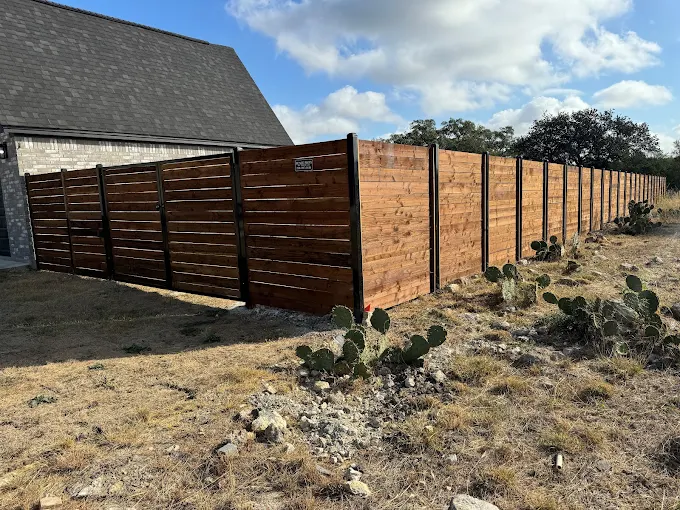
Why Fence Staining is Worth the Investment
A typical wood fence in North Texas faces over 230 sunny days a year, frequent high winds, and dramatic temperature swings. In Plano, that combination can turn a beautiful new fence gray, warped, and cracked in as little as 2–3 years if it’s left untreated. Yet, properly stained and maintained fences in our area routinely last 10–15 years or more with their color and structure intact.
For many property owners, the fence is one of the largest exterior investments—right after the roof and driveway. Whether you manage a commercial property off Preston Road or own a home near Legacy West, your fence plays a major role in security, curb appeal, and property value. Staining is one of the simplest ways to protect that investment, but it’s often the most overlooked.
In this guide, you’ll see why fence staining is far more than a cosmetic upgrade. You’ll learn how it impacts lifespan, maintenance costs, appearance, and even security for both homes and businesses in Plano. You’ll also see real-world examples, cost comparisons, and practical tips to decide when and how to stain your fence for the best long-term results.
Key Insight: Quality fence staining doesn’t just make your fence look better—it dramatically extends its life, reduces long-term costs, and protects your property from the harsh North Texas climate.
Staining as Protection: Shielding Your Fence from the Texas Elements
Wood is a natural material that reacts to its environment. In Plano, UV exposure, moisture, and heat are the three main enemies of any fence. Staining creates a protective barrier that helps your fence stand up to all three.
How Staining Protects Your Fence
A professional stain:
- Blocks harmful UV rays that cause fading and surface breakdown
- Repels water, reducing swelling, shrinking, and rot
- Helps prevent cracking, warping, and splintering
- Seals the surface against mildew and surface mold
Think of it as sunscreen and a raincoat for your fence—both are essential in North Texas.
One Plano homeowner near Coit Road installed a new cedar fence and skipped staining to “save money for now.” Within three years, the west-facing side was gray, brittle, and beginning to lean. Their neighbor, who had a similar cedar fence installed at the same time and professionally stained, still had rich color and solid boards. The unstained fence ended up needing major repairs and partial replacement, while the stained fence only needed a light maintenance coat.
“UV and moisture damage are the two biggest reasons fences fail early in Texas. Staining directly targets both.” — Local Fence Consultant
For wood systems like Wood Fence Installation and Mixed Material Fences that include wood rails or posts, staining is often the deciding factor between a 5-year fence and a 15-year fence.
CALLOUT: If your fence faces south or west, or borders an open field or parking lot, staining is not optional—those exposures take the hardest beating from the sun and wind.
The Real Cost Equation: Staining vs. Early Replacement
Many property owners hesitate on staining because they see it as an “extra” expense after paying for the fence itself. In reality, staining is one of the most cost-effective forms of Fence Maintenance you can invest in.
Typical Costs in the Plano Area
While exact numbers vary by fence size and stain type, here’s a general comparison for a standard 6-foot wood fence around a typical Plano backyard:
| Option | Approx. Upfront Cost (Local) | Expected Lifespan | 10-Year Estimated Total Cost | Notes |
|---|---|---|---|---|
| Unstained wood fence | Base fence cost | 5–8 years | High (fence + early replace) | Likely repairs and early replacement |
| Professionally stained new wood fence | Base + moderate staining | 10–15 years | Lower than unstained | Fewer repairs, longer life |
| Fence stained 1–2 years after install | Stain-only cost | Extends by 3–7 yrs | Moderate | Some early weathering already occurred |
| Regular staining every 3–4 years | Periodic maintenance cost | 15+ years possible | Lowest per year | Best long-term value |
\Lifespan ranges based on North Texas climate and average maintenance patterns.
A Plano business owner with a long cedar privacy fence along a parking lot initially skipped staining to keep construction costs down. Within six years, they faced widespread board rot and leaning posts and ended up paying for a major Fence Replacement. The replacement fence was stained immediately, and their projected life expectancy almost doubled.
“You either invest in protection now or pay much more later in repairs and replacement. Staining is the classic pay-a-little-now, save-a-lot-later decision.”
For commercial properties—shopping centers, offices, or HOA-managed neighborhoods—budget planning is critical. A predictable staining schedule is easier to plan for than an unexpected large replacement project.
Curb Appeal and Property Value: Why Appearance Matters
Beyond protection, staining dramatically improves how your fence looks—and that matters more than many owners realize, especially in a competitive market like Plano.
Visual Impact on Homes and Businesses
A stained fence:
- Enhances the natural grain and color of the wood
- Creates a finished, cohesive look with your home or building
- Hides minor imperfections and weathering
- Makes landscaping, patios, and outdoor features “pop”
For homeowners, a rich, well-maintained fence can be the difference between a buyer’s first impression being “this place is well cared for” versus “there’s a lot of deferred maintenance here.” Real estate agents in Collin County often note that exterior condition—fences included—sets the tone for how buyers view the entire property.
A Plano family near Oak Point Park had a standard pine privacy fence installed with Privacy Fence Installation. They chose a medium walnut stain that complemented their brick and trim. When they sold five years later, their listing photos showed a warm, rich fence line framing the backyard. Multiple buyers commented on how “finished” the outdoor space felt compared to similar homes with gray, weathered fences.
For businesses, appearance can directly impact customer perception:
- Restaurants with patios framed by well-stained fences feel more inviting
- Professional offices with neat perimeter fencing signal attention to detail
- Retail centers with consistent fence color and condition feel safer and better maintained
“Your fence is part of your brand image, whether you intend it to be or not.” — Property Manager, Plano Commercial Center
Staining can also help coordinate with other materials—such as Wrought Iron Fences, Aluminum Fences, or even Corrugated Metal Fences—to create a unified, intentional design rather than a patchwork of mismatched textures.
Security, Privacy, and Structural Integrity Over Time
A fence isn’t just decoration. It provides security, defines boundaries, and protects privacy. As wood breaks down, those core functions are compromised—and staining can delay that breakdown significantly.
How Staining Supports Security and Privacy
Unprotected wood:
- Warps and shrinks, creating gaps between boards
- Cracks and splits, weakening panels
- Rots at the base, causing leaning or collapsing sections
- Loses fastener grip as the wood deteriorates
All of these issues reduce privacy and make it easier for intruders—or even just neighborhood pets—to get through or under your fence.
In one Plano neighborhood near Spring Creek Parkway, an HOA had to address repeated complaints about leaning backyard fences along a greenbelt. Many of these fences had never been stained. Windstorms and saturated soil caused several sections to fail. When the HOA updated their standards, they required new fences to be stained within a set timeframe. Five years later, the newer, stained fences along the same stretch were still straight and solid, even after heavy storms.
For businesses that rely on perimeter security—storage yards, service businesses, or facilities with valuable equipment—keeping the fence strong is critical. Combining a stained wood privacy fence with Security Fence Installation and Access Control on gates creates a tighter overall security system.
“A weak fence is an invitation. A well-maintained, stained fence sends a message that the property is actively cared for and monitored.”
Staining supports structural integrity by limiting moisture intrusion and surface breakdown, so posts and rails stay stronger for longer. That means fewer emergency calls for Fence Repair after storms and fewer surprises during property inspections.
Staining Options, Colors, and How It Fits Different Fence Types
Not all fences are the same—and not all stains are either. Understanding how staining works with different fence materials helps you make smart decisions for your property.
How Staining Works with Common Fence Types
While you typically think of stain for wood, it can also play a role with mixed material systems:
- Wood privacy fences: The most common candidate for staining; benefits are both protective and aesthetic.
- Farm and ranch fencing: Wood posts and rails along Acreage or Farm Fencing benefit from stain to slow rot and sun damage.
- Mixed material fences: Wood combined with Metal Fence Installation (like steel posts or frames) can be stained to tie the look together.
- Gates and railings: Wood components in Residential Gates, Estate Gates, or Railings should be stained just like the main fence.
For non-wood systems like Vinyl Fences, Chain Link Fences, Aluminum Fences, and Glass Fences, stain isn’t used, but those systems are often combined with stained wood elements for privacy screens, accents, or property lines.
Choosing Stain Types and Colors
Professional staining services, like Fence Staining, typically offer:
- Transparent stains: Highlight natural grain, lighter protection, more frequent re-coats
- Semi-transparent stains: Balance between color and visible grain, strong protection
- Solid stains: Paint-like coverage, maximum UV protection, bolder color options
A Plano homeowner near the Dallas North Tollway chose a semi-transparent cedar tone for their new fence. It complemented their existing Decorative Fence Installation and matched the warm tones of their brick. Their neighbor, with a more contemporary home, went with a darker, solid stain to create a modern, high-contrast backdrop for their landscaping.
“The right stain color can make your fence feel like part of a professionally designed outdoor room, not just a boundary.”
Professional Staining vs. DIY: What’s Really Worth It?
Fence staining is one of those projects that looks straightforward—until you’re 4 hours in on a hot Plano afternoon with only one side of the fence done. Deciding whether to hire a pro or do it yourself depends on your time, tools, and tolerance for detail work.
Comparing Approaches
Here’s a quick look at the difference between DIY staining and using a professional service:
| Factor | DIY Staining | Professional Staining Service |
|---|---|---|
| Time Commitment | High (can take days for larger fences) | Low (crew completes in a focused time window) |
| Equipment | Brushes/rollers/small sprayer | Commercial sprayers, prep tools, safety gear |
| Surface Preparation | Often minimal | Thorough cleaning, repairs, and prep |
| Coating Consistency | Varies by skill and fatigue | Even coverage, correct thickness, neat lines |
| Product Knowledge | Store-bought guidance | Product-specific expertise for North Texas |
| Overall Cost | Lower cash, higher personal time | Higher cash, lower personal time, better result |
| Long-Term Performance | Depends on application quality | Typically longer-lasting, warrantied |
A Plano resident off Park Boulevard decided to stain his own backyard fence one summer. After renting a small sprayer, buying stain, and spending two full weekends on the project, he realized he hadn’t applied enough product on several sections. Within two years, the color had faded unevenly. When he called a professional crew for the next round, they corrected the coverage, cleaned up overspray, and finished both sides in a single day.
“The biggest difference with professional staining is consistency and prep. That’s what makes stain last.”
For larger properties, commercial campuses, or HOA-managed neighborhoods, professional staining isn’t just a convenience—it’s almost a necessity for scheduling, safety, and consistent results across multiple fences and gates.
What This Means for Businesses and Property Owners in Plano, TX
Plano’s growth, density, and business climate make exterior appearance and asset longevity especially important. From single-family homes to corporate campuses, fences are everywhere—and they’re constantly exposed.
For homeowners, stained fences:
- Protect one of your largest outdoor investments
- Support higher curb appeal in competitive neighborhoods
- Create a more inviting, finished backyard for family and guests
- Reduce surprise costs for early Fence Replacement
For businesses and commercial properties, staining:
- Extends the life of perimeter and screening fences along parking lots, dumpsters, and service areas
- Supports a professional, clean brand image for customers and tenants
- Helps meet HOA or property management standards with fewer violations
- Complements systems like Commercial Gates and Access Control for security
Plano’s hot summers, occasional ice events, and strong storms all take a toll on unprotected wood. Staining is one of the few steps you can take that directly counters that damage. It’s especially relevant if:
- Your fence is less than 2 years old and still in good condition
- You’re planning a new Residential Fence Installation or Commercial Fence Installation
- Your property backs up to open space, greenbelts, or busy roads
- You’re preparing a property for sale or lease
In a city where first impressions and long-term maintenance costs both matter, fence staining isn’t just cosmetic—it’s a strategic decision to protect value, improve appearance, and reduce headaches down the road.
Frequently Asked Questions
Q: How soon after installing a new fence in Plano should I have it stained?
A: For most new wood fences in North Texas, the sweet spot is usually 4–8 weeks after installation, depending on the wood type and weather. The wood needs time to dry out from milling and installation moisture, but you don’t want to wait so long that it starts to gray or crack. Cedar typically can be stained a bit sooner than pressure-treated pine. A professional Fence Staining contractor can test moisture levels and recommend the ideal timing. If your fence has already been up for several months, it’s still worth staining—your contractor may just need to do a more thorough cleaning and prep to remove early weathering before applying stain.
Q: Will staining really make that big of a difference in fence lifespan?
A: Yes. In our Plano climate, unstained fences commonly show significant deterioration—splitting, warping, loose boards—in as little as 5–7 years. Properly stained and maintained fences often last 10–15 years or more while still looking good. Stain slows the main drivers of wood failure: UV breakdown and moisture intrusion. That means fewer boards needing replacement, fewer leaning sections, and fewer calls for Fence Repair. While no product can make a fence last forever, staining is one of the most effective ways to extend its usable life and postpone major replacement costs.
Q: How often should I re-stain my fence in North Texas?
A: For most Plano properties, a good rule of thumb is every 3–5 years, depending on the type of stain, sun exposure, and how well the previous coat was applied. Transparent stains usually need more frequent touch-ups; semi-transparent and solid stains can last longer. South- and west-facing fences fade faster than shaded sides. A simple test: if water no longer beads on the surface and the color looks dull or patchy, it’s time to consider a maintenance coat. Regular re-staining is far less expensive than letting the fence deteriorate to the point where full Fence Replacement is the only option.
Q: Can I stain an older, gray fence, or is it too late?
A: In many cases, you can absolutely revive an older fence with professional cleaning, repairs, and staining. The key is surface preparation. A staining contractor will typically power wash or chemically clean the fence to remove gray fibers, mildew, and surface dirt, then replace any rotten or broken boards before staining. While you may not get a “brand new” look if the wood is heavily weathered, the transformation can be dramatic. This can be especially valuable before listing a Plano home for sale or updating a rental property. However, if posts are rotted or large sections are structurally unsound, you may need partial Fence Replacement before staining.
Q: Is staining worth it for rental or commercial properties where I’m not living there?
A: For many investors and commercial owners, staining is even more important. It protects an asset you’re responsible for but may not see every day. In Plano’s competitive rental and commercial markets, exterior condition directly affects tenant satisfaction, lease rates, and vacancy time. A well-stained perimeter fence or screening fence can reduce complaints, support higher perceived value, and lower long-term capital expenses. For properties with Security Fence Installation or Commercial Gates, keeping wood components stained also supports the overall security system by preventing weak points from developing.
Q: Will staining interfere with my metal or mixed material fencing or gates?
A: No, when done properly, staining works very well alongside other materials. Many Plano properties combine wood privacy sections with Wrought Iron Fence Installation, Aluminum Fence Installation, or Estate Gates. A professional crew will mask or protect metal components and apply stain only where it’s needed. In fact, staining can visually tie together different fence and gate materials so the property looks designed as a whole instead of pieced together. If you have a custom or high-end Custom Fence Design or railing system, stain selection is an important part of the overall look.
Q: Is there a best time of year to stain a fence in Plano?
A: Spring and fall are often ideal because temperatures are moderate and humidity is manageable. However, with proper planning, staining can be done most of the year in North Texas. The main things to avoid are active rain, extremely high humidity, and very cold temperatures. Professional crews watch the forecast closely to schedule projects when conditions are right for stain to penetrate and cure properly. If you’re planning a new Residential Fence Installation or Commercial Fence Installation, it’s smart to talk about staining timing during the initial project planning.
Ready to Get Started?
North Texas weather isn’t gentle on wood, and every season your fence goes unstained is another season of UV and moisture damage you can’t get back. If your fence is new, you’re in the perfect window to protect it before noticeable damage sets in. If your fence is a few years old and starting to gray, each month you wait makes restoration more difficult—and more expensive.
Acting now means:
- Extending the life of your fence by years
- Reducing future repair and replacement costs
- Improving curb appeal for your home or business
- Strengthening privacy and security around your property
The next step is simple: schedule a consultation to evaluate your existing fence or plan staining for an upcoming installation. A knowledgeable local team can recommend stain types, colors, and timing tailored to Plano’s climate and your specific property.
Protect the fence you’ve already invested in—and make it look great while you’re at it.
About Fence Pros of Texas
Fence Pros of Texas is a locally focused fencing and staining contractor serving Plano and the surrounding North Texas communities. Our team specializes in Residential Fence Installation, Commercial Fence Installation, Farm Fencing, gates, railings, and professional Fence Maintenance services. With years of experience in the local climate and soils, we design and protect fences that are built to last in North Texas conditions. To learn more about our services and see examples of our work, visit our website.