
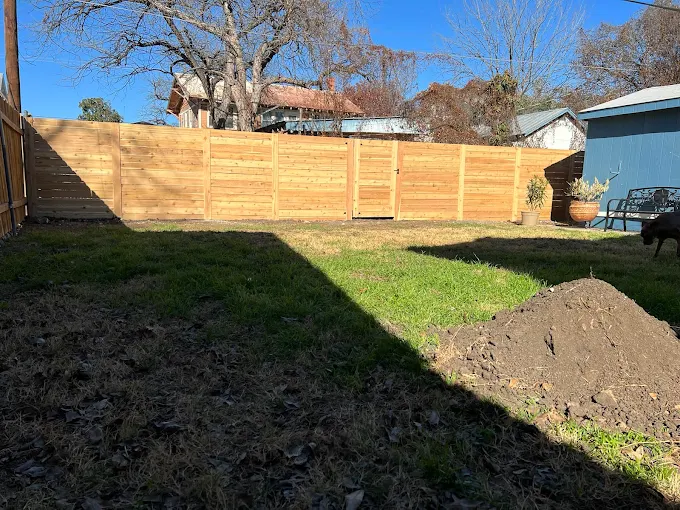
The Importance of Quality Fence Staining
A typical wood fence in North Texas can start graying, warping, and cracking in as little as 18–24 months if it isn’t properly protected. Between Plano’s intense summer sun, sudden storms, and periodic freezes, unprotected wood simply doesn’t stand a chance for long. Yet, many property owners invest thousands in a beautiful new fence and then skip the one step that truly determines how long it will last: quality staining.
For homes, businesses, and farms across Plano and the greater DFW area, fence staining is not just about looks. It’s about preserving your investment, protecting your property, and avoiding premature Fence Replacement costs. According to industry studies, a properly stained wood fence can last up to twice as long as an unstained one, and ongoing Fence Maintenance can cut repair expenses by 30–50% over the life of the fence.
This guide walks you through why quality fence staining matters so much in Plano’s climate, how it affects different types of properties, what separates professional work from DIY attempts, and how to keep your fence looking great year after year.
Key Insight: Quality fence staining is a protective system, not just a color choice. When done correctly, it shields your fence from sun, moisture, and insects, dramatically extending its life and preserving your property’s curb appeal and security.
Why Plano’s Climate Makes Staining Non‑Negotiable
In North Texas, your fence is under constant attack from the elements. Plano averages more than 230 sunny days a year, with summer temperatures regularly hitting triple digits. Combine that with seasonal storms, humidity swings, and the occasional freezing winter, and you’ve got a recipe for rapid wood deterioration.
UV rays break down the lignin in wood, causing it to gray and lose structural integrity. Moisture then seeps into those weakened fibers, leading to warping, cupping, and splitting. Without a quality stain, even a professionally built Wood Fence Installation or Privacy Fence Installation will age quickly and unevenly.
A recent Plano homeowner we worked with had installed a beautiful cedar privacy fence three years ago—but never stained it. By the time we were called, several pickets were rotted at the bottom, the posts were checking, and the entire fence had turned a dull, patchy gray. Instead of a simple staining project, they were facing partial replacement plus stain—nearly double the cost.
“Sun and water are wood’s worst enemies. Proper staining is the shield that keeps both at bay.” — Senior Fence Technician, Fence Pros of Texas
Quality staining forms a barrier against UV rays and moisture, stabilizing the wood and slowing down the aging process. For Plano property owners, that means fewer repairs, straighter lines, and a fence that looks intentional instead of neglected.
More Than Looks: How Staining Protects Your Investment
A stained fence certainly looks better, but the real value is in how it protects the structure. Think of stain as a breathable raincoat for your fence—repelling water while letting trapped moisture escape so the wood can dry properly.
Here’s what quality staining does for your fence:
- Blocks UV damage that causes fading, brittleness, and surface breakdown
- Repels water to reduce swelling, shrinking, and rot
- Helps resist mildew and fungus in damp or shaded areas
- Reduces warping and cracking, which are common in Plano’s heat
- Protects hardware by limiting rust from constant moisture exposure
We recently helped a small business near Legacy West that had a six-foot cedar enclosure around their outdoor seating area. The fence was stained properly when installed, and we’ve maintained it every 3–4 years. After nearly a decade, the wood is still structurally sound, straight, and attractive—a major win compared to the neighboring property’s bare fence, which has already needed sections replaced.
Compare that to an unstained fence, where the top rail often begins to bow, pickets twist, and gaps open up. Once that happens, your fence is no longer performing as a reliable privacy or security barrier, and your only options are extensive Fence Repair or full Fence Replacement.
CALLOUT: A well-built, properly stained cedar fence in Plano can often last 15–20 years. Unstained, that same fence may need major repairs in as little as 5–7 years.
For property owners, the math is simple: staining is a small, periodic expense that protects a much larger investment and keeps your property looking cared-for and secure.
Residential, Commercial, and Farm Fences: Different Needs, Same Protection
Not all fences serve the same purpose, and different properties around Plano ask different things of their fencing. But whether you’re a homeowner, a business owner, or a landowner, quality staining plays a critical role in performance and longevity.
Residential Properties: Curb Appeal and Privacy
In neighborhoods across Plano, from West Plano to the older areas near downtown, most homeowners rely on wood privacy fences to define property lines and create a comfortable backyard. A high-quality stain keeps these fences from becoming the eyesore on the block.
One Plano family in a HOA community near Preston Road chose a rich, medium-brown stain for their new Residential Fence Installation. Not only did it meet HOA guidelines, it also bumped their curb appeal when they later decided to sell. Their real estate agent specifically noted the fence as a selling point because it looked “new” and well maintained.
Commercial Properties: Brand Image and Security
For businesses, a fence is part of your brand and your security system. Whether you’ve got Commercial Fence Installation around a service yard, a retail center, or a restaurant patio, a faded, warped fence sends the wrong message to customers and tenants.
We worked with a Plano office park that had a long stretch of wood screening fence along a busy road. After a full cleaning and staining, the property looked significantly more upscale. Tenants commented that clients were noticing the difference, and management now budgets regular staining as part of their property maintenance plan.
Farms and Acreage: Function and Durability
For landowners with Farm Fencing around pastures or arenas, the stakes are even higher. Rotting posts and broken boards can be a safety issue for livestock and horses.
Staining helps protect long fence runs from constant sun exposure and ground moisture, especially in low-lying or irrigated areas. While some farm fences use pipe or wire, many properties around the outskirts of Plano still rely on wood rails or mixed systems. Protecting that wood with stain reduces both replacement labor and material costs over time.
CALLOUT: Whether it’s a backyard privacy fence, a screening fence for your business, or a pasture fence on acreage, quality staining extends the life and performance of your fence across all property types.
Professional Staining vs. DIY: What’s the Real Difference?
On the surface, staining a fence looks straightforward—buy stain, grab a sprayer or brush, and go. But the difference between a rushed DIY job and a professional application can easily be 5–10 years of fence life.
Here’s how they compare for a typical Plano wood fence:
| Factor | DIY Staining | Professional Staining |
|---|---|---|
| Surface Prep | Often minimal (quick rinse) | Full cleaning, mildew removal, dry-time management |
| Product Selection | Big-box general-purpose stain | Contractor-grade, UV-resistant, climate-suited |
| Application Method | Uneven coverage, overspray, missed spots | Even coverage, correct thickness, detailed edges |
| Time Investment | 1–2 weekends + learning curve | Completed efficiently by trained crew |
| Longevity of Results | 1–3 years before obvious fading | 3–5+ years with proper products and prep |
| Cost Over Fence Lifetime | Lower upfront, higher long-term | Higher upfront, better protection per dollar |
One Plano homeowner tried a DIY stain on their back fence using a bargain product and rental sprayer. They skipped cleaning, didn’t check moisture levels, and applied stain in direct afternoon sun. Within 18 months, the stain was patchy, peeling in some areas, and faded in others. We were called in to strip, clean, and re-stain—essentially doing the job twice.
“The prep work you don’t see is what makes a stain job last. Skipping those steps is like painting over dust and hoping it sticks.” — Project Lead, Fence Pros of Texas
A professional crew understands how Plano’s weather patterns affect drying times, how to work around landscaping, how to protect nearby Residential Fence Installation features like gates and railings, and which products perform best on local wood species such as cedar and pine.
How Staining Fits with Modern Fence Materials and Design
While many Plano properties still rely on traditional wood fences, modern fencing often combines materials for style and function. Staining can play a key role even in these mixed-material designs.
Mixed and Decorative Fences
More homeowners and businesses are choosing Mixed Material Fences—for example, wood with metal posts, or wood infill panels with Metal Fence Installation accents. In these designs, stain is what ties everything together visually.
A Plano homeowner near Arbor Hills Nature Preserve installed a sleek combination of horizontal cedar boards with black metal posts and a matching Decorative Fence Installation gate. A warm, semi-transparent stain brought out the grain of the wood and contrasted beautifully with the metal, creating a high-end, custom look.
Coordinating with Other Fence Types
Even if your property uses non-wood fences—such as Aluminum Fences, Chain Link Fences, Vinyl Fences, or Wrought Iron Fences—you may still have wood elements that need protection. Common examples include:
- Wood privacy screens alongside Security Fence Installation or access control systems
- Wood gates paired with Residential Gates or Commercial Gates
- Wood infill under Railings or decks
Staining these components ensures they age gracefully alongside more durable materials and don’t become the weak link in your property’s appearance or security.
Specialty Applications
For properties with Pool Fence Installation or Garden Fence Installation, stain selection is especially important. Chlorine exposure, irrigation systems, and constant moisture demand products that are formulated for tougher environments and applied with extra attention to end grains and ground contact.
CALLOUT: Modern fence designs often mix long-lasting metal with warm natural wood. Stain is what keeps that wood from becoming the first thing to fail—or the first thing people notice for the wrong reasons.
What Quality Fence Staining Actually Involves
A great stain job is the result of a clear process—not just a good product. Here’s how a professional approach typically works for Plano properties:
1. Inspection and Planning
The first step is evaluating the current condition of your fence:
- Is the wood new, weathered, or previously stained?
- Are there damaged boards or posts that need Fence Repair?
- Are there sprinklers hitting the fence or heavy landscaping to work around?
For a Plano homeowner near Coit and Spring Creek, our inspection revealed a few rotted posts and boards, plus heavy sprinkler overspray along one section. We replaced the damaged components and adjusted the watering pattern before staining to avoid trapping excess moisture.
2. Cleaning and Prep
Proper cleaning removes dirt, mildew, and loose fibers. This may include:
- Gentle washing with specialized cleaners
- Light surface brightening for gray, weathered wood
- Allowing full drying time before stain application
3. Product Selection
We match the stain type to the fence and your goals:
- Transparent or semi-transparent for newer, high-quality cedar
- Semi-solid for older fences with more imperfections
- Colors that coordinate with your home, Decorative Fence Installation, or business branding
4. Application
Professional crews apply stain evenly, paying attention to:
- Back-brushing to work stain into the wood
- Coating edges, cut ends, and areas near the ground
- Protecting adjacent surfaces, plants, and hardscapes
5. Final Walkthrough and Maintenance Plan
After drying, a walkthrough confirms coverage and color. From there, you’ll know when to plan your next maintenance coat, usually every 3–5 years depending on exposure and product type.
Cost, Value, and Long-Term Payoff for Plano Properties
Fence staining is a maintenance item, but it’s also a strategic investment decision. Understanding how the costs compare over time can help you budget smarter.
Here’s a simplified look at the financial side for a typical 150-foot backyard fence in Plano:
| Approach | Upfront Cost (Approx.) | Expected Lifespan of Fence | Long-Term Impact |
|---|---|---|---|
| No Stain / Minimal Maintenance | Lowest | 7–10 years | Early rot, frequent repairs, full replacement sooner |
| Basic DIY Stain Every Few Years | Low to Moderate | 10–12 years | Some protection, uneven wear, more touch-ups |
| Professional Stain + Scheduled Care | Moderate | 15–20 years | Fewer repairs, better appearance, lower cost per year |
These are general ranges, but the pattern holds: the more consistently and professionally your fence is protected, the more years you get out of your original installation—and the better it looks over that time.
We’ve seen this play out repeatedly in Plano subdivisions where fences were installed at roughly the same time. A few years later, side-by-side fences tell the story: one is bowed, gray, and leaning; the other is straight, rich in color, and clearly cared for. The difference isn’t the original build quality alone—it’s the commitment to proper staining and maintenance.
For businesses, this also affects brand perception. A well-maintained Commercial Fence Installation or Security Fence Installation shows clients and tenants that you invest in your property and take their safety and experience seriously.
CALLOUT: The real cost of skipping staining isn’t just cosmetic—it’s the accelerated timeline to your next major fence project.
What This Means for Businesses in Plano, TX
Plano’s business community is competitive and image-conscious. Whether you manage a corporate campus, retail center, restaurant, or industrial yard, your fence is part of the first impression your property makes.
Quality staining supports your operation in several ways:
- Professional Appearance: A faded, splintered fence around an otherwise modern building stands out for the wrong reasons. Staining keeps your perimeter consistent with the quality of your brand and interiors.
- Security and Liability: Warped or deteriorated boards can create gaps and weak points in your perimeter. For businesses that rely on Access Control systems, storage yards, or screened service areas, a strong, well-maintained fence is essential.
- Tenant and Customer Confidence: For multi-tenant properties, stained and maintained fences signal to current and prospective tenants that ownership is proactive and attentive. That perception can influence lease renewals and occupancy rates.
- Budget Predictability: By building staining and periodic Fence Maintenance into your regular operating budget, you avoid surprise capital expenditures for premature replacement. It’s easier to plan for a known, recurring cost than a sudden five-figure fence project.
A Plano restaurant with a popular patio area is a good example. Their wood privacy fence and gate system had started to gray and show water stains, conflicting with their otherwise modern, polished look. After a thorough cleaning and rich semi-transparent stain, the patio felt more inviting and upscale. According to the owner, guests specifically commented that the space looked “refreshed”—all from addressing the fence.
For businesses along high-visibility corridors like Preston Road, Park Boulevard, or the Dallas North Tollway, this kind of detail can be the difference between blending in and standing out—in the best way.
Frequently Asked Questions
Q: My fence is already gray and weathered. Is it too late to stain it?
A: In many cases, no—it’s not too late. Weathered wood can often be restored with a combination of cleaning, brightening, and then staining. We frequently work on older Wood Fences in Plano neighborhoods that have turned gray but are still structurally sound. The process usually involves a low-pressure wash with specialized cleaners to remove dirt and mildew, a brightener to restore the natural tone, and then a high-quality stain. If we find rotted or badly damaged boards or posts, we’ll recommend targeted Fence Repair before staining. The result can be surprisingly dramatic—many homeowners are shocked at how “new” their fence looks again, even after years of neglect.
Q: How often should I have my fence stained in Plano’s climate?
A: Most fences in Plano benefit from staining every 3–5 years, depending on exposure, wood type, and stain product. South- and west-facing sections that get the most direct sun may need attention a bit sooner than shaded areas. New cedar fences typically hold stain well, while older pine may require more frequent maintenance. During an on-site evaluation, we can estimate a realistic schedule for your specific fence—whether it’s a residential privacy fence, Commercial Fence Installation, or Farm Fencing. Building this into your long-term property maintenance plan helps you avoid the “wait until it looks terrible” cycle that often leads to more expensive repairs.
Q: Will staining help with warping and cracking, or is that already permanent?
A: Staining can’t reverse existing warping or cracks, but it can significantly slow down future movement and deterioration. When wood repeatedly absorbs and releases moisture—common with Plano’s storms and heat—it expands and contracts, which leads to warping, cupping, and splitting. Quality stain reduces water penetration and helps stabilize the wood, so those cycles are less extreme. We often pair staining with selective replacement of the worst boards or rails to restore a clean, straight look. For new Fence Installation, staining within the recommended window (usually after the wood has had time to dry properly) is one of the best ways to keep your fence straighter and stronger over its life.
Q: What’s the best time of year to stain a fence in Plano?
A: Spring and fall are typically ideal in North Texas. Temperatures are moderate, humidity is manageable, and there’s usually less risk of extreme heat or sudden storms compared to mid-summer. That said, professional crews can stain successfully outside those windows if conditions are monitored carefully—avoiding days that are too hot, too windy, or too wet. In Plano, we watch both short- and medium-range forecasts to make sure your fence has enough dry time before and after application. Because schedules book up quickly during peak seasons, it’s smart to plan your Fence Maintenance a little in advance, especially if you’re coordinating around other projects like landscaping or Residential Gates installation.
Q: Do all fence types need staining, or just wood?
A: Staining is primarily for wood fences and wood components. Materials like Aluminum Fences, Vinyl Fences, and Chain Link Fences don’t require staining, though they do benefit from periodic cleaning and inspection. However, many properties use mixed systems—such as wood privacy sections alongside Commercial Gates, or wood screens with metal posts. Those wood elements absolutely need stain to avoid becoming the weak link in your fence system. Even if most of your perimeter is metal, protecting any wood components with stain helps maintain a consistent appearance and performance across the entire installation.
Q: How does staining work with gates, railings, and access control systems?
A: Gates and railings often see more wear and tear than the rest of the fence, so careful staining around these components is essential. For properties with Access Control or automated Estate Gates, we take extra steps to protect mechanical and electronic parts during cleaning and staining. Wood gate frames, trim, or infill panels are stained just like the rest of the fence, with attention to edges and joints where water can enter. Metal Railings don’t get stain, but nearby wood elements do. The goal is a cohesive look and a smooth, functional gate operation with no overspray on sensitive components.
Q: Is professional staining worth it if I plan to sell my home or building soon?
A: Yes, in many cases it’s one of the most cost-effective exterior improvements you can make before listing. A fresh, quality stain on a Residential Fence Installation can instantly improve curb appeal and reduce the impression of “deferred maintenance,” which buyers often use as a bargaining chip. For commercial properties, a clean, well-maintained perimeter can support higher perceived value and tenant interest. In the Plano market, where buyers and tenants have options, a neglected fence can stand out in photos and drive-by impressions. Staining is relatively quick, non-invasive, and impactful—especially compared to larger projects like full Fence Replacement or major exterior renovations.
Ready to Get Started?
Plano’s weather isn’t kind to unprotected wood, and time rarely improves the look of an unstained fence. Every season your fence goes without proper protection, UV rays and moisture are quietly shortening its lifespan and chipping away at your property’s appearance.
If your fence is starting to gray, show water stains, or simply doesn’t match the quality of the rest of your property, now is the right time to act. Spring and fall staining schedules in North Texas fill up quickly, and addressing your fence before peak heat or storm season can make a noticeable difference in performance and longevity.
Fence Pros of Texas can evaluate your existing fence, recommend the right staining approach, handle any necessary repairs, and set you up with a maintenance plan that fits your budget—whether you’re protecting a single-family home, a commercial property, or acreage outside Plano.
Take the next step toward a fence that looks better, lasts longer, and truly protects your investment.
About Fence Pros of Texas
Fence Pros of Texas is a locally focused fencing contractor serving Plano and the greater North Texas area. Our team brings years of hands-on experience in Residential Fence Installation, Commercial Fence Installation, Farm Fencing, gates, railings, and professional Fence Maintenance and staining. We understand the demands of North Texas weather and design our solutions to perform in real-world conditions, not just on paper. From custom designs to long-term care, we help property owners protect and enhance one of their most visible investments: their fence.