
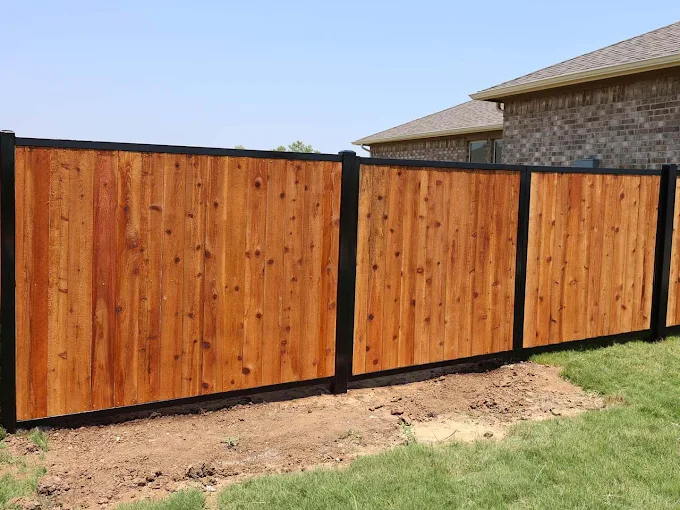
The Benefits of Professional Fence Staining
North Texas sun is no joke. In Plano, it’s not unusual to see summer days climb past 100°F, with UV levels in the “very high” range for weeks at a time. Add in sudden thunderstorms, hail, and humidity swings, and your fence is taking a beating every single day. That’s why so many wood fences around Collin County start out beautiful and rich in color… and within a couple of years look gray, warped, and tired.
Professional fence staining is one of the simplest ways to protect that investment and keep your property looking sharp—whether you’re a homeowner off Spring Creek Parkway or a business near Legacy West. Studies from building material associations show that properly sealed and stained wood can last 2–3 times longer than untreated wood in high-UV climates like North Texas.
In this guide, you’ll learn how professional staining:
- Extends the life of your fence
- Protects against rot, warping, and insect damage
- Enhances curb appeal and property value
- Saves you money compared to early fence replacement
Key Insight: Professional fence staining isn’t just about color—it’s a protective system that can dramatically extend the life, performance, and appearance of your fence in Plano’s harsh climate.
Why Plano’s Climate Makes Staining Essential, Not Optional
North Texas is tough on exterior wood. Between hot summers, sudden cold snaps, and wind-driven rain, your fence is constantly expanding, contracting, and drying out. Untreated wood quickly starts to:
- Fade and turn gray from UV exposure
- Develop surface cracks and splinters
- Absorb moisture, leading to warping and rot
The Texas A&M Forest Service notes that UV radiation is one of the primary causes of premature wood degradation in our region. That’s where professional staining comes in.
A high-quality, oil-based stain penetrates deep into the wood fibers, creating a barrier against:
- UV rays that break down wood lignin
- Moisture that causes swelling and decay
- Mold, mildew, and insect activity
“Think of stain as sunscreen and moisturizer for your fence. Without it, your fence is aging years faster than it needs to.” — Local Fence Technician
In Plano neighborhoods like Willow Bend or Ridgeview Ranch, you can often see the difference from the street: one fence rich in color, straight and solid; the neighbor’s fence gray, warped, and leaning. The first is usually professionally stained and maintained; the second often wasn’t protected at all.
Professional staining is equally important whether you have a brand-new Wood Fence Installation at your home or a long perimeter fence around a commercial property. The climate doesn’t care who owns it—unstained wood breaks down the same way.
How Professional Staining Extends Fence Life and Saves Money
A fence is one of the largest exterior investments on your property. In Plano, replacing a standard backyard wood fence can easily run several thousand dollars. For large commercial or Farm Fencing projects, that number climbs fast.
Staining is a relatively small, periodic expense that can delay full replacement for many years.
The Protective Power of Professional Staining
Professional-grade stains and sealers:
- Penetrate deeper than most DIY products
- Provide better UV inhibitors
- Include mildewcides and water repellents
- Are applied with commercial sprayers and back-brushing for uniform coverage
A Plano business along US-75, for example, had a 6-foot privacy fence installed around a service yard. After just two years without staining, boards were cupping and splitting, and the fence looked 10 years old. They brought in a professional crew to clean, repair, and stain the fence. The result:
“We thought we’d have to replace the whole fence. After staining, it looked almost new—and we bought ourselves years of extra life.” — Facility Manager, Plano Service Company
Cost Comparison: Stain vs. Replace in Plano
| Option | Typical Timing in Plano Climate | Approximate Cost (Per Linear Foot) | Long-Term Impact |
|---|---|---|---|
| No Stain, No Maintenance | Replace in 7–10 years | $$$$ (full replacement) | Early rot, warping, frequent repairs |
| DIY Stain (Low-Quality Product) | Recoat every 1–2 years | $$ (materials + your time) | Uneven coverage, limited protection |
| Professional Stain & Maintenance | Recoat every 3–5 years | $$$ (service) | Fence life extended 2–3x, better looks |
These are general ranges, but the pattern is clear: professional staining is a fraction of the cost of premature replacement. When you factor in the value of your time—and the difference in results—professional help is often the smarter financial move.
Curb Appeal, Property Value, and First Impressions
Your fence is one of the first things people see when they approach your property. A faded, patchy, or leaning fence can drag down the look of an otherwise beautiful home or business.
On the flip side, a rich, evenly stained fence frames your landscaping, complements your exterior, and gives your property a cared-for, cohesive look.
Residential Curb Appeal in Plano Neighborhoods
For homeowners, stained fences work like a picture frame around your yard. Whether your yard backs up to a greenbelt or faces a busy street, a uniform, well-maintained fence makes a strong statement.
A family in West Plano, near Preston Road, had recently renovated their home’s exterior—new paint, updated landscaping, and a modern Residential Fence Installation. The only problem? Their older, sun-bleached fence clashed with the upgrades.
They opted for a warm cedar-tone stain applied professionally. The difference:
- The fence color now tied in with their trim and front door
- Their backyard felt more like an intentional outdoor room
- They received positive comments from neighbors and visitors
Real estate professionals often note that buyers in Plano notice fences—especially in subdivisions where backyards are a key selling feature. A sharp-looking, well-stained fence supports higher perceived value.
Commercial and Multi-Family Properties
For businesses and property managers, professional staining is equally important. Consider:
- Shopping centers with perimeter fences
- Daycare facilities with playground enclosures
- Apartment complexes with pool or Residential Gates and fencing
- Office parks along major corridors like the Dallas North Tollway
A property management firm in Plano oversaw several communities with aging perimeter fences. After a coordinated staining project:
“Our communities instantly looked more upscale, without the cost of full fence replacement. It’s one of the highest-ROI exterior upgrades we’ve made.” — Regional Property Manager
Stained fences also pair beautifully with modern materials like Mixed Material Fences, where wood is combined with metal or masonry. The contrast of rich wood against stone or steel creates a high-end, custom look that stands out in a crowded market.
Protection Against Rot, Warping, and Everyday Wear
Wood is naturally porous. Left unprotected, it acts like a sponge—absorbing rain, morning dew, and lawn irrigation. In Plano’s climate, that cycle of wet/dry, hot/cold quickly leads to structural problems.
Professional staining helps in three key ways:
1. Moisture Control
Quality stains repel water, helping wood shed moisture instead of soaking it up. Less moisture means:
- Fewer swollen boards
- Less warping and cupping
- Reduced risk of rot at the base of posts and pickets
2. UV Protection
Pigments in the stain act as a shield against UV rays, slowing the breakdown of the wood’s surface. This keeps boards stronger and more flexible over time.
3. Mold, Mildew, and Insect Resistance
Many professional products include additives that discourage fungal growth and insects, both of which are common in North Texas.
A local Plano homeowner with a 10-year-old privacy fence was starting to see soft spots along the bottom of pickets, especially near sprinklers. Before assuming the fence needed full replacement, they brought in a pro. After replacing the worst boards, the team cleaned and stained the entire fence. The staining helped:
- Seal cut ends and vulnerable areas
- Slow further rot development
- Protect remaining boards from rapid decline
“Rot usually starts at the bottom of the fence or where water sits. Staining can’t reverse damage that’s already there, but it can slow or stop it from spreading.” — Fence Staining Specialist
This level of protection is especially important for properties that rely on fences for security. For example, a Security Fence Installation around a business or a Pool Fence Installation around a community pool must remain structurally sound. Staining is part of responsible risk management, not just aesthetics.
Staining Different Fence Types: What You Can (and Can’t) Do
Not every fence on your property will be wood, and not every material benefits from staining in the same way. Understanding what can be stained—and what needs a different approach—helps you make smart decisions.
Wood Fences
These are the primary candidates for professional staining: cedar, pine, and other common materials used in Plano. Whether you have a standard privacy fence, a board-on-board style, or a more decorative design, staining is highly recommended.
Wood fences are often installed alongside other fence types. For example, a homeowner might have:
- A wood privacy fence along the back
- Wrought Iron Fences or Estate Gates at the front
- Shorter wood or Garden Fence Installation around planting beds
Staining the wood elements preserves a unified, intentional look.
Other Popular Fence Materials in Plano
Here’s how staining (or alternatives) plays out with other materials:
| Fence Type | Staining? | Typical Finish Approach |
|---|---|---|
| Wood Fences | Yes – ideal | Professional stain & seal |
| Aluminum Fences | No stain – factory finish | Occasional cleaning, touch-up paint if needed |
| Vinyl Fences | No stain | Wash to remove dirt, mildew |
| Chain Link Fences | No stain | Galvanized or coated; minimal upkeep |
| Corrugated Metal Fences | No stain | Clear coat or paint if desired |
| Wrought Iron Fences | No stain | Rust prevention, repaint as needed |
| Glass Fences | No stain | Regular cleaning to maintain clarity |
Property owners in Plano often mix materials—for example, Mixed Material Fences that combine wood with steel or masonry. In these cases, the wood sections still need staining, while the metal or stone components require different maintenance.
Why Professional Staining Beats DIY in Plano
Big-box stores in Plano and nearby cities are full of stain cans and pump sprayers. It’s tempting to think, “How hard can it be?” The reality: staining is one of those projects that looks simple but is easy to get wrong.
Common DIY Issues
Homeowners who tackle staining themselves often run into:
- Uneven color or lap marks
- Missed areas, especially between pickets and at the bottom edges
- Overspray on houses, cars, neighbors’ yards, or stonework
- Using the wrong product for our climate
- Inadequate surface prep, leading to peeling or blotchy results
A Plano homeowner tried to stain their 200-linear-foot fence over a single weekend using a handheld sprayer and discount stain. They ran out of product halfway through, struggled to match color on the second batch, and ended up with noticeable stripes and dark/light patches. Fixing it required stripping and restaining—essentially paying twice, once in time and once in money.
What Professionals Bring to the Table
Professional staining crews bring:
- Proper Prep: Cleaning, light sanding if needed, and mildew removal to ensure the stain adheres and looks even.
- Right Products: Commercial-grade stains designed for high-UV, high-heat environments like Plano.
- Equipment: Professional sprayers, shields, and back-brushing techniques for consistent coverage.
- Speed and Safety: Completed in a fraction of the time, with care taken around landscaping, pools, and neighboring properties.
“Preparation is 70% of the job. Most DIY failures come from skipping that step or rushing it.” — Fence Maintenance Pro
For businesses, DIY isn’t really an option. Liability, appearance standards, and time constraints make professional services the clear choice, especially for large Commercial Fence Installation projects or properties using access-controlled Commercial Gates.
What This Means for Businesses in Plano, TX
Plano’s business community is competitive and image-conscious. Corporate campuses, medical offices, retail centers, and industrial facilities all compete for tenants, customers, and employees. Exterior appearance plays a bigger role than many owners realize.
Professional fence staining matters for businesses here because:
- Brand Image: A well-maintained fence reflects a well-run operation. Faded, damaged fencing sends the opposite message.
- Asset Protection: Commercial fences are often taller, longer, and more expensive than residential fences. Extending their life with staining preserves capital.
- Security and Liability: For businesses relying on fences and Access Control systems to secure inventory, equipment, or sensitive areas, structural integrity is a safety issue, not just an aesthetic one.
- Tenant Satisfaction: Property managers in Plano’s multifamily and retail sectors know that clean, cohesive exteriors help with lease renewals and occupancy rates.
For example, a light industrial park near Plano’s technology corridor had a long, weathered wood fence along the rear property line, visible from a busy roadway. Tenants complained it made the park look run-down. Rather than replacing hundreds of feet of fencing, ownership opted for professional cleaning and staining.
The results:
- Tenants reported increased pride in the property
- The park’s street presence improved significantly
- Ownership deferred a major capital expense for years
In a market like Plano—where companies compete with newer developments in nearby Frisco and Allen—small details like fence condition can tip the scales. Professional staining is a relatively low-cost way to keep older properties looking current and cared for.
Frequently Asked Questions
Q: How often should I have my fence stained in Plano’s climate?
A: In North Texas, most wood fences benefit from staining every 3–5 years, depending on the product used, fence exposure, and color. Darker stains with more pigment usually last a bit longer than very light tones. Fences in full sun on south or west-facing sides may need more frequent attention than shaded sections. After your initial professional staining, a quick visual check each spring—looking for fading, dryness, or water no longer beading on the surface—can help you decide when it’s time to recoat. For large Commercial Fence Installation projects, setting up a maintenance schedule with your contractor is a smart move.
Q: Can you stain an older fence that’s already gray and weathered?
A: Yes, in many cases an older, gray fence can be cleaned and stained with excellent results. The key is proper preparation. A professional will typically wash the fence, remove surface mildew, and sometimes lightly sand rough or splintered areas. Severely damaged or rotten boards should be replaced before staining. While you may not get the exact look of brand-new wood, a quality stain can dramatically improve appearance and add years of life. We see this often with older Wood Fences throughout established Plano neighborhoods.
Q: Is staining necessary if I have a cedar fence?
A: Cedar is naturally more resistant to decay than pine, but it still suffers from UV damage and moisture cycling. In Plano’s intense sun, even cedar will turn gray, crack, and dry out over time if left untreated. Staining a cedar fence preserves its color longer, protects against splitting, and helps maintain its structural integrity. Many homeowners with premium cedar Privacy Fence Installation choose to stain to protect their higher initial investment and keep that rich cedar look.
Q: Will staining help with warping and gaps between boards?
A: Staining won’t straighten boards that are already badly warped, but it can slow further movement by reducing how much moisture the wood absorbs. Over time, repeated wet/dry cycles cause boards to twist, cup, and shrink, creating gaps. By sealing the wood, stain helps stabilize its moisture content. When combined with minor repairs and board replacement where needed, staining can improve both the look and performance of your fence. This is especially important around secure areas or where your fence ties into Residential Gates or Commercial Gates, where alignment matters.
Q: Can I change the color of my fence with stain, or am I stuck with what I have?
A: You usually have options. If your fence is unstained or only lightly weathered, you can choose from a variety of tones—from transparent and natural to semi-transparent or solid colors. On previously stained fences, your new color choice may be somewhat influenced by what’s already there, especially if the old stain is dark. A professional can evaluate your fence, do test patches, and recommend products that will provide even coverage. Many Plano homeowners update their fence color as part of broader exterior refreshes, especially when they change house paint or roofing.
Q: How does staining work if I have mixed materials, like wood and metal together?
A: Mixed-material fences are common in Plano, especially where wood is paired with Aluminum Fences, Wrought Iron Fences, or stone columns. In these cases, professionals carefully mask or shield non-wood components during staining. The wood sections receive the full cleaning and staining process, while metal or masonry is protected from overspray. This approach keeps your Decorative Fence Installation looking sharp and cohesive, without staining materials that aren’t designed to absorb it.
Q: Does staining help reduce maintenance on my fence overall?
A: Yes. While staining is a maintenance task itself, it significantly reduces the amount of ongoing repair work your fence will need. Stained fences are less likely to develop rot, severe cracking, or loose boards as quickly as untreated fences. They’re also easier to clean—dirt and mildew are less likely to penetrate deeply. Many Plano property owners pair professional staining with periodic Fence Maintenance checks, addressing minor issues before they turn into costly Fence Repair or full Fence Replacement projects.
Ready to Get Started?
Plano’s weather won’t wait. Every season of intense sun, sudden storms, and temperature swings accelerates the aging of an unstained fence. If your fence is new and still unstained, you’re in the perfect window to lock in protection before damage starts. If your fence is older and faded, professional cleaning and staining can bring it back to life and help you avoid premature replacement.
Now is an ideal time to schedule staining before the busiest seasons hit and crews book up. A professional team can evaluate your fence, recommend the right products and colors, and handle the prep and application safely and efficiently. You’ll end up with a fence that looks better, lasts longer, and supports the overall value and appearance of your property—whether it’s a single-family home, a commercial site, or a larger multi-property portfolio.
Fence Pros of Texas has extensive experience with Plano’s specific climate and soil conditions, and understands how local HOAs, businesses, and property managers approach exterior maintenance. Take the next step toward protecting your investment and keeping your property looking its best.
About Fence Pros of Texas
Fence Pros of Texas proudly serves Plano and the surrounding North Texas communities with expert fence installation, staining, and maintenance services. Our team has years of hands-on experience with wood, metal, and mixed-material fencing for both residential and commercial properties. We stay current with industry best practices, use proven professional-grade products, and understand the unique demands of the Plano climate. Whether you need new fencing, staining, or related services like gates and access control, we’re committed to delivering durable, attractive results that stand the test of time.