
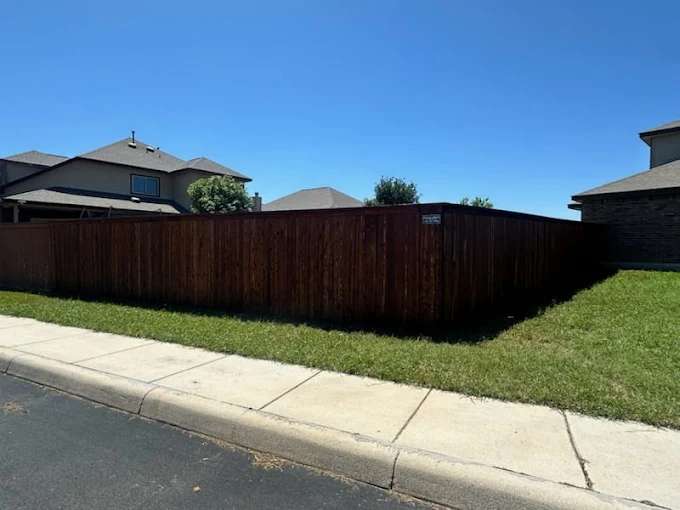
Revitalize Your Fence with Professional Staining
If you’ve lived in Plano for more than a couple of summers, you’ve seen what our Texas sun can do to a wood fence. What started as a rich, warm color turns gray and tired. Boards begin to warp, crack, or lean. According to the U.S. Forest Service, unprotected exterior wood can start to show serious degradation in as little as 2–3 years in high-UV climates—and Collin County gets well over 230 sunny days a year.
For homeowners, property managers, and business owners, that weathering isn’t just cosmetic. A neglected fence can reduce curb appeal, weaken privacy and security, and shorten the life of a major investment. Professional staining is one of the most effective, affordable ways to protect your fence, extend its lifespan, and refresh the look of your property without the cost of full replacement.
In this guide, you’ll learn how staining works, why it matters so much in Plano’s climate, how to time and maintain it, and what to expect from a professional service—whether you’re protecting a backyard cedar fence, a ranch line, or a commercial perimeter.
Key Insight: Professional fence staining doesn’t just make your fence look new—it creates a protective barrier against UV, moisture, and pests that can add 5–10 years to the life of your wood.
Why Staining Matters So Much in Plano’s Climate
Wood is a natural, porous material. In North Texas, it faces three main enemies: UV radiation, rapid temperature swings, and moisture. Together, they break down the lignin that holds wood fibers together, causing fading, checking, and rot.
Plano’s climate is especially tough on fences:
- High UV index much of the year
- Intense summer heat followed by cold snaps
- Occasional hail and heavy thunderstorms
- Sprinkler overspray in dense residential neighborhoods
Left unstained or poorly protected, even high-quality cedar or pine used in Wood Fence Installation can start to:
- Turn gray and blotchy within 12–18 months
- Absorb water, leading to swelling, shrinking, and cracks
- Develop mold, mildew, or algae, especially near landscaping
- Warp or lean, compromising privacy and security
A property manager off Preston Road recently called us about a 6-year-old perimeter fence around a small office complex. The fence had never been stained. Boards were cupping, fasteners were rusting, and the top rail was bowing in multiple sections. After assessing the damage, we found that 30–40% of the fence would need replacement before it could even be stained.
Contrast that with a West Plano homeowner whose cedar privacy fence was stained professionally within the first year and then maintained every 3–4 years. At 10 years old, the fence still stands straight, with minimal board replacement—saving thousands compared to a full Fence Replacement.
“The cost of one full fence replacement can equal the cost of multiple professional staining cycles over a decade.” — Fence Pros of Texas Team
CALLOUT: In Plano’s climate, staining isn’t a luxury add-on; it’s a core part of responsible fence ownership if you want long-term value.
How Professional Staining Protects and Transforms Your Fence
Professional-grade stain does far more than change the color of your fence. It’s a protective system designed to shield the wood from the specific threats we see in North Texas.
What a Quality Stain Should Do
A high-quality, oil-based or hybrid stain used by professionals should:
- Block UV rays to slow graying and fiber breakdown
- Repel water to reduce swelling, shrinking, and rot
- Penetrate deeply to nourish and stabilize the wood
- Resist mildew and fungal growth
- Enhance the natural grain and character of the wood
When applied correctly, staining adds a rich, finished look that can elevate everything around it. A weathered fence can make even a beautifully landscaped yard or a modern patio feel run-down. After staining, many Plano homeowners tell us it feels like they “got a new yard” without changing anything else.
The Professional Difference
DIY stain jobs often fail because of:
- Poor surface prep (dirt, mildew, and old coatings left on)
- Wrong product for the wood type or age
- Uneven application (lap marks, drips, missed spots)
- Insufficient coverage or protection
A professional staining crew will:
- Inspect the fence for repairs before staining
- Clean and prep the surface (washing, stripping if needed)
- Choose the right product and color for your wood and exposure
- Apply with commercial sprayers and back-brushing for even penetration
- Protect landscaping, hardscapes, and nearby structures
We recently worked with a homeowner near Legacy West who had tried a big-box store stain on their own. The result was uneven color and visible roller marks. Our team stripped failing areas, cleaned the fence, and applied a professional semi-transparent stain. The grain popped, the color was even, and the fence finally matched the quality of their outdoor kitchen and pool area.
Choosing the Right Stain Color and Finish for Your Property
Color and finish aren’t just about personal taste—they affect how long your fence looks good and how well it fits your property style, whether it’s a suburban home, a commercial site, or a farm on the outskirts of Plano.
Transparency vs. Protection
Generally, the more pigment in the stain, the more UV protection you get:
| Stain Type | Look & Style | UV Protection | Typical Recoat Cycle (Plano) |
|---|---|---|---|
| Transparent | Very natural, light tint | Low | 1–2 years |
| Semi-Transparent | Visible grain, richer color | Medium-High | 3–4 years |
| Semi-Solid | Minimal grain, strong color | High | 4–5 years |
| Solid (Fence Paint) | Paint-like coverage, no grain visible | Very High | 5+ years (more maintenance to avoid peeling) |
For most homeowners with cedar Privacy Fence Installation, a semi-transparent stain strikes the best balance: you keep the wood’s natural character while adding meaningful UV protection.
Coordinating with Your Property
In Plano, we often see three common approaches:
- Warm cedar tones around traditional brick homes in neighborhoods like Deerfield or Kings Ridge—these complement red and tan brick beautifully.
- Cooler, darker browns or espresso tones for modern homes, especially near Legacy where mixed-material designs and Mixed Material Fences are popular.
- Natural, lighter tones for acreage and Farm Fencing on the outskirts of Plano and Parker, blending with fields and tree lines.
For commercial properties, we often recommend darker, more uniform colors that pair well with Metal Fence Installation or Commercial Gates, creating a cohesive perimeter.
A small medical office near Coit Road, for example, had a weathered wood screen fence next to their parking lot. We helped them select a deep, neutral brown that matched their bronze window frames and Railings. The result felt intentional and professional instead of like an afterthought.
“Color choice should support your architecture and landscaping, not compete with it.” — Design Lead, Fence Pros of Texas
CALLOUT: Ask for real wood samples stained with your top color choices, and view them outdoors at different times of day before making a final decision.
Timing, Maintenance, and When Staining Isn’t Enough
Staining isn’t a one-time event; it’s a maintenance cycle. The good news is that with the right schedule, you can keep your fence looking sharp and structurally sound for many years.
When to Stain a New Fence
For new Wood Fence Installation:
- Most kiln-dried cedar: 3–6 months after install, once surface oils dissipate
- Green or wetter lumber: 6–12 months, depending on moisture levels
Staining too soon can trap moisture; too late, and UV damage has already begun. A quick test: sprinkle water on the fence. If it soaks in rather than beading up, the wood is typically ready for stain.
How Often to Re-Stain in Plano
Recoat cycles vary by exposure, color, and stain type, but typical ranges:
- South- and west-facing fences: every 2–3 years
- North- and east-facing fences: every 3–4 years
- Heavily irrigated or shaded areas: inspect yearly for mildew and moisture damage
We recommend an annual “fence check” each fall:
- Look for graying, dryness, or roughness
- Check for loose boards or fasteners
- Inspect posts for movement or rot at the base
When Staining Isn’t Enough
Sometimes, staining can’t solve underlying structural issues. Warning signs include:
- Posts that move when pushed
- Significant rot at the bottom of boards
- Large sections leaning or bowing
- Extensive broken or missing pickets
In those cases, targeted Fence Repair or even strategic replacement of sections may be necessary before staining. We recently worked on a 15-year-old fence in central Plano. About 25% of the posts had failed due to poor original installation and constant sprinkler exposure. We replaced the posts, braced the line, then stained the entire fence, giving the homeowner many more years of service without a full tear-out.
CALLOUT: Stain can preserve and enhance sound wood, but it can’t resurrect severely rotted or structurally failed sections. Fix first, then protect.
Staining for Different Property Types: Residential, Commercial, and Farm
Not every fence serves the same purpose, and staining strategies should reflect that. A backyard privacy fence, a commercial security perimeter, and a rural pasture fence all face different demands.
Residential Fences
For Plano homeowners, priorities usually include:
- Privacy and security
- Curb appeal and HOA compliance
- Long-term protection of investment
Staining works especially well for:
- Cedar and pine privacy fences
- Decorative Decorative Fence Installation around gardens and pools
- Wood components paired with Residential Gates or Estate Gates
A client in the Russell Creek area had a beautiful pool with a weathered fence that didn’t match the space. After cleaning and staining the fence and wood gate to complement the stone coping, the entire backyard felt more cohesive and resort-like—without any structural changes.
Commercial Properties
For businesses, staining can support:
- Professional image and branding
- Customer and tenant perception
- Protection of assets and screening of service areas
We often stain:
- Wood screening fences around dumpsters or HVAC units
- Property-line fences bordering Commercial Fence Installation in metal
- Wood accents integrated into Access Control entryways
A retail center off Spring Creek Parkway had mismatched, faded wood screens behind several stores. Our team standardized the color across all enclosures, creating a uniform, upscale appearance that tenants appreciated and property management could maintain on a predictable schedule.
Farm and Acreage
On the outskirts of Plano and into Parker and Lucas, Farm Fencing needs to balance aesthetics with function:
- Defining property lines
- Containing livestock or pets
- Withstanding weather with minimal maintenance
Staining can:
- Reduce splitting and checking in long fence runs
- Help identify property boundaries more clearly
- Provide a cohesive look around barns, arenas, and homes
“Even a simple stained rail fence around acreage can dramatically change how finished and cared-for a property looks from the road.” — Fence Pros of Texas Project Manager
Professional Staining vs. DIY: Cost, Quality, and Long-Term Value
Many property owners wonder whether they should tackle staining themselves or hire a professional crew. Both approaches have their place, but the differences in outcome and time investment can be significant.
Side-by-Side Comparison
| Factor | DIY Staining | Professional Staining (Plano Area) |
|---|---|---|
| Upfront Cost | Lower materials, high time cost | Higher upfront cost, low time cost |
| Time Required | 1–3 full weekends for avg. backyard | 1 day (most residential), 2–3 for large jobs |
| Equipment | Brushes/rollers, maybe small sprayer | Commercial sprayers, cleaners, safety gear |
| Surface Prep | Often minimal or inconsistent | Thorough cleaning, repairs, masking |
| Finish Quality | Variable; lap marks, drips common | Even coverage, deep penetration |
| Product Quality | Consumer-grade stains | Contractor-grade, often longer-lasting |
| Longevity | 1–3 years typical | 3–5 years typical (depending on exposure) |
| Warranty | None | Workmanship and product warranties |
In Plano, a typical professionally stained backyard fence often costs less than many people expect—especially compared to the cost of full Fence Replacement years earlier than necessary.
One Plano homeowner in an HOA community tried DIY staining on half of their fence and hired professionals for the rest the following year. Their feedback: the pro side not only looked better and more even, but it also held color and water repellency noticeably longer. They estimated they’d spent nearly as much on equipment, multiple stain purchases, and lost weekends as they did on the professional portion.
CALLOUT: The real “savings” of professional staining often come 5–10 years down the road, when your fence still looks good and stands straight instead of needing full replacement.
What This Means for Businesses in Plano, TX
Plano’s mix of established neighborhoods, growing commercial corridors, and nearby rural properties makes fences a visible and important part of the local landscape. Whether you’re running a business along the Dallas North Tollway, managing a townhome community near Park Boulevard, or caring for a home off Independence Parkway, your fence is a daily, public-facing element of your property.
For businesses and property managers, professional staining can:
- Improve tenant satisfaction and reduce complaints about eyesores
- Support brand image and perceived quality of services or products
- Protect capital investments in perimeter and screening systems
- Coordinate wood elements with existing Commercial Fence Installation and gate systems
For homeowners, especially in HOA-governed neighborhoods, a well-maintained, professionally stained fence can:
- Help you stay in compliance with association standards
- Enhance curb appeal when it’s time to sell
- Provide a more enjoyable, polished backyard environment
- Reduce long-term costs by extending fence life
Plano is a competitive real estate market. Details matter. A faded, leaning fence sends a message about maintenance and care—fair or not. A rich, even, protected fence sends a different one: that you take pride in your property and understand long-term value.
Staining is one of those rare projects that checks every box: it’s practical, aesthetic, and financially smart, especially in a climate as demanding as North Texas.
Frequently Asked Questions
Q: How long should I wait to stain a new fence in Plano?
A: For most new Residential Fence Installation using cedar or pine, 3–6 months is a good starting point. The goal is to let the wood dry and release surface oils so the stain can penetrate properly. In Plano’s climate, sun and wind can dry lumber faster, but sprinklers or heavy shade can slow that down. A simple test is to sprinkle water on the boards—if it soaks in rather than beading up, the fence is usually ready. A professional team can also use moisture meters and visual inspection to determine timing more precisely, which helps avoid premature failure of the stain.
Q: How often will my fence need to be re-stained in North Texas weather?
A: Most fences in Plano benefit from re-staining every 3–4 years, but that can vary. South- and west-facing fences that get intense afternoon sun may need attention closer to 2–3 years, while shaded or protected sections can go longer. The type and color of stain matter too—darker, more pigmented products typically last longer than light, transparent options. Annual visual checks are key: if you see significant fading, dryness, or water quickly soaking into the wood, it’s time to plan another professional staining before structural damage starts, protecting your investment in Fence Maintenance.
Q: Can staining fix a fence that’s already gray and weathered?
A: Staining can dramatically improve the look of a gray fence, but results depend on the condition of the wood. Professional prep—usually including cleaning, brightening, and sometimes light sanding—is essential to remove surface graying and restore some of the original tone. If the wood is structurally sound, a quality stain can bring back warmth and depth, often surprising homeowners who thought replacement was their only option. However, if boards are severely cracked, rotted, or warped, those sections should be repaired or replaced first. A professional evaluation can help you decide whether a combination of Fence Repair and staining will give you the best long-term outcome.
Q: Is professional staining worth it compared to DIY in Plano?
A: For many property owners, yes—especially when you factor in time, equipment, and long-term performance. DIY staining can work for small sections or touch-ups, but full-yard fences are labor-intensive, and it’s easy to end up with uneven color, lap marks, or insufficient protection. Professional crews bring commercial sprayers, high-quality products, and experience with Plano’s climate and common wood species. They also handle prep, masking, and cleanup. Over the life of your fence, a properly applied, longer-lasting stain can reduce how often you need to recoat and may delay the need for Fence Replacement, offsetting the initial cost.
Q: Will staining affect my metal, vinyl, or composite fences or gates?
A: Staining is specifically for wood, but many properties in Plano have mixed materials—wood privacy sections alongside Metal Fence Installation, Residential Gates, or even vinyl or aluminum segments. During professional staining, crews should carefully mask and protect non-wood components to avoid overspray or discoloration. While stain doesn’t “protect” metal or vinyl, coordinating wood stain colors with existing Access Control or decorative metal elements can create a cohesive, high-end look across your entire perimeter.
Q: Can you stain older farm or ranch fencing around Plano?
A: Yes, many older farm or acreage fences can benefit from staining, especially if the wood is still structurally sound. Long runs of rail or post-and-board fencing are subject to sun, wind, and moisture just like residential fences. Staining helps reduce checking and splitting and can visually tie together barns, arenas, and homes. The process usually involves cleaning, targeted repairs, and then application of a stain appropriate for large linear footage. For properties transitioning from rural to more estate-style uses on the edges of Plano, updating existing Farm Fencing with stain is a cost-effective way to elevate curb appeal without full replacement.
Q: Does staining help with privacy or security, or is it just cosmetic?
A: Staining primarily protects and enhances the wood, but it indirectly supports privacy and security. A fence that stays strong, straight, and intact is better at blocking views and deterring entry. Unprotected wood can warp, shrink, and crack, creating gaps that compromise privacy or weaken the structure. By reducing moisture intrusion and UV damage, professional staining extends the life of your Privacy Fence Installation or commercial perimeter, helping it maintain both appearance and function. In busy parts of Plano where homes and businesses are close together, that consistent performance can make a noticeable difference.
Ready to Get Started?
Plano’s weather isn’t kind to wood, and every season you wait, your fence weathers a little more. If your fence is starting to gray, feel dry, or show signs of wear, this is the ideal time to act—before summer heat or the next round of storms accelerates the damage. Professional staining is a fast, minimally disruptive project that can often be completed in a day for typical residential properties, yet it delivers years of visible and structural benefits.
The next steps are simple: schedule an on-site assessment, review color and product options tailored to your fence and exposure, and plan your project around weather and your schedule. Whether you’re refreshing a backyard privacy fence, protecting wood accents around Commercial Gates, or extending the life of acreage fencing, our team can help you get the most value from every board.
Fence Pros of Texas has extensive experience with Plano’s specific climate, soil, and building styles. You’ll get clear recommendations, transparent pricing, and a crew that treats your property with care. Your fence is already working hard—give it the protection it needs to keep doing its job beautifully.
About Fence Pros of Texas
Fence Pros of Texas is a locally focused fencing and staining contractor serving Plano and the surrounding North Texas communities. Our team brings years of hands-on experience in Residential Fence Installation, Commercial Fence Installation, and professional staining services designed for the demands of our climate. We’re committed to honest assessments, quality materials, and workmanship that stands up to Texas weather. To learn more about our services and see how we can help protect and enhance your property, visit our website.