
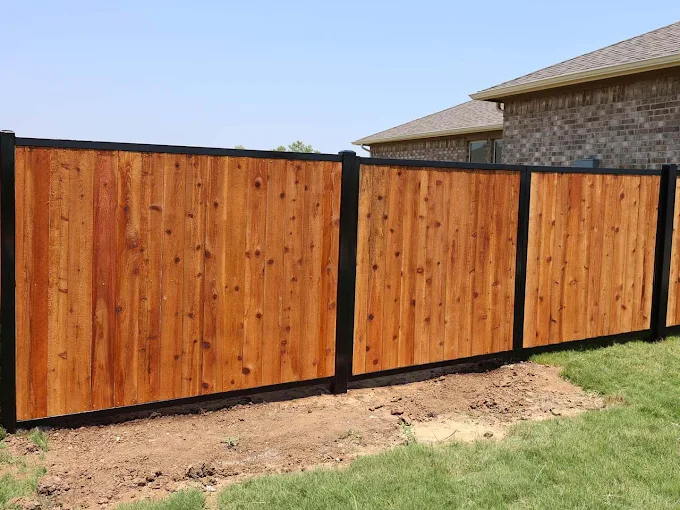
Why Fence Staining is Essential for Longevity
a Plano homeowner finally invests in a beautiful new cedar fence. It looks sharp, boosts curb appeal, and frames the backyard perfectly. Fast forward just a couple of hot Texas summers—and that same fence is gray, warped, and cracking. The problem isn’t the wood or the installation. It’s the lack of protection.
In Collin County, we see over 230 sunny days a year, frequent storms, and big temperature swings. Untreated wood fences in North Texas can start to noticeably deteriorate in as little as 2–3 years. Properly stained and maintained fences, on the other hand, regularly last 15–20 years or more.
This isn’t just about looks. For homeowners, HOAs, and businesses, your fence is an investment in privacy, security, and property value. Staining is what stands between a fence that falls apart early and one that delivers decades of reliable service.
You’ll learn how staining actually protects your fence, what makes Texas conditions so demanding, how to choose the right product and timing, and why professional staining can save you serious money over the life of your fence.
Key Insight: Staining isn’t a cosmetic upgrade—it’s a protective system that dramatically extends the life, performance, and appearance of your fence in harsh North Texas weather.
The Texas Climate vs. Your Fence: Why Staining Matters More Here
The North Texas climate is tough on wood, and Plano is right in the middle of it. We see:
- Intense UV exposure most of the year
- Heavy spring storms and occasional hail
- High humidity periods followed by dry, hot spells
- Rapid temperature swings from one week to the next
All of these conditions break down unprotected wood faster than many people realize.
UV rays break down lignin—the natural “glue” that holds wood fibers together. That’s what causes the gray, weathered look you see on old, untreated fences. Once the surface fibers are weakened, moisture starts to penetrate deeper, leading to swelling, shrinking, cracking, and eventually rot.
“In our region, unsealed fences can lose up to 50% of their structural integrity in the first 7–10 years.” — Regional Building & Material Study, North Texas
Staining creates a barrier that:
- Blocks UV rays that bleach and weaken the wood
- Repels water from rain, irrigation, and humidity
- Reduces cracking, warping, and cupping
- Slows mold, mildew, and fungal growth
We often see this contrast in real neighborhoods. One Plano subdivision off Spring Creek Parkway had two side-by-side homes with nearly identical wood fences installed the same year. One homeowner stained within six months and kept up with basic Fence Maintenance. The other left the fence untreated.
- After 5 years, the stained fence still had rich color and tight boards.
- The unstained fence was gray, warped, and already needed major Fence Repair.
CALLOUT: In Plano’s climate, staining isn’t optional if you expect your wood fence to reach its full life span. It’s the difference between routine care and premature replacement.
How Staining Extends Fence Life and Saves You Money
A well-built wood fence is a significant investment, especially for larger properties, estates, or commercial sites. Staining is one of the simplest ways to protect that investment and avoid early Fence Replacement.
Here’s what staining does for the life cycle of your fence:
- Prevents early rot and decay by keeping moisture out of the wood fibers.
- Reduces structural damage from cracking, splitting, and warping.
- Protects fasteners by reducing wood movement that loosens nails and screws.
- Keeps posts stronger longer by limiting ground-level water penetration.
We handled a project in West Plano for a homeowner with a 250-foot Wood Fence Installation along a greenbelt. The original fence—unstained—lasted just under 10 years before posts started rotting and boards warped beyond repair. Replacement cost was more than double what it would have been 10 years earlier due to material and labor increases.
This time, they chose to stain:
- We used a high-quality oil-based stain with UV inhibitors.
- Applied it within 3 months of the new fence going up.
- Set them on a maintenance schedule for touch-ups every 3–4 years.
The projected life of that same fence now? 18–20 years.
Cost Comparison: Unstained vs. Properly Stained Wood Fence in Plano
| Scenario | Initial Fence Cost | Staining & Maintenance (20 yrs) | Replacement Cycle | Total 20-Year Cost (Est.) |
|---|---|---|---|---|
| Unstained, minimal upkeep | $$ | $ | Replace ~10 yrs | $$$$$ |
| Professionally stained & maintained | $$ | $$ | Replace ~18–20 yrs | $$$$ |
Note: Dollar signs are relative. Actual costs depend on fence length, height, and material.
“Preventive maintenance like staining can cut lifecycle fence costs by 25–40% over 20 years.” — Industry Maintenance Benchmarking Report
When you factor in avoided repairs, fewer emergency fixes, and delayed replacement, staining is one of the highest-ROI decisions you can make for any wood fence.
CALLOUT: If you plan to stay in your Plano home or commercial property more than 5–7 years, professional staining usually pays for itself—and then some.
More Than Color: How Stain Protects Against UV, Moisture, and Wear
Many people think of stain as “paint for wood,” but from a performance standpoint, it’s more like sunscreen, raincoat, and moisturizer all in one.
UV Protection
Quality fence stains include UV-blocking pigments that:
- Slow down the graying process
- Keep the wood’s structural fibers stronger, longer
- Protect both softwoods like pine and denser species like cedar
Darker stains generally offer better UV protection because they contain more pigment. That’s why many Plano HOAs approve medium to dark browns for perimeter fences.
Moisture Control
In North Texas, moisture is a major threat:
- Spring storms saturate the wood
- Summer heat dries it rapidly
- This constant expansion and contraction causes cracks and gaps
Stain penetrates the wood and creates a water-repellent barrier. You’ll literally see water bead up and roll off a properly stained fence.
Everyday Wear and Tear
Stain also helps your fence stand up to:
- Sprinkler overspray and pool splash-out
- Soil contact and mulch along the bottom boards
- Kids, pets, and general backyard use
We worked with a Plano family near Legacy West whose backyard included a pool, kids’ playset, and a dog run. Their fence took a beating: chlorine, constant moisture, and paw traffic. By selecting a high-performance stain and sealing all exposed wood, we cut visible wear dramatically and extended the life of their privacy fence.
CALLOUT: Stain is a working layer of protection, not just a color choice. The right product and application method make a measurable difference in how long your fence lasts.
Choosing the Right Stain for Your Fence and Property
Not all stains are created equal, and not every fence needs the same product. The right choice depends on your wood type, fence style, and how you use your outdoor space.
Types of Stain
- Transparent Stain
Shows the most wood grain; lightest UV protection. Best for newer, high-grade cedar where you want the natural look.
- Semi-Transparent Stain
Our most common recommendation in Plano. Balances visible grain with strong UV protection and longer life.
- Solid Stain
Looks more like paint, but still penetrates. Highest UV protection, great for older fences, or when you want to unify mismatched boards.
Matching Stain to Fence Type
Whether you have a simple privacy fence or a more complex design, the stain should match the fence’s role and surroundings:
- For backyard privacy and pool areas, we often recommend semi-transparent browns that complement stone, brick, and Decorative Fence Installation elements like railings.
- For farms or acreage properties, we match stain to Wood Fences or mixed perimeter fencing to keep a consistent look across long runs.
- For homes with Custom Fence Design and estate-style entries, we coordinate the fence stain with gate and trim colors for a cohesive appearance.
We recently helped a Plano homeowner with a mixed-material backyard: a cedar privacy fence, a small Garden Fence Installation, and metal accents near the patio. By choosing a semi-transparent walnut stain, we tied the wood elements together while letting the grain show. The result was a polished, high-end look that matched the home’s style.
“The best stain is the one that fits your wood, your environment, and your maintenance expectations.” — Senior Fence Specialist, Fence Pros of Texas
CALLOUT: Think of stain selection as part of your overall outdoor design strategy, not an afterthought. Done right, it boosts both performance and curb appeal.
Professional Staining vs. DIY: What Plano Property Owners Should Know
Staining a fence might seem like a straightforward weekend project. For a small, simple fence, it can be. But for most Plano homes—especially with larger yards, corner lots, or commercial properties—the difference between DIY and professional staining shows up in both results and longevity.
Key Differences
| Factor | DIY Staining | Professional Staining |
|---|---|---|
| Surface Prep | Often minimal | Detailed cleaning, repairs, and prep |
| Product Selection | Retail-grade, limited options | Contractor-grade stains with proven durability |
| Application Equipment | Brushes, rollers, small sprayers | Commercial sprayers, back-brushing techniques |
| Coverage & Consistency | Can be uneven, missed spots | Even application, full coverage |
| Time & Labor | 1–2 weekends or more | Usually 1 day for most residential projects |
| Long-Term Performance | 1–3 years typical | 3–5+ years between re-stains (product dependent) |
We were called out to a Plano home near Preston Road where the owner had DIY-stained a 6-foot cedar fence. Within 18 months, the south-facing side had faded badly, and there were visible lap marks and missed areas near the posts. The homeowner was frustrated—they’d invested time, money, and effort, but the protection just didn’t last.
Our crew:
- Power-washed and lightly sanded problem areas
- Used a professional-grade semi-transparent stain
- Applied with commercial sprayers and back-brushed critical zones
The difference was night and day—not just visually, but in how the fence will perform over the next several years.
CALLOUT: For residential neighborhoods, commercial properties, and large Security Fence Installation projects, professional staining isn’t a luxury—it’s a performance upgrade that protects your investment.
Integrating Staining into Your Overall Fence Strategy
Staining is just one part of a smart, long-term approach to fence ownership—especially in a growing, high-value market like Plano.
New Fence Installations
If you’re planning a new Residential Fence Installation or Commercial Fence Installation, think about staining from day one:
- Choose wood species (like cedar) that respond well to stain.
- Plan for staining 4–8 weeks after installation, once the wood has acclimated.
- Coordinate stain color with any Residential Gates, Commercial Gates, or Access Control systems.
For example, we completed a large privacy fence and gate system for a Plano office park. By integrating staining into the project plan, we:
- Protected the fence before the first full summer
- Matched the color to the building’s exterior and parking lot accents
- Created a professional, cohesive perimeter that supports the property’s image
Mixed Materials and Specialty Fences
Plano properties increasingly feature more than just standard wood:
- Metal Fence Installation with wood trim
- Mixed Material Fences combining wood, stone, and steel
- Pool Fence Installation with wood privacy sections and Glass Fences or metal panels
In these cases, stain helps unify the design and protect the wood components that are often the first to show age.
“A fence is part of your property’s security, privacy, and brand. Stain is what keeps that asset performing over the long haul.” — Project Manager, Fence Pros of Texas
What This Means for Businesses in Plano, TX
For businesses, developers, and property managers in Plano, fence staining is a strategic decision, not just an aesthetic one.
Commercial properties rely on fences for:
- Security and access control
- Clear boundaries and traffic flow
- Screening of service areas or equipment
- Professional appearance for clients and tenants
In high-visibility areas—near major corridors like US-75, Preston Road, or the Dallas North Tollway—your fence is part of your brand. Faded, warped, or rotting wood sends the wrong message to customers and tenants, even if the building itself is well maintained.
By including staining in your fence budget and maintenance plan, you:
- Extend the life of perimeter Security Fence Installation and screening structures
- Reduce emergency repairs from storm damage and accelerated decay
- Keep your property in compliance with appearance standards or lease obligations
- Protect the value of your investment in Estate Gates, entries, and branded features
We’ve seen this firsthand with Plano retail centers and office campuses. Those that schedule regular fence staining and inspections have fewer surprise expenses and maintain a more consistent, professional look over time.
For multi-family communities, HOA-managed neighborhoods, and business parks, coordinated staining across the property also:
- Creates visual consistency
- Simplifies budgeting and planning
- Helps avoid disputes about fence condition and responsibility
In a competitive market like Plano—where tenants and buyers have plenty of choices—details like a well-maintained fence can tip the scales in your favor.
Frequently Asked Questions
Q: How often should I stain my fence in Plano’s climate?
A: In North Texas, most wood fences need re-staining every 3–5 years, depending on the product used, sun exposure, and sprinkler patterns. South- and west-facing sections usually fade faster because they get more direct UV exposure. High-quality, oil-based stains with strong UV protection can last longer than budget options from big-box stores. A simple test: splash water on the fence. If it soaks in instead of beading up, or if the color has noticeably faded, it’s time to schedule staining to keep your Wood Fences protected.
Q: Can you stain an older, gray fence, or is it too late?
A: In many cases, yes—you can bring an older fence back to life with proper prep and staining. The process typically includes cleaning, power washing, and sometimes light sanding to remove dead wood fibers and surface contaminants. Once the surface is prepped, we apply a penetrating stain that restores color and adds protection. If boards are severely rotted or warped, we may recommend targeted Fence Repair first. We’ve revived plenty of 8–10-year-old fences in Plano that looked “too far gone” at first glance.
Q: Is stain really better than paint for fences?
A: For most wood fences, especially in Plano’s climate, stain is the better choice. Paint forms a film on the surface, which can peel, crack, and trap moisture inside the wood over time. Stain penetrates into the wood, providing protection from within while allowing the wood to breathe and move naturally. This is especially important for Privacy Fence Installation where large, solid sections of wood expand and contract with temperature and humidity changes. Solid stains can give you a “paint-like” look while still offering the benefits of a penetrating product.
Q: Should I stain my fence before or after installing gates and access control systems?
A: Ideally, you plan staining as part of your overall project. For properties with Access Control systems or custom Residential Gates, we often install the fence and gate structure first, allow the wood to acclimate for several weeks, and then stain everything together. This ensures consistent color and coverage, including around hinges, posts, and hardware. For existing Commercial Gates, we protect sensitive equipment during the staining process to avoid overspray or damage.
Q: Does staining help with insects and termites?
A: While stain is not a substitute for dedicated termite treatment, it does add a layer of deterrence by reducing moisture in the wood—one of the main conditions termites and wood-destroying insects look for. By keeping your fence drier and better sealed, you make it less attractive to pests. In combination with good ground clearance, proper installation, and regular Fence Maintenance, staining contributes to a healthier, longer-lasting fence structure.
Q: What about non-wood fences—do they need any kind of protective coating?
A: While traditional stain is specifically for wood, other fence types benefit from maintenance too. Aluminum Fences, Vinyl Fences, and Wrought Iron Fences don’t need stain, but they do need periodic cleaning and, in the case of iron, rust prevention and touch-up painting. For properties with both wood and metal—such as Mixed Material Fences—we often coordinate wood staining with metal maintenance to keep everything looking and performing its best.
Q: My fence backs up to a greenbelt. Does that change how I should approach staining?
A: Yes, fences along greenbelts, creeks, and common areas typically face more moisture, soil contact, and vegetation. That makes proper staining even more critical. We usually recommend higher-performance stains, extra attention to the bottom boards and posts, and a slightly more frequent re-stain schedule. For long runs along trails or open spaces, professional application also ensures consistent coverage you might struggle to achieve with DIY methods on large Residential Fence Installation projects.
Ready to Get Started?
Plano’s weather won’t wait, and neither should your fence. Every season your wood fence sits unstained, UV rays and moisture are quietly shortening its life. Whether your fence is brand new, a few years old, or starting to show its age, the right staining plan can add years of service and save you from costly early replacement.
Now is an ideal time to schedule:
- A professional evaluation of your fence’s condition
- Recommendations on stain type and color for your property
- A staining or re-staining service tailored to your needs
At Fence Pros of Texas, we work with homeowners, HOAs, and businesses across Plano and the surrounding area to protect fences of all sizes—from backyard privacy fences to large commercial perimeters and farm properties. Our team understands local conditions, HOA requirements, and industry best practices, so your fence gets the protection it deserves.
Take the next step to safeguard your investment and keep your property looking its best.
About Fence Pros of Texas
Fence Pros of Texas is a locally focused fencing contractor serving Plano and the greater North Texas area. Our team brings years of experience in Residential Fence Installation, Commercial Fence Installation, farm and ranch solutions, gates, access control, and professional staining services. We combine quality materials, proven techniques, and a commitment to customer service to deliver fences and finishes that stand up to Texas weather and time. To learn more about our services and see how we can help with your next project, visit our website.