
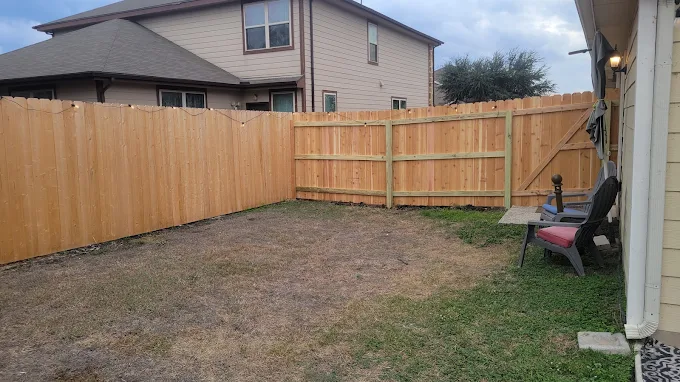
The Ultimate Guide to Fence Staining Techniques
If you’ve driven through a Plano neighborhood after one of our heavy summer storms, you’ve probably noticed it: one fence looks rich and vibrant, while the one next door is gray, warped, and peeling. In North Texas, sun and weather can age an unstained wood fence in as little as 2–3 years. Proper staining can easily double or even triple that lifespan.
According to industry data, UV exposure is responsible for over 80% of visible fading and surface cracking in exterior wood. Combine that with Plano’s intense heat and occasional hail, and your fence is under constant attack. Whether you’re protecting a backyard privacy fence, a commercial perimeter, or farm and ranch fencing, staining isn’t just cosmetic—it’s a critical part of long-term fence maintenance.
This guide walks you through the most effective fence staining techniques used by professionals, how to choose the right products, and what works best for North Texas conditions. You’ll see real examples from projects like yours, learn how to avoid costly mistakes, and understand when it makes sense to bring in a professional staining crew.
Key Insight: The right stain, applied with the right technique at the right time, can dramatically extend the life and appearance of your fence—especially in a demanding climate like Plano, TX.
Understanding Fence Stain Types (And Why They Matter in North Texas)
Before you think about brushes or sprayers, you need to understand the stain itself. The type of stain you choose affects color, durability, maintenance cycles, and how well your fence stands up to Plano’s UV and moisture swings.
The main types of fence stain
- Transparent stains
- Lightest tint, shows the most wood grain
- Great for high-quality cedar Wood Fence Installation
- Needs more frequent reapplication (every 2–3 years here)
- Semi-transparent stains
- Most popular choice in residential neighborhoods
- Balance of color, grain visibility, and protection
- Typically lasts 3–5 years in North Texas
- Semi-solid and solid stains
- Heavier pigment, more like paint but still penetrates
- Excellent UV protection and color uniformity
- Ideal for older, weathered fences or mismatched boards
In Plano, we see a lot of new cedar fences going up in master-planned communities and around pools. Many homeowners choose semi-transparent stains in warm browns to complement their homes and HOA guidelines. For older fences that have already grayed, a semi-solid stain can give them a “reset” without a full fence replacement.
“Think of stain as sunscreen plus moisturizer for your fence—blocking UV while nourishing the wood fibers.” — Senior Staining Technician, Fence Pros of Texas
Real-world example from Plano
A homeowner near Legacy West had a five-year-old cedar privacy fence that was gray, dry, and starting to crack. Replacing it would have cost tens of thousands. Instead, we power-washed, did minor Fence Repair, and applied a semi-solid oil-based stain. The fence not only looked nearly new, but the stain will extend its life another 5–7 years with proper care.
CALLOUT: In our climate, oil-based penetrating stains generally outperform water-based products on fences, especially for UV resistance and water repellency.
Prep Work: The Step That Makes or Breaks Your Stain Job
Most DIY staining failures in Plano aren’t caused by bad stain—they’re caused by poor preparation. Dust, mildew, old coatings, and high moisture content in the wood all prevent proper penetration and bonding.
Essential prep steps
- Inspection and repairs
- Replace rotten pickets and warped rails
- Tighten or replace loose fasteners
- Address any grade or drainage issues that cause standing water
- Cleaning
- Use a wood-safe cleaner or brightener, not just water
- Remove mildew, dirt, and gray “oxidized” wood fibers
- Rinse thoroughly and allow proper drying time
- Moisture testing
- Wood should generally be below 15–18% moisture before staining
- In Plano’s humidity, that often means waiting 24–72 hours after washing
Local case study
A commercial property off Preston Road had a long perimeter fence that was power-washed by a general contractor and stained the next day. The wood was still too wet. Within six months, the stain started peeling and blotching. When Fence Pros of Texas was called in, we tested moisture, stripped the failed coating, and re-stained once the wood was ready. The owner learned the hard way that rushing the prep cost more than doing it right the first time.
“Most premature stain failures can be traced back to one thing: putting stain on wood that wasn’t properly cleaned or dry.” — Project Manager, Fence Pros of Texas
CALLOUT: If your fence is new, don’t stain it immediately. Kiln-dried lumber can often be stained after 4–6 weeks; green lumber may need 3–6 months in our climate.
Application Techniques: Brush, Roll, or Spray?
Once your fence is clean and dry, how you apply the stain is just as important as the product you choose. Each method has pros and cons, and often the best results come from combining them.
Common application methods
| Method | Pros | Cons | Best Use Cases |
|---|---|---|---|
| Brush | Maximum control, deep penetration | Labor intensive, slower | Detail work, edges, smaller fences |
| Roller | Faster coverage on flat surfaces | Can leave lap marks, less penetration | Smooth boards, touch-ups |
| Airless Sprayer | Fastest, even coverage on large areas | Overspray risk, skill required | Long runs, tall fences, commercial properties |
| Pump Sprayer | Simple, budget-friendly | Less consistent, more manual back-brushing | Small sections, DIY projects |
For many Plano homeowners, the ideal approach is spray-and-back-brush:
- Use an airless sprayer to apply an even coat quickly
- Immediately follow with a brush to work the stain into the grain and catch runs
- This combo delivers professional results with efficient labor
Example: Residential backyard in West Plano
On a 220-linear-foot cedar privacy fence, our crew used a commercial-grade airless sprayer to apply semi-transparent stain, then back-brushed every picket and rail. The project took a day, and the finish was smooth, consistent, and deeply penetrated. Had the homeowner tried to brush only, it might have taken them several weekends and produced more lap marks.
“A sprayer is a great tool, but it’s not a shortcut. The professional finish comes from the prep, the technique, and the back-brushing.” — Lead Stain Crew Foreman
CALLOUT: For properties with mixed materials—such as Mixed Material Fences that combine wood with stone or metal—masking and careful application are essential to avoid staining surfaces that should remain clean.
Matching Techniques to Different Fence Types and Uses
Not every fence on your property has the same job—or the same material. A backyard privacy fence needs different treatment than a ranch fence or a security perimeter. The staining technique should reflect the fence’s purpose and construction.
Privacy and decorative fences
For residential privacy fences and decorative designs around pools or gardens, appearance is often the top priority. These may include:
- Decorative Fence Installation with custom patterns
- Backyard privacy fences between homes
- Pool enclosures paired with Pool Fence Installation and gates
Best practices:
- Choose semi-transparent or semi-solid stains for rich color and UV protection
- Focus on consistent color and grain enhancement
- Use brush or spray-and-back-brush to avoid lap marks
Farm, ranch, and perimeter fences
On farms and larger properties near the outskirts of Plano and Collin County, the priority is durability and cost-efficiency:
- Long runs of farm fencing or cross-fencing
- Paddock and pasture boundaries
- Wood components integrated with Metal Fence Installation
Best practices:
- Use sprayers for coverage efficiency
- Consider more economical stain options for sheer volume
- Focus on penetration and water repellency over aesthetics
“For large agricultural projects, the right technique is the one that protects miles of fence reliably without breaking the budget.” — Agricultural Fencing Specialist
Integrating with other fence materials
In many Plano neighborhoods and commercial sites, wood fencing is combined with:
- Aluminum Fences around storefronts or offices
- Chain Link Fences with wood privacy slats
- Wrought Iron Fences or railings at entries
- Decorative Railings and Estate Gates
In these mixed-material situations, staining technique must be precise, with careful masking and often hand-brushing near metal components to avoid unwanted staining or corrosion concerns.
CALLOUT: A one-size-fits-all staining approach doesn’t work across residential, commercial, and farm fencing. Matching the method to the fence type is where professionals add real value.
Timing, Weather, and Maintenance Cycles in Plano’s Climate
Even perfect technique can fail if the weather doesn’t cooperate. Our local climate in Plano brings intense sun, high summer temperatures, and occasional heavy rains and cold snaps. All of this affects when and how you stain.
Best conditions for staining
- Temperature: Typically between 50°F and 90°F
- Avoid direct, harsh midday sun to reduce flash-drying and lap marks
- No rain in the forecast for at least 24–48 hours
- Low to moderate humidity for proper curing
In North Texas, early spring and fall are often the sweet spots for fence staining. Summer projects are still very doable but require earlier start times and careful monitoring of sun exposure.
“On a 100-degree day in Plano, stain can start drying almost as soon as it hits the board. That’s when experience really matters.” — Operations Manager, Fence Pros of Texas
Maintenance intervals by stain type
| Stain Type | Typical Recoat Interval (Plano, TX) | Notes |
|---|---|---|
| Transparent | 2–3 years | Beautiful, but needs more frequent upkeep |
| Semi-Transparent | 3–5 years | Most common choice for residential fences |
| Semi-Solid / Solid | 4–6 years | Strong UV protection; slightly more “painted” look |
Local example: Commercial perimeter in Plano
A commercial customer near the Dallas North Tollway had a long wood privacy fence installed around a service yard. To protect their investment, we established a maintenance plan: initial semi-solid stain application, then inspections every two years with light cleaning and touch-ups as needed. This proactive approach avoids sudden, large-scale Fence Replacement costs and keeps the property looking professional.
CALLOUT: Treat your stain as part of a scheduled maintenance cycle, not a one-time project. That mindset alone can save thousands over the life of your fence.
DIY vs. Professional Staining: What’s Right for Your Property?
Many Plano homeowners and business owners wonder whether to tackle fence staining themselves or hire professionals. The answer depends on your time, tools, budget, and tolerance for detail work.
Traditional DIY approach vs. modern professional service
| Aspect | Traditional DIY Approach | Professional Staining Service |
|---|---|---|
| Tools | Basic brushes/rollers, rental sprayer | Commercial sprayers, moisture meters, pro-grade tools |
| Prep Quality | Varies, often minimal | Systematic cleaning, repairs, and moisture checks |
| Time Investment | Weekends or multiple days | Typically 1–2 days for most residential projects |
| Finish Consistency | Can be uneven, lap marks common | Uniform, controlled application |
| Long-Term Performance | Depends on prep and product choice | Backed by experience and product knowledge |
| Safety & Cleanup | Homeowner-managed, limited PPE | Proper safety gear, overspray control, thorough cleanup |
For a small, low-visibility section of fencing, a DIY job might be perfectly reasonable. But for:
- Large residential privacy fences
- Commercial or retail properties
- High-end homes with Estate Gates and decorative entries
- Properties with integrated Security Fence Installation and access control
…the margin for error is smaller. A blotchy or peeling fence can hurt curb appeal, tenant satisfaction, or brand image.
“People often call us after a DIY attempt goes sideways—usually because of poor prep or wrong product selection for our climate.” — Owner, Fence Pros of Texas
CALLOUT: Fence Pros of Texas offers dedicated Fence Maintenance and staining services, so you can protect your investment without the trial and error.
What This Means for Businesses in Plano, TX
For businesses in Plano—whether you operate a retail center off 75, a corporate office near Legacy, or a light industrial site—your fence plays a bigger role than you might realize. It’s part of your first impression, your security strategy, and your long-term asset management.
A well-stained fence offers:
- Stronger brand image
A faded, peeling fence around a modern building with pristine Commercial Fence Installation sends mixed signals. Consistent, rich color and clean lines show attention to detail.
- Better protection for your investment
Commercial fencing—especially tall privacy or security fencing—represents a significant capital expense. Regular staining and maintenance can extend its service life by years, delaying major replacement costs.
- Improved security and functionality
Cracked, warped boards or weakened posts can compromise security. A structured staining and inspection program helps identify and correct problems early. This is particularly important when your wood fence is integrated with Access Control systems, commercial gates, or perimeter lighting.
- Compliance and consistency
Many business parks and HOAs in Plano have appearance standards for fencing. Professional staining helps ensure your property meets those expectations and maintains a cohesive look with neighboring developments.
In a competitive market like Plano, where companies are vying for both customers and talent, the exterior of your property is part of your story. A thoughtfully stained and well-maintained fence may not close a deal on its own—but a neglected one can quietly undermine the professional image you’ve worked hard to build.
Frequently Asked Questions
Q: How soon should I stain a new wood fence in Plano?
A: Timing depends on the type of wood and how it was treated. Many new Wood Fences in Plano are built with cedar or treated pine. Cedar often needs 4–8 weeks to weather and dry; green-treated pine can require 3–6 months. You want the wood dry enough to absorb stain but not so aged that it starts to gray. A moisture meter reading below about 15–18% is ideal. Staining too early can trap moisture and lead to peeling, while waiting too long can mean extra cleaning and prep. A professional can evaluate your specific fence and recommend the right timing.
Q: What’s the best type of stain for Plano’s sun and weather?
A: For most residential privacy and decorative fences, a high-quality, oil-based semi-transparent or semi-solid stain performs best in our climate. It penetrates deeply, resists UV damage, and repels water—key factors under North Texas sun and storms. Transparent stains look beautiful on premium cedar but require more frequent maintenance. Solid stains offer the longest UV protection but give a more painted look. For commercial properties or fences integrated with Security Fence Installation, semi-solid products are often a smart choice for durability and uniformity.
Q: Can you stain fences that include metal or other materials?
A: Yes, but they require more care. Many Plano properties feature combinations like wood with Aluminum Fences, Wrought Iron Fences, or corrugated metal panels. In these mixed designs, careful masking and controlled application are crucial to avoid staining metal surfaces or affecting coatings. Our crews often hand-brush near metal posts, Residential Fence Installation gates, and decorative Railings to keep lines sharp and components protected. The right technique lets you enjoy the warmth of wood without compromising the performance of your metal elements.
Q: How often will I need to re-stain my fence?
A: In Plano’s climate, most fences need attention every 2–5 years, depending on stain type, sun exposure, and wood species. Transparent stains may need recoating every 2–3 years, while semi-transparent products often last 3–5 years. Semi-solid and solid stains can stretch to 4–6 years with proper prep. South and west-facing sections usually fade faster. Regular inspections—especially after harsh summers or storms—help you catch fading or water absorption early so you can schedule maintenance before damage sets in. This is true for both residential and Commercial Fence Installation.
Q: Is it worth staining older, gray fences, or should I just replace them?
A: Many gray, weathered fences in Plano can be revived rather than replaced. If the structure is sound—posts solid, rails intact, pickets not extensively rotten—professional cleaning, repairs, and a quality semi-solid stain can dramatically improve appearance and extend life. We’ve seen 8–10-year-old fences look nearly new after restoration. Replacement becomes a better option when posts are failing, boards are rotten or heavily warped, or prior coatings are severely peeling and beyond practical stripping. A fence specialist can evaluate whether Fence Repair and staining or full replacement makes more financial sense.
Q: Can I stain a fence myself if I don’t own a sprayer?
A: You can, especially on smaller projects, but expect it to be labor-intensive. Brushing alone gives great penetration and control but is slow. Rolling can speed things up on flat surfaces but still requires back-brushing for best results. Rental sprayers are an option, though they come with a learning curve and overspray risk—especially near Commercial Fence Installation, vehicles, and neighboring properties. Many Plano homeowners find that for large privacy fences, hiring a professional crew is more efficient and delivers a more consistent finish, especially when factoring in their own time and equipment costs.
Q: Do commercial and industrial fences need staining too?
A: If the fence includes wood components—yes, if you want it to last. While many commercial perimeters use materials like Chain Link Fences or Vinyl Fences, wood privacy screens, dumpster enclosures, and decorative elements are common. These areas benefit from the same protection as residential fences. Regular staining helps maintain a professional image, protects wood from premature rot, and supports the overall performance of your Access Control and security systems. Many Plano businesses schedule staining and Fence Maintenance as part of their annual facility upkeep.
Ready to Get Started?
Plano’s climate is tough on fences, and every season you wait, the sun and weather chip away at your investment. The good news is that with the right stain, proper prep, and a proven application technique, you can dramatically improve both the look and lifespan of your fence—whether it’s surrounding your home, your business, or your acreage.
Now is an ideal time to schedule a professional assessment and staining plan, especially before the next wave of summer heat or fall storms. Fence Pros of Texas can evaluate your existing fence, recommend the best stain type for your specific wood and exposure, and handle everything from cleaning and repairs to final application. If you’re planning new Residential Fence Installation or Commercial Fence Installation, integrating a staining strategy from day one will help protect that investment from the start.
You don’t have to guess your way through products, timing, or techniques. Partner with a local team that understands Plano’s weather, HOA expectations, and business needs—and can deliver a finish that looks great and lasts.
About Fence Pros of Texas
Fence Pros of Texas is a locally focused fence and staining specialist serving Plano and the surrounding North Texas communities. Our team has years of experience designing, installing, and maintaining fences for homes, businesses, and farms—from Residential Fence Installation and Farm Fencing to Commercial Gates and access control systems. We follow industry best practices, use proven products tailored to our climate, and stand behind our work.