
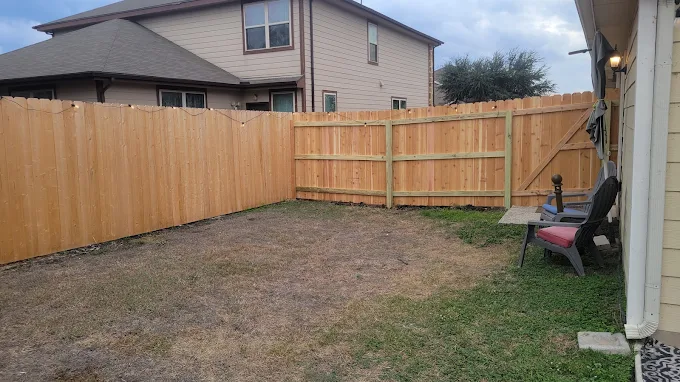
Staining Your Fence: DIY vs. Professional
North Texas sun is no joke. In Plano, a brand-new cedar fence can start to gray and dry out in as little as 6–12 months if it’s left unstained and unsealed. Between intense UV exposure, sudden rainstorms, and clay soil that shifts with every season, your fence is constantly under stress. A good stain and seal can easily double—or even triple—the life of your wood fence, but the question many homeowners and property managers face is simple: should you do it yourself or hire a professional?
According to industry data, a properly stained and maintained fence can retain up to 80% of its original strength after 15 years, while untreated wood can lose that same strength in less than half the time. At the same time, DIY projects have surged, with more Texans choosing to tackle home improvements on weekends.
This guide walks you through the pros and cons of DIY vs. professional fence staining, what it really costs in Plano, and how to decide which route is best for your property—whether you’re protecting a backyard privacy fence, a commercial perimeter, or a stretch of farm fencing.
Key Insight: The “cheaper” option isn’t always the most cost-effective. The right choice depends on your fence type, your time, and how long you want your investment to last.
How Staining Protects Your Fence in North Texas Climate
Staining a fence in Plano isn’t just about color—it’s about protection. Our climate swings from blazing hot summers to cold, wet snaps, and that constant expansion and contraction is rough on wood.
What stain actually does
A quality stain and seal system:
- Blocks UV rays that cause graying, cracking, and warping
- Repels water to reduce rot, mold, and mildew
- Protects fasteners and hardware from rust
- Helps prevent splitting at the tops and ends of pickets
On Wood Fences especially, stain soaks into the fibers and acts like sunscreen plus moisturizer for the wood. On a new Privacy Fence Installation, that means the boards stay straighter, smoother, and stronger for years.
“UV damage is the number one killer of wood fences in Texas—moisture is a close second.” — Regional Fence Maintenance Study
Local example: two Plano neighbors, two very different results
We recently looked at two nearly identical cedar fences in a Plano subdivision:
- House A stained the fence professionally within 3 months of installation.
- House B left the fence raw, planning to “get to it eventually.”
After five years:
- House A: Fence still rich in color, minimal warping, only minor touch-ups needed.
- House B: Boards cupped and cracked, heavy graying, multiple pickets already replaced.
The difference? A one-time investment in stain and proper application.
As you weigh DIY vs. professional, keep in mind that the value of staining is long-term: fewer repairs, fewer replacements, and a better-looking property.
DIY Fence Staining: What It Really Takes
Doing your own fence staining can absolutely be a good option—if you know what you’re getting into. Many Plano homeowners see a weekend project; what they actually get is closer to a multi-day commitment.
Time, tools, and materials
For a typical 6-foot backyard fence on a Plano lot (150–200 linear feet), DIY staining usually requires:
- 1–2 days of prep (cleaning, drying time, masking)
- 1 full day of staining (or more, if working alone)
- Equipment: sprayer or rollers/brushes, drop cloths, tape, cleaners, safety gear
If you don’t already own a sprayer, you’ll either rent one or apply by hand. A sprayer can speed things up but requires practice to avoid runs and overspray onto your home, landscaping, or neighbor’s yard.
“Most DIY fence projects underestimate prep time more than anything else.” — Field Supervisor, Fence Pros of Texas
Common DIY challenges in Plano
- Uneven color: Hot, dry winds can flash-dry stain, leading to lap marks and patchiness.
- Overspray issues: In tight Plano neighborhoods, wind can carry stain onto brick, cars, or windows.
- Poor penetration: If the wood isn’t dry enough or properly cleaned, stain can sit on the surface and peel sooner.
- Safety oversights: Inhaling overspray or working without eye protection is more common than you’d think.
We’ve seen DIY projects where a client used a low-quality, big-box stain. The fence looked great for a year, then faded badly by year two. When they called Fence Pros of Texas, we had to strip and recoat the entire fence—a job that cost more than if they’d hired a pro from the start.
CALLOUT: DIY can work if you have time, patience, and are okay with a learning curve. It’s less ideal if your fence is large, highly visible, or part of a commercial or rental property where consistency and durability matter.
Professional Staining: What You Get Beyond “Someone Else Doing It”
Hiring a professional staining contractor in Plano isn’t just about convenience. It’s about expertise, equipment, and warranty.
What a pro brings to the table
Professional staining services, like those offered through Fence Pros of Texas’ Fence Maintenance and staining teams, usually include:
- Proper prep: Power washing or soft washing as needed, mildew treatment, and drying checks.
- Right product selection: Oil-based vs. water-based, semi-transparent vs. solid, based on your fence type and goals.
- Efficient application: Commercial sprayers with back-brushing to ensure penetration and even coverage.
- Protection: Masking and shielding for siding, concrete, plants, and neighboring properties.
- Warranty: Many pro jobs include workmanship and product warranties.
On large properties—think business parks with Commercial Fence Installation or HOA perimeter fences—professional staining is almost always the only practical option. The scale, liability, and visibility make DIY unrealistic.
Plano case study: commercial vs. DIY attempt
A small business off Preston Road tried to stain their own perimeter fence around a parking lot. After three weekends:
- Only half the fence was done
- Color was inconsistent
- Overspray hit a few parked vehicles
They brought in a professional crew. In two days, the entire fence was cleaned, masked, stained, and sealed with a uniform finish. The owner later told us, “I wish I’d called you first. We lost more in employee labor than your quote.”
Professional staining can also be combined with other services: for example, staining wood Residential Fence Installation while also adjusting Residential Gates or touching up nearby Railings for a cohesive look.
Cost Comparison in Plano: DIY vs. Professional Staining
The decision often comes down to dollars. What does DIY really cost compared to hiring a pro in Plano?
Typical cost ranges
For a standard 6-foot cedar fence, 150–200 linear feet:
| Approach | Estimated Cost (Plano) | What’s Included | Pros | Cons |
|---|---|---|---|---|
| DIY – Basic | $250–$400 | Mid-grade stain, rollers/brushes, cleaners | Lowest cash outlay | High time cost, risk of mistakes |
| DIY – With Sprayer Rental | $350–$550 | Stain, sprayer rental, supplies, cleaners | Faster than hand application | Learning curve, overspray risk |
| Professional Staining | ~$800–$1,600 (varies by fence & product) | Prep, pro-grade stain, application, cleanup, warranty | Best finish, longest lifespan, no labor | Higher upfront cost |
These are ballpark ranges; actual quotes depend on fence height, condition, accessibility, and stain type.
“Most homeowners only compare material cost, not the value of their own time or the risk of redoing the job.”
The long-term math
A high-quality, professional stain job in Plano can last 3–5 years before needing a maintenance coat, sometimes longer with premium products. Lower-end DIY stains may need reapplication every 1–2 years.
Over 10 years, that can look like:
| Scenario | Applications in 10 Years | Total Est. Cost (200 ft fence) | Notes |
|---|---|---|---|
| DIY, low-cost stain every 2 years | 5 | $1,250–$2,000 + your labor | More frequent work, more wear on the wood |
| Professional every 4 years | 3 | $2,400–$4,800 | Better protection, less repair/replacement |
If your fence protects a pool, valuable equipment, or a commercial lot, the extra protection from professional-grade products and application often pays off in reduced Fence Repair and Fence Replacement down the line.
Matching Your Fence Type to the Right Staining Strategy
Not every fence on your property needs the same level of attention—or the same approach to staining.
Wood fences and privacy fences
These are the most common candidates for stain:
- 6-foot Wood Fence Installation in Plano neighborhoods
- Board-on-board or horizontal Privacy Fence Installation
- Decorative wood accents paired with Mixed Material Fences
For these, professional staining is often worth it, especially if the fence is part of your home’s curb appeal or wraps a pool or outdoor living area.
Farm, ranch, and acreage fencing
On larger properties around Collin County and the outskirts of Plano, long runs of Farm Fencing may be:
- Split rail
- Post and rail
- Crossbuck or ranch style
Here, cost per linear foot matters more, and DIY can make sense—especially if you have equipment and can work in sections. Many owners choose a hybrid approach: hire pros for the highly visible sections near the home and entrances, and DIY the back acreage.
“High-visibility sections—frontage, entryways, and pool areas—are where professional staining has the biggest visual and resale impact.”
Mixed-material and specialty fences
For properties with Metal Fence Installation such as Wrought Iron Fences, Aluminum Fences, or Corrugated Metal Fences, staining usually applies to:
- Wood infill panels between metal posts
- Wood toppers or trim above Chain Link Fences
- Wood bases under Glass Fences or decorative panels
These mixed-material systems often benefit from professional handling because you’re working around metal, glass, and sometimes integrated Access Control systems or gate operators.
DIY vs. Professional: Which Is Right for You?
There’s no single “best” choice for everyone in Plano. The right decision depends on your priorities.
DIY might be right if:
- You have a smaller, straightforward fence
- You enjoy hands-on projects and have the time
- You’re comfortable renting and learning to use a sprayer
- The fence isn’t highly visible or critical to property value
For example, a homeowner in East Plano with a short side-yard fence chose DIY. They had previous painting experience and tackled it over two weekends. The result? Not perfect, but good enough for a side yard with minimal visibility.
Professional staining is usually best if:
- Your fence is new and a major visual feature
- You have a large property or multiple fence lines
- The fence is part of a Commercial Fence Installation or rental property
- You can’t afford mistakes (pool fences, HOA rules, close neighbors)
- You want warranty-backed work and consistent color
We recently worked with a Plano family who had just installed a new horizontal cedar fence as part of a backyard renovation with a pool. They initially considered DIY but realized one mistake could permanently affect the look of their high-end outdoor space. Professional staining preserved the designer look and protected a significant investment.
CALLOUT: A simple rule of thumb—if you’d be upset seeing uneven color or drips every time you look at the fence, hire a pro. If minor imperfections don’t bother you, DIY may be fine.
Integrating Staining with Your Overall Fence Strategy
Staining isn’t a one-off decision—it fits into the bigger picture of how you protect and present your property.
For residential properties in Plano
Many homeowners pair fence staining with:
- New Residential Fence Installation
- Upgrading Residential Gates or adding Estate Gates
- Installing decorative Railings on porches or balconies
Coordinating these projects can save time and money. For example, staining a fence and gate system at the same time ensures color match and reduces repeat setup costs.
For commercial properties and HOAs
Businesses and HOAs often:
- Use a mix of Chain Link Fence Installation with privacy slats and stained wood sections
- Install Commercial Gates with integrated Access Control
- Protect parking lots, equipment yards, and tenant areas with a combination of Security Fence Installation and stained wood accents
Here, professional staining is almost always the standard because:
- Appearance affects tenant satisfaction and brand image
- Liability and access control integration require trained crews
- Large-scale work needs to be done quickly and safely
Long-term maintenance planning
Whether you go DIY or professional for your first stain, plan ahead:
- Keep records of stain brand, color, and date applied
- Schedule inspections every 1–2 years for fading, peeling, or water absorption
- Budget for maintenance coats—less frequent with pro-grade products
What This Means for Businesses in Plano, TX
For Plano businesses, property managers, and HOAs, fence staining is less about weekend projects and more about asset management.
A faded, peeling fence around a retail center or office park sends a message—often the wrong one. In a competitive local market where companies fight for tenants and customers along corridors like Legacy, Preston, and 75, appearance matters.
Stained and well-maintained fencing:
- Supports your brand image and tenant satisfaction
- Extends the life of your investment in Commercial Fence Installation
- Helps protect valuable equipment and inventory behind Security Fence Installation
- Keeps your Decorative Fence Installation and entry features looking intentional and high-end
Many Plano-area businesses opt for service plans that combine periodic Fence Maintenance, gate checks on Commercial Gates, and scheduled staining. This approach flattens costs over time and avoids sudden, large repair or replacement bills.
If you manage multi-family properties, medical offices, or retail centers, professional staining is almost always the most efficient choice. Coordinated crews can work around operating hours, handle liability and safety compliance, and deliver uniform results across large fence lines—something DIY or in-house teams rarely have time or expertise to match.
Frequently Asked Questions
Q: How soon after installing a new wood fence in Plano should I stain it?
A: For most new Wood Fence Installation in Plano, 4–8 weeks is a good window. You want the wood to dry out from any pressure treatment or construction moisture, but not sit unprotected through a full summer. A simple test: sprinkle water on the boards. If it beads up heavily, wait a bit longer; if it soaks in within a few minutes, it’s ready. Cedar often dries faster than pine. A professional staining service will check moisture levels to make sure the stain can penetrate properly and won’t just sit on the surface and peel.
Q: Is DIY staining ever a bad idea for Plano homeowners?
A: DIY staining can go wrong when fences are large, highly visible, or tied to other systems like Access Control or automatic gates. It’s also risky if your fence backs directly onto a neighbor’s yard, pool, or vehicles—overspray disputes can get expensive. If you have a tall privacy fence around a pool, high-end outdoor living space, or a front-facing fence that affects curb appeal and resale value, professional staining is usually the safer choice. In those cases, uneven color, drips, or early failure can cost more to fix than a pro job would have cost upfront.
Q: How often should I re-stain my fence in North Texas?
A: In Plano’s climate, most fences need re-staining every 3–5 years with professional-grade products, and sometimes every 2–3 years with lower-end DIY stains. Sun exposure matters—a south- or west-facing fence may age faster than a shaded one. Look for signs like fading color, water soaking into the boards instead of beading, or hairline cracking. Many owners pair re-staining with a quick inspection for loose pickets, damaged posts, or needed Fence Repair, which can help avoid bigger issues and premature Fence Replacement.
Q: Can I stain a fence that’s already gray and weathered?
A: Yes, but it takes more prep. Older Wood Fences in Plano often need cleaning, brightening, and sometimes light sanding to remove dead fibers before staining. A professional crew will typically soft wash or power wash, apply a wood brightener, and allow the fence to dry fully before staining. Skipping these steps can lead to blotchy color and poor adhesion. If the fence is severely deteriorated, a contractor may recommend partial Fence Replacement or reinforcement before staining so you’re not investing in wood that’s already at the end of its life.
Q: Do only wood fences need this level of maintenance? What about metal or vinyl fences?
A: Staining is primarily for wood, but other fence types still need care. Vinyl Fences, Aluminum Fences, and Wrought Iron Fences won’t be stained, but they do need cleaning and periodic inspection. For example, Wrought Iron Fence Installation around pools or commercial properties may require rust treatment and repainting over time. Chain Link Fence Installation with privacy slats may need slat replacement. If you have a property with both wood and metal—such as Mixed Material Fences or Decorative Fence Installation—a professional can create a maintenance plan that addresses each material appropriately.
Q: Will staining help with security or just appearance?
A: Staining primarily protects and preserves the wood, but that has indirect security benefits. A solid, well-maintained Security Fence Installation is harder to break, climb, or push over than a rotted one. Stain reduces rot, warping, and splitting, helping your fence maintain structural integrity longer. For properties with Commercial Fence Installation around equipment yards, loading docks, or restricted areas, professional staining is part of treating the fence as a critical security asset, not just a visual boundary.
Q: Can I stain around gates, railings, and access systems without damaging them?
A: You can, but it requires care. When staining near Residential Gates, Commercial Gates, or decorative Railings, overspray on metal, hinges, or electronic components can cause cosmetic or functional issues. Professionals typically mask and shield hardware, motors, and access panels, and may even coordinate minor gate adjustments during the visit. On properties with Estate Gates or integrated Access Control, hiring a pro is strongly recommended to avoid damaging expensive equipment while still protecting the surrounding wood.
Ready to Get Started?
Plano’s weather won’t wait. Every season your fence sits unprotected, UV rays and moisture quietly chip away at your investment. Whether you’re leaning toward a DIY project or thinking about professional help, the most important step is not to put it off indefinitely.
If your fence is new, this is the perfect time to lock in its color and strength before the Texas sun takes over. If it’s older and starting to gray, a proper cleaning and stain can restore its look and add years of life—often at a fraction of the cost of full Fence Replacement.
Fence Pros of Texas can walk you through your options, explain product choices, and provide a clear, no-pressure estimate for professional staining services. From backyard privacy fences and pool enclosures to commercial properties and Farm Fencing, our team understands the specific demands of Plano’s climate and soil.
Take a quick look at your fence today. If water no longer beads on the surface or the color has significantly faded, it’s time to act.
About Fence Pros of Texas
Fence Pros of Texas is a locally focused fencing and staining contractor serving Plano and surrounding North Texas communities. Our team designs, installs, and maintains everything from Residential Fence Installation and Commercial Fence Installation to custom gates, Garden Fence Installation, and long-run agricultural solutions. With years of experience in our region’s unique climate and soil conditions, we specialize in protecting and extending the life of your fence investment through professional staining, repair, and maintenance services. Learn more about our services and history at our main site.