
Maintaining Your Residential Fencing Investment
North Texas weather is hard on fences. One month you’re dealing with blazing 100-degree heat, and a few weeks later a storm rolls through Plano with high winds and pounding rain. That kind of extreme shift is tough on wood, metal, and hardware. It’s no surprise many homeowners in Collin County find themselves replacing fences far sooner than they expected.
Industry data shows that a properly installed and maintained fence can last 15–25 years, while a neglected one may start to fail in as little as 7–10. That’s the difference between replacing your fence once versus paying for it two or even three times over the life of your home.
This guide is all about helping you protect that investment. You’ll learn how to care for different materials, what Plano’s climate does to your fence over time, what maintenance you can handle yourself, and when it’s smarter to call a professional. You’ll also see real examples from local homes, cost comparisons, and answers to the questions Plano homeowners ask most.
Key Insight: A fence doesn’t just need to look good on day one—it should perform and protect your property for decades. Smart, consistent maintenance is what turns a fence from a cost into a long-term asset.
How North Texas Weather Affects Your Fence (And What You Can Do About It)
Plano sits in a climate zone that’s particularly harsh on exterior structures. You have intense UV exposure most of the year, regular temperature swings of 30+ degrees in a day, and seasonal storms with strong winds and occasional hail. Each of these elements attacks your fence in different ways.
For wood fences, the sun dries out boards, causing cracking and warping. Rain and irrigation overspray then soak that same wood, leading to swelling and, over time, rot. Metal systems like Wrought Iron Fences or Aluminum Fences can corrode where coatings are compromised, especially near the soil line where moisture lingers.
“Most fence failures we see in Plano aren’t from a single storm—they’re from five or ten years of small, preventable damage adding up.” — Fence Pros of Texas Team
A homeowner off Legacy Drive recently called about a leaning section of their eight-year-old wood fence. The posts were rotted at ground level, but the pickets still looked decent. The cause? Sprinkler heads pointed directly at the fence, soaking the posts daily. A simple sprinkler adjustment and earlier sealing could have extended those posts’ life by many more years.
From a maintenance standpoint, Plano homeowners should focus on:
- Protecting surfaces from UV and moisture
- Keeping soil and landscaping from trapping water against the fence
- Inspecting hardware after major wind events
- Addressing minor rust or rot immediately
CALLOUT: Your fence doesn’t fail overnight. It fails quietly, over time. A 15-minute seasonal inspection is one of the highest-value home maintenance tasks you can do.
Material Matters: Different Fences, Different Maintenance Plans
Not all fences age the same way. The care schedule for Wood Fences is very different from what you’ll need for Vinyl Fences or Chain Link Fences. Understanding your material is the first step to choosing the right maintenance approach.
Here’s a high-level comparison tailored to typical Plano installations:
| Fence Type | Typical Lifespan (with care) | Maintenance Level | Common Local Issues |
|---|---|---|---|
| Wood (cedar/pine) | 15–20 years | High | Warping, rot at posts, graying, loose pickets |
| Vinyl | 20–30 years | Low | Fading, algae/dirt buildup |
| Aluminum / Wrought Iron | 20–30+ years | Medium | Rust at welds/soil line, paint chipping |
| Chain Link | 20–25 years | Low–Medium | Sagging fabric, rust on fittings |
| Corrugated Metal / Mixed | 20–30+ years | Medium | Fastener corrosion, panel movement |
| Glass | 20+ years | Medium | Hard water spots, hardware corrosion |
A family near Oak Point Park installed a combination of Mixed Material Fences: cedar with Corrugated Metal Fences panels. The metal panels required almost no care beyond an occasional rinse, while the wood framing needed staining every few years. Because they understood the difference and kept the wood sealed, the entire fence line still looks nearly new after six years.
For Plano homeowners:
- Wood is beautiful and private, but demands regular staining or sealing.
- Vinyl is ideal if you want a lower-maintenance privacy solution.
- Wrought Iron Fences and Aluminum Fences are excellent around pools and front yards where visibility matters.
- Glass Fences are growing in popularity for high-end pool and patio areas, but hardware quality and care are critical.
CALLOUT: Matching your maintenance plan to your fence material is how you get the full value from your installation—whether it’s a basic Residential Fence Installation or a custom design.
Staining, Sealing, and Surface Protection: The Front Line of Defense
For wood fences in Plano, professional staining is not a luxury—it’s a necessity if you want long-term performance and curb appeal. Unprotected cedar or pine will start to gray within months and can begin absorbing water like a sponge.
A homeowner near West Plano Village installed a new cedar privacy fence and initially planned to “let it weather naturally.” After only two summers, the boards were badly faded, and several pickets had started to split. They decided to work with our team for a full cleaning and professional staining. The transformation was dramatic, but the wood had already lost some of its original integrity. Had the fence been stained within the first 6–12 weeks of installation, those issues could have been minimized.
“Think of stain as sunscreen and moisturizer for your fence—it blocks UV damage and helps control moisture absorption.” — Fence Pros of Texas Team
Key best practices for surface protection:
- Timing: For new wood, stain once the wood has dried to the proper moisture level (often 4–12 weeks in North Texas, depending on season and species).
- Product choice: Use high-quality, exterior-grade oil-based or hybrid stains designed for Texas climates.
- Frequency: Plan on re-staining every 3–5 years, depending on sun exposure and color choice (darker pigments usually last longer).
- Preparation: Clean the fence thoroughly before re-staining; don’t simply apply new stain over dirt, mildew, or failing coatings.
Plano’s intense sun on south- and west-facing yards means those sides of your fence may need attention sooner than shaded areas. A quick visual test: if water no longer beads up on the surface, your stain or sealant is likely past its prime.
CALLOUT: Professional staining extends the life of your wood fence and often costs far less than premature Fence Replacement—it’s one of the smartest maintenance investments you can make.
Hardware, Posts, and Gates: The Hidden Components That Make or Break Your Fence
While most homeowners focus on boards and panels, the real structural strength of your fence lies in its posts, rails, and gate hardware. That’s where many of the most serious—and most expensive—problems begin.
In Plano neighborhoods with expansive clay soils, like those around Preston Road and Legacy, soil movement is a real concern. As the ground swells when wet and shrinks in summer heat, fence posts can shift. If they weren’t set deep enough or properly anchored, you’ll see leaning sections, sagging gates, and stress cracks.
We recently inspected a property where the fence appeared relatively new, but the main gate had become almost impossible to close. The issue wasn’t the gate itself; it was a single post that had heaved slightly due to soil movement. Resetting and reinforcing that one post restored full function and likely added years to the life of the entire run.
Key areas to monitor:
- Posts: Look for movement, rot at the base, or gaps between post and surrounding soil.
- Rails: Check for splitting, detachment from posts, or signs of insect activity.
- Fasteners: Rusted or backing-out nails and screws should be replaced with exterior-grade, coated fasteners.
- Gates: Inspect hinges, latches, and frames; a sagging gate puts huge stress on posts and connections.
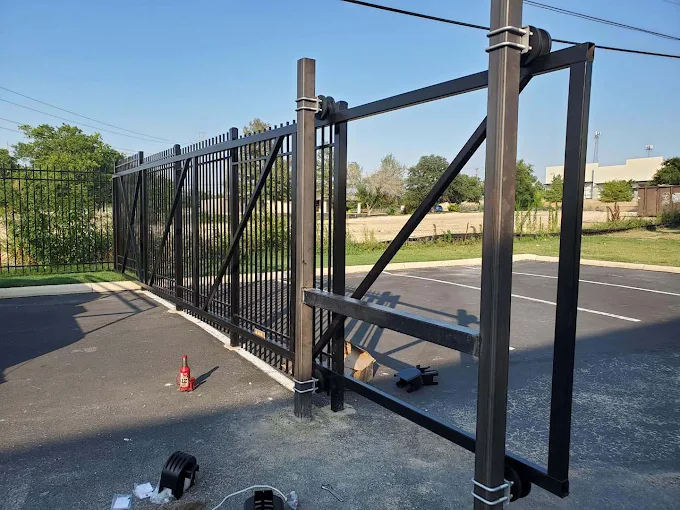
If you have residential gates with operators or access control systems, regular checks are even more critical. Motorized gates have moving parts, safety features, and electronics that need periodic adjustment and inspection.
CALLOUT: A well-maintained gate and sturdy posts can easily double the usable life of your fence. When in doubt, reinforcing structure beats cosmetic patchwork every time.
When to Repair, When to Replace: Smart Budgeting for Your Fence
Every fence reaches a point where you have to decide: keep repairing or invest in replacement? In Plano, where property values are high and curb appeal matters, this decision has both financial and aesthetic implications.
Here’s a simple comparison that reflects what we often see for local homeowners:
| Scenario | Recommended Action | Reasoning |
|---|---|---|
| Isolated damage (1–2 panels or posts) | Targeted Fence Repair | Cost-effective, minimal visual disruption |
| 20–30% of sections failing | Sectional replacement | Balance between cost and improving overall stability |
| Widespread rot, leaning, or rust | Full Fence Replacement | Repairs become band-aids; long-term cost is higher |
| Fence older than 18–20 years | Evaluate for replacement | Materials may be near end of life, even if “holding” |
A homeowner near Downtown Plano had a 17-year-old wood privacy fence with multiple leaning sections and rotted posts. Another company had quoted a long list of repairs, but when we ran the numbers, the cost of extensive Fence Repair was approaching 60–70% of a full new Privacy Fence Installation. They chose to replace the fence with a new board-on-board cedar design and added a steel-framed gate. Their long-term maintenance and repair costs will be significantly lower.
“Throwing money at an end-of-life fence usually doesn’t pay off. The key is honest evaluation, not just patching what’s visibly broken.” — Fence Pros of Texas Team
Factors that should push you toward replacement:
- Multiple posts failing or rotting at ground level
- Significant structural issues combined with obvious age
- Desire to upgrade materials (e.g., moving from basic wood to Metal Fence Installation or vinyl)
- Repeated repairs in the same areas over a short period
CALLOUT: Smart fence decisions factor in long-term costs, not just today’s invoice. Sometimes the most “expensive” option on paper is the most economical choice over 10–20 years.
Enhancing Safety, Privacy, and Curb Appeal Through Thoughtful Upgrades
Maintenance isn’t only about preventing problems; it’s also an opportunity to improve function and appearance. As Plano grows and neighborhoods evolve, many homeowners are upgrading older fences to better match their lifestyle and property value.
Common upgrade paths we see across Plano:
- Changing from standard wood to decorative Decorative Fence Installation with custom trim or mixed materials
- Adding estate gates at driveways for both curb appeal and security
- Installing access control on driveway gates for convenient, secure entry
- Upgrading pool enclosures to modern Pool Fence Installation that meets safety codes and enhances views
One Plano homeowner backing onto a greenbelt had a basic, aging wood fence that blocked their view and offered limited security. They opted for a custom Custom Fence Design using steel posts, horizontal cedar boards, and strategically placed Glass Fences panels overlooking the trees. The design maintained privacy where needed while opening up the best sightlines. It also increased perceived property value and reduced long-term maintenance.
You can also integrate:
- Railings on decks and stairs that complement your fence style
- Matching residential gates and pedestrian gates for a cohesive look
- Strategic landscaping that protects, rather than harms, your fence (no vines growing directly on it, proper plant spacing, etc.)
CALLOUT: Thoughtful upgrades turn basic perimeter fencing into a cohesive part of your outdoor living space, especially in design-conscious Plano neighborhoods.
What This Means for Homeowners in Plano, TX
Plano homeowners sit at the intersection of high property values, strict HOA standards in many neighborhoods, and a climate that punishes exterior structures. That combination makes fence maintenance more than just a “nice-to-have”—it’s part of protecting one of your biggest investments.
Well-maintained fences in areas like Willow Bend, Kings Ridge, or Whiffletree don’t just look better; they help homes stand out in a competitive real estate market. Appraisers and buyers may not assign a specific dollar value to your fence, but they absolutely notice when it’s leaning, rotting, or mismatched.
At the same time, Plano’s family-focused communities place a premium on safety and function. From secure backyards for kids and pets to code-compliant pool enclosures, your fence plays a daily role in how you use and enjoy your property.
For local homeowners, that means:
- Budgeting for periodic Fence Maintenance just like you would for HVAC servicing or roof inspections
- Choosing materials and designs that balance aesthetics, privacy, and long-term care needs
- Working with professionals who understand local soil conditions, wind patterns, and HOA expectations
Whether you live near Plano Senior High, out toward Murphy and Parker, or in newer developments on the city’s northern edge, the principles are the same: inspect regularly, protect surfaces, address structural issues early, and plan ahead for eventual upgrades or replacement.
A proactive approach keeps your fence doing its job—defining your space, protecting your family, and complementing your home—for many years longer than a “set it and forget it” mindset ever could.
Frequently Asked Questions
Q: How often should I stain or seal my wood fence in Plano’s climate?
A: Most wood fences in Plano benefit from professional staining every 3–5 years. Sun exposure, color choice, and product quality all affect that timeline. South- and west-facing fences often need attention sooner because they get the most UV exposure. A simple way to check is to spray a small section with water—if it soaks in quickly instead of beading up, your protection is likely worn out. Keeping up with staining significantly extends the life of your Wood Fence Installation and reduces the risk of warping, splitting, and rot.
Q: My fence is leaning in a few spots. Can it be repaired, or do I need a full replacement?
A: Leaning sections don’t automatically mean you need a full Fence Replacement. In many Plano yards, isolated leaning is caused by one or two failing posts or soil movement in specific areas. If the boards and rails are still in decent shape, targeted Fence Repair—resetting or replacing posts, reinforcing rails—can restore stability at a fraction of the cost of a new fence. However, if leaning is widespread, combined with rotted posts and aging boards, replacement is usually the more cost-effective long-term solution.
Q: Are metal or vinyl fences really lower maintenance than wood in North Texas?
A: Generally, yes. Vinyl Fences and many Aluminum Fences require less frequent surface maintenance than wood. They don’t need staining and are resistant to rot and insect damage. That said, they’re not “maintenance-free.” You’ll still want to rinse them periodically, inspect hardware, and address any impact damage. For Metal Fence Installation (including Wrought Iron Fences and Corrugated Metal Fences), keeping an eye on rust at welds and near the soil line is key. Choosing the right material comes down to your priorities for look, privacy, and long-term care.
Q: What’s the best fence type for privacy and noise reduction in busy Plano neighborhoods?
A: For privacy, a solid wood or vinyl Privacy Fence Installation is usually the best option. Board-on-board designs help eliminate gaps as wood shrinks and can offer slightly better noise reduction. While no standard residential fence will fully block traffic noise from major roads like Preston or 121, taller, solid designs can make a noticeable difference. Some homeowners also combine fencing with strategic landscaping—trees and shrubs—to improve sound absorption. If you’re near a busy street or commercial area, a custom Custom Fence Design can balance privacy, aesthetics, and local code requirements.
Q: How can I make sure my pool fence meets safety requirements in Plano?
A: Pool safety is critical, especially in family-focused communities. A proper Pool Fence Installation should meet local building codes and any HOA standards. That typically means a minimum height, self-closing and self-latching gates, and no large gaps a child could squeeze through. Materials like Aluminum Fences, Wrought Iron Fences, or Glass Fences are common around pools because they balance safety with visibility. Working with an experienced contractor ensures your fence not only looks good but also complies with safety standards that help protect your family and guests.
Q: I’m considering a driveway gate. What maintenance does that involve?
A: A driveway gate—especially one with access control—adds both security and curb appeal, but it does require routine care. For manual residential gates, you’ll want to inspect hinges, latches, and frames for wear or sagging, just like any other gate. For automated systems, plan on periodic checks of the operator, safety sensors, and controls. Keeping the gate track or swing arc clear of debris is essential. Many Plano homeowners opt for an annual service visit to keep their estate gates and operators running smoothly and safely.
Q: Can you match my new fence to existing railings or commercial-style elements on my property?
A: Yes. Coordinated design across your property can make a big difference in overall appearance. We often match new fencing to existing railings, or take cues from nearby Commercial Fence Installation styles for homeowners who like that clean, modern look. Whether you’re adding a Garden Fence Installation, upgrading your backyard privacy line, or tying into existing farm fencing on larger properties near the edge of Plano, a custom approach ensures everything feels intentional and cohesive.
Ready to Get Started?
Fence issues rarely get better on their own, especially in Plano’s demanding climate. If your fence is starting to lean, fade, or show signs of rot or rust, addressing those problems now can save you from much larger expenses down the road. Spring and fall are particularly busy seasons for Residential Fence Installation, Fence Repair, and staining, so planning ahead helps you secure your preferred schedule.
The next step is simple: walk your fence line with a critical eye. Make note of problem spots—loose boards, leaning posts, sticking gates—and think about how long you want this fence to last. Then reach out to a local team that understands Plano’s soils, weather patterns, and neighborhood expectations.
Fence Pros of Texas can inspect your existing fence, provide honest recommendations, and help you build a maintenance or upgrade plan that fits your budget. Whether you need a minor repair, a fresh coat of stain, or a full replacement with modern materials, protecting your fencing investment now will pay off in years of safety, privacy, and curb appeal.
About Fence Pros of Texas
Fence Pros of Texas is a locally focused fencing contractor serving homeowners and businesses throughout Plano and the greater North Texas area. Our team brings years of experience in Residential Fence Installation, Commercial Fence Installation, gates, staining, and custom designs tailored to our unique climate and soils. We pride ourselves on honest assessments, quality workmanship, and long-term relationships with Plano property owners. To learn more about our services and see examples of our work, visit our website.