
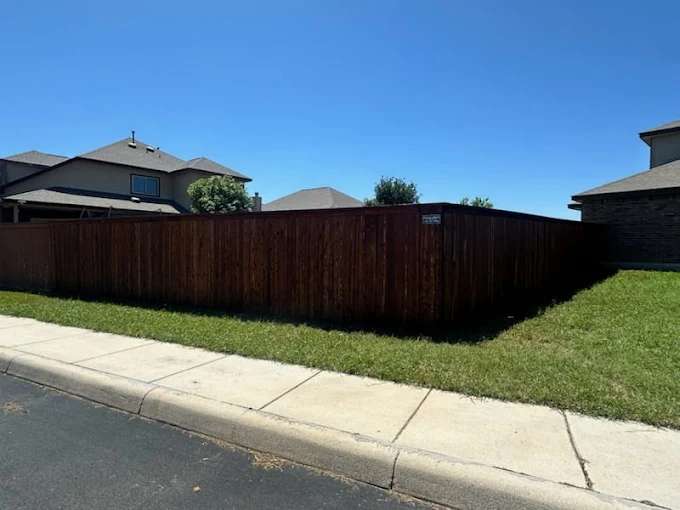
Find the Right Fence Staining Color
you’ve just invested in a beautiful new wood fence around your Plano home or business. The lines are clean, the craftsmanship is solid, and the yard finally feels complete. Fast-forward one Texas summer, and that same fence is faded, blotchy, and dry from sun and heat. The difference almost always comes down to one decision: choosing the right stain color and finish—and applying it correctly.
In North Texas, our intense UV exposure, temperature swings, and surprise storms are especially hard on wood. Studies show that unstained exterior wood can start to degrade in as little as 3–6 months under strong sun, while properly stained and maintained wood can last 2–3 times longer. That’s a big difference in both curb appeal and long-term cost.
In this guide, you’ll learn how to choose a fence staining color that fits your style, boosts property value, and stands up to Plano’s climate—plus how color interacts with wood type, architecture, neighborhood expectations, and even HOA rules.
Key Insight: The best fence stain color isn’t just “what looks good.” It’s the color that works with your wood, your property style, and our Texas weather—so your fence stays attractive and protected for years.
How Stain Color Affects the Life and Look of Your Fence
Color is more than decoration—it plays a big role in how your fence weathers over time. In Plano, where summer sun can easily hit triple digits and UV levels stay high, the right stain choice can mean the difference between a fence that grays out in a year and one that still looks rich and warm five years later.
Darker stains generally offer better UV protection because they contain more pigment. That pigment acts like sunscreen for your wood. For example, a deep walnut or espresso on a cedar Wood Fence Installation along a West Plano backyard can dramatically slow down fading compared to a very light natural tone.
However, darker isn’t always “better.” On south-facing fences that get blasted all day, very dark stains can absorb more heat, which can slightly increase expansion and contraction. In practice, that usually isn’t a problem if the fence is well-built, but it’s something a professional will weigh when recommending products.
A Plano homeowner near Oak Point Park recently had a new privacy fence installed and wanted a “barely-there” natural look. We walked through samples in the actual sunlight in their yard and showed how a light transparent stain would look after a year vs. a medium-tone semi-transparent. Seeing that comparison helped them choose a slightly richer color that still looked natural but offered better long-term protection.
“Stain color isn’t just an aesthetic choice—it’s part of your fence’s weather protection system.” — Local Fence Finishing Specialist
Matching Stain Color to Your Wood Type, Home Style, and Neighborhood
Plano has a wide range of home styles—from older ranch homes east of 75 to newer developments in West Plano and Frisco-adjacent neighborhoods. The right stain color should feel like a natural extension of your home’s architecture and landscaping, not an afterthought.
Consider the wood species
Most residential fences in the area are cedar or pressure-treated pine. They take stain differently:
- Cedar
- Naturally warm, reddish tones
- Takes transparent and semi-transparent stains beautifully
- Popular choices: cedar tone, redwood, medium browns that enhance the grain
- Pine
- Starts more yellow/green
- Often looks best with semi-transparent or solid stains to even out color
- Popular choices: neutral browns, driftwood grays, or darker tones for a richer look
If you’ve invested in a custom Residential Fence Installation with decorative top rails or board-on-board design, a semi-transparent stain can highlight those details. For simpler privacy fences, a solid or darker semi-transparent stain can create a clean, uniform backdrop.
Fit the style of your property
- Traditional brick homes (common in central Plano):
Medium walnut, chestnut, or “cedar tone” stains usually complement red and brown brick nicely.
- Modern or transitional homes:
Cooler tones like gray-browns, charcoal, or even a weathered driftwood look can coordinate with black windows, stucco, or mixed materials like Mixed Material Fences and metal accents.
- Acreage and farm-style properties:
On larger lots or near the outskirts of Plano and Allen, warmer, natural tones blend better with open fields, Farm Fencing, and tree lines.
One West Plano cul-de-sac had multiple homes share a common fence line. After one neighbor stained their section a very dark espresso, the contrast with the rest of the lighter, weathered wood was jarring. Eventually, three neighbors coordinated to restain using a medium neutral brown that worked with all three homes’ brick colors—instantly creating a cohesive, higher-end look.
CALLOUT: Before choosing your color, step back to the street and look at your roof, brick/stone, trim, and nearby fences. Your stain should tie those elements together, not fight them.
Transparent vs. Semi-Transparent vs. Solid: What Works Best in Plano?
Color isn’t the only decision—you also need to choose the opacity of your stain. That determines how much wood grain you’ll see and how often you’ll need maintenance.
Here’s a quick comparison tailored to North Texas conditions:
| Stain Type | Look & Coverage | Typical Longevity in Plano | Best For |
|---|---|---|---|
| Transparent | Shows full grain, light tint | ~2–3 years | High-end cedar, decorative fences |
| Semi-Transparent | Shows some grain, richer color | ~3–5 years | Most privacy fences, mix of beauty & life |
| Semi-Solid / Solid | Hides most grain, strong uniform color | ~4–6 years | Older fences, pine, color corrections |
Because of our strong sun and storm cycles, semi-transparent is often the sweet spot for Plano homeowners. It gives you:
- Enough pigment for UV protection
- Visible grain for a natural look
- Reasonable longevity before re-coating
One business owner off Preston Road had an older pine fence around a small outdoor seating area. The wood had uneven graying and previous spot repairs. A transparent stain would have highlighted every inconsistency. We recommended a semi-solid stain in a warm brown, which covered the mismatched boards and gave the space a polished, intentional feel—without the cost of full Fence Replacement.
“Older wood often looks brand new again under a well-chosen semi-solid stain.” — Exterior Wood Restoration Pro
Working With Sun, Shade, and Orientation in North Texas
The same stain color can look very different on a north-facing fence in the shade vs. a south-facing run that bakes in the sun all afternoon. Plano’s lot layouts and two-story homes also cast shifting shadows that affect how color reads throughout the day.
Sun exposure and color choice
- Full sun (south and west-facing runs):
- Medium to darker tones hold color longer
- Warmer browns often look less “washed out” over time
- Higher-quality UV-resistant stains are a must
- Partial shade or north-facing fences:
- Lighter or neutral tones can keep spaces from feeling too dark
- Gray-based stains can look cooler and sometimes slightly blue in heavy shade
- Slightly warmer undertones can balance that effect
We worked with a homeowner near Legacy West who had a tall privacy fence on three sides. The back fence faced south and got hammered by sun; the side fences were mostly shaded by the house and trees. Using the exact same stain color on all three sides made the back fence look noticeably lighter over time. On their maintenance re-coat, we adjusted technique—applying a slightly heavier coat on the sunniest side—to keep the color visually consistent.
Test in real conditions
Always test stain:
- On the actual wood of your fence
- In at least two or three spots (sun, shade, partial shade)
- Viewed at different times of day (morning, midday, late afternoon)
A small test area near a gate or low-visibility corner can save you from staining 200+ feet of fence in a color that turns out too red, too orange, or too dark in your specific yard.
CALLOUT: Don’t rely on online photos alone. Plano’s bright, clear light can make colors look lighter and more intense than they appear on a screen or in other regions.
Coordinating Fence Stain With Other Outdoor Features
Your fence doesn’t exist in a vacuum. It frames everything else in your yard—landscaping, pool, patio, and even other structures like railings and gates. A smart color choice will pull those elements together.
Think beyond the fence line
If you have:
- A pool with light decking and modern finishes, a cooler-toned stain may work better with glass or metal accents and any Pool Fence Installation you’ve added.
- A warm stone patio, cedar pergola, or wood Railings, a complementary warm brown stain will unify the space.
- Black Wrought Iron Fences or gates, rich browns or charcoal-toned stains can create a sophisticated contrast.
A Plano family near Russell Creek Park had a mix of materials: a black metal pool fence, a stained cedar privacy fence, and a composite deck. Originally, the fence was a bright orange-toned stain that clashed with the cooler deck and sleek pool area. On their next maintenance cycle, they opted for a more neutral, slightly gray-brown stain. The result was a backyard that looked like a unified outdoor living space rather than a collection of separate projects.
For commercial properties
If you’re managing a business in Plano—say a daycare, restaurant patio, or small office with an outdoor break area—your fence color becomes part of your brand impression.
- Neutral, medium stains feel professional and low-maintenance.
- Very dark stains can read upscale but may show dust and sprinklers more.
- Light, natural tones feel welcoming but may need more frequent maintenance.
For a restaurant off Park Boulevard with a patio enclosed by a combination of Commercial Fence Installation and wood screening, we recommended a stain color that echoed the interior wood tones. That continuity made the transition from inside to outside feel seamless and intentional.
Planning for Maintenance, HOAs, and Long-Term Costs
Choosing a stain color isn’t just about what looks great on day one; it’s about how that choice affects maintenance cycles, HOA compliance, and your long-term budget.
Maintenance and color
As a general rule:
- Lighter, more transparent stains require more frequent re-coats (every 2–3 years).
- Medium semi-transparent stains may stretch to 3–5 years with proper Fence Maintenance.
- Darker or more opaque stains can last longer but may show wear more noticeably when they do start to fade.
In Plano’s climate, building a realistic maintenance plan is essential. A homeowner near Plano Senior High opted for a rich, medium-brown semi-transparent stain on their new fence. We set expectations from the start: a light cleaning and inspection every 1–2 years, and a full maintenance coat every 3–4 years. Because they understood the schedule, their fence still looks almost new eight years later—far cheaper than early fence replacement.
HOAs and neighborhood standards
Many Plano neighborhoods have HOA guidelines about fence color and finish. Some:
- Require “natural wood tones” only
- Prohibit certain colors (very red, black, or gray stains)
- Specify that all street-facing fences must match
Before you fall in love with a dramatic dark espresso or trendy gray, check your restrictions. A quick conversation with your HOA or management company can prevent costly rework.
Cost vs. value
Here’s a simple way to think about long-term value in our area:
| Choice | Upfront Cost | Maintenance Frequency | Long-Term Value in Plano Climate |
|---|---|---|---|
| Cheap stain, random color | Low | Very frequent | Low – fades fast, looks dated |
| Quality stain, weak color choice | Medium | Medium | Mixed – protected but may clash |
| Quality stain, strategic color | Medium | Predictable | High – curb appeal + longevity |
CALLOUT: Treat stain color and quality as part of your fence investment, not an add-on. The right combination can easily add 5–10 years of useful life to your fence in Texas conditions.
What This Means for Businesses in Plano, TX
For homeowners and businesses in Plano, your fence is part of your property’s first impression. Whether you’re protecting a backyard, a commercial lot, or agricultural land on the outskirts of town, the stain color you choose affects security perception, brand image, and long-term maintenance costs.
A well-chosen stain on a Privacy Fence Installation around a residential property can:
- Make the yard feel more private and inviting
- Increase perceived home value and buyer appeal
- Coordinate with outdoor living upgrades like patios or pools
For commercial properties, a consistent, professional stain color on Commercial Fence Installation and gates can:
- Reinforce your brand’s quality and attention to detail
- Improve customer confidence and perceived security
- Reduce the need for frequent repaints or emergency Fence Repair
In a competitive real estate and business environment like Plano, where curb appeal and outdoor spaces matter more than ever, neglecting your fence color choice can quietly undermine the rest of your property improvements. On the other hand, making a thoughtful, locally informed decision helps your fence support your goals—whether that’s a more relaxing backyard, a safer play area, or a more polished business exterior.
Frequently Asked Questions
Q: How do I know which stain color will look best with my Plano home’s brick or stone?
A: Start by identifying the dominant tones in your exterior—are they warm (reds, tans, golds) or cool (grays, blues, off-whites)? For warm brick or stone, medium browns and cedar tones usually blend well. For cooler exteriors and modern designs, gray-browns or neutral dark stains can create a clean contrast. We often bring sample boards to properties in Plano and compare them directly to the house, roof, and existing Wood Fences or trim so you can see how they interact in your actual lighting.
Q: Will a darker stain make my backyard feel smaller or too closed in?
A: It can, depending on your yard size and landscaping. In smaller Plano yards with tall privacy fencing, a very dark stain might feel a bit enclosing, especially if there’s a lot of shade. In those cases, a medium-tone brown can offer depth and richness without making the space feel cramped. For larger lots or more open views, darker stains often look elegant and intentional. We frequently walk fence lines with homeowners to talk through how different tones will feel in their specific space before committing.
Q: How often will I need to restain my fence in Plano’s climate?
A: For most quality oil-based or hybrid stains, plan on a maintenance coat every 3–5 years, depending on exposure and product type. South and west-facing Fence Maintenance areas may need attention sooner, while shaded sections can go a bit longer. Transparent stains usually need re-coating more often, while semi-transparent and solid stains last longer. Regular inspections—looking for fading, dryness, or water no longer beading on the surface—are the best way to time your next application.
Q: Can I change my fence color later if I don’t like the first choice?
A: Yes, but the options depend on what you start with. Going from a lighter transparent or semi-transparent stain to a darker or more opaque color is usually straightforward after cleaning and prep. Going from very dark or solid stains to lighter tones is trickier and may require stripping or sanding. We often help Plano homeowners transition from older orange-toned stains to more modern neutrals by gradually deepening and neutralizing the color over one or two maintenance cycles.
Q: Do HOAs in Plano usually restrict fence stain colors?
A: Many do. Common rules include requiring natural wood tones, prohibiting painted looks, or asking that street-facing fences match a neighborhood standard. Some developments have very specific guidelines, while others are more flexible. Before choosing a dramatic color or gray stain, check your HOA documents or contact the board. As a local contractor, we’re familiar with many Plano-area HOA requirements and can suggest options that meet the rules while still giving you a look you love.
Q: Is it worth staining an older fence, or should I replace it first?
A: It depends on the fence’s structural condition. If posts are solid, boards are mostly intact, and there’s no major rot, professional cleaning, repairs, and a quality stain can make an older fence look remarkably refreshed. This is especially true for cedar Fence Repair projects. If your fence is leaning, has widespread rot, or boards are crumbling, you’ll get more value from a new Residential Fence Installation and then protecting it from day one with stain.
Q: Can I match my fence stain to my gates and metal fencing?
A: Absolutely. Many Plano properties combine Wrought Iron Fence Installation or aluminum panels with wood privacy sections. Choosing a stain that complements black or bronze metal—often a medium to dark neutral brown or a subtle gray-brown—creates a cohesive, high-end look. We also coordinate stain colors with Security Fence Installation hardware, Residential Gates, and even Commercial Gates so everything feels like one unified design rather than separate pieces.
Ready to Get Started?
Plano’s weather won’t wait, and neither should your fence. The first 6–12 months after installation are critical for protecting new wood, and older fences only get harder to revive the longer they sit unprotected. Choosing the right stain color—and applying it with the right products and prep—means your fence works harder for you: better curb appeal, longer life, and less frequent major repairs.
If you’re unsure where to start, a color consultation on-site is often the easiest step. Seeing real samples against your home, landscaping, and existing Metal Fence Installation or railings can give you confidence in your choice. Fence Pros of Texas has years of experience working with Plano homes, businesses, and HOAs, so we can guide you toward options that both look great and perform well here.
Schedule a visit, walk your fence line with an expert, and lock in a stain color that will keep your fence looking sharp through our next round of Texas summers and storms.
About Fence Pros of Texas
Fence Pros of Texas is a locally focused fence and staining contractor serving Plano and the surrounding North Texas communities. Our team specializes in Residential Fence Installation, commercial projects, custom gates, and professional staining services designed for our demanding climate. With years of hands-on experience, industry-best practices, and a commitment to honest guidance, we help property owners choose fence solutions and stain colors that are as durable as they are attractive. Learn more about our services and local work at our website.