
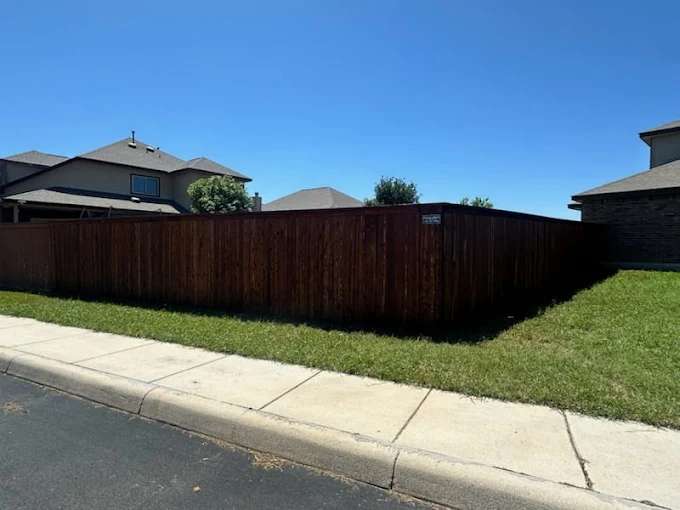
Expert Tips for Maintaining Commercial Fencing
A sagging gate that won’t latch. Rust creeping up posts along your property line. Boards warping in the Texas sun. If you manage or own commercial property in Plano, you’ve probably seen how quickly a fence can go from “looks great” to “liability” in a single season.
According to risk management studies, poorly maintained perimeter security is one of the top five issues cited in commercial property inspections. At the same time, curb appeal can boost perceived property value by up to 7–10%—and your fence is one of the first things customers and tenants see when they pull in.
In North Texas, intense UV exposure, clay soil that shifts with moisture, and the occasional severe storm all work against your fence. That makes a smart maintenance strategy more than a “nice to have”—it’s a business necessity.
You’ll learn how to extend the life of your commercial fence, spot small issues before they turn into big repairs, and choose the right maintenance routines for different materials. We’ll also look at real examples from businesses in and around Plano so you can see what works in the real world, not just on paper.
Key Insight: A well-maintained commercial fence isn’t just about looks—it protects your investment, reduces liability, and keeps your property operating smoothly, year after year.
Build Your Maintenance Plan Around Your Fence Material
Not all commercial fences age the same way. A maintenance plan that works beautifully for wood can be a waste of time—or even harmful—for metal or vinyl. The first step is understanding what you’re working with and what it needs to thrive in Plano’s climate.
How Different Fencing Materials Behave in North Texas
Here’s how common commercial fencing materials hold up locally:
- Wood fences dry out, crack, and gray quickly under Texas sun if they’re not stained and sealed regularly.
- Aluminum Fences and Wrought Iron Fences resist pests but can develop rust at welds and hardware points if coatings are compromised.
- Chain Link Fences endure well, but their posts can shift in Plano’s expansive clay soil.
- Vinyl Fences handle moisture well but can become brittle or discolored with prolonged UV exposure.
- Corrugated metal and Mixed Material Fences (wood + metal, for example) often fail at the connection points between materials.
Local Example
A Plano office park near Independence Parkway installed a mix of Metal Fence Installation and wood screening panels. The property manager was power washing all of it the same way. The metal did fine, but the unsealed wood began to splinter and gray within 18 months. After switching to a tailored plan—gentle cleaning plus professional staining for the wood and periodic rust checks for the metal—the fence’s appearance stabilized and repair calls dropped dramatically.
“Your maintenance plan should start with the material, not the calendar.” — Fence Pros of Texas Team
CALLOUT: Match your maintenance to your fence type. A one-size-fits-all approach is one of the fastest ways to shorten your fence’s lifespan.
Inspect, Document, Repeat: Turning Walkthroughs Into Savings
A fence can look “fine” from 30 feet away and be one storm away from failure up close. Regular, structured inspections are how you catch problems early—before they mean lost business or emergency repairs.
What to Look for During Routine Inspections
For commercial properties in Plano, a quarterly inspection schedule works well. During each walkthrough, focus on:
- Posts: Check for leaning, movement in the soil, and signs of rot or rust at ground level.
- Rails and panels: Look for cracks, warping, corrosion, or missing fasteners.
- Gates and access points: Test each Commercial Fence Installation gate, latch, and closer for smooth operation.
- Coatings and finishes: Note peeling paint, faded stain, or chalking on vinyl.
- Ground clearance: Vegetation growing into or under the fence can trap moisture and accelerate decay.
Keep it simple but consistent. A clipboard checklist or a shared digital form works well for property management teams.
Plano Case Study
A distribution facility off US-75 had recurring issues with a sagging sliding gate along its access control perimeter. Instead of replacing the entire system, the facility manager started documenting each issue. The pattern showed that heavy truck traffic was hitting the same track area. By reinforcing the track and adjusting traffic patterns, they extended the life of the gate and avoided a costly full replacement.
“Small, documented issues today are your roadmap to big cost savings tomorrow.” — Facility Manager, Plano Industrial Client
CALLOUT: Treat your fence inspection like a safety walk. The goal isn’t just aesthetics—it’s preventing access failures, liability, and security breaches.
Protect Against Weather, Soil, and Sun: Plano’s Biggest Fence Enemies
North Texas weather is hard on structures that live outdoors 24/7. Your fence stands between blazing heat, shifting clay soil, and the occasional hail or windstorm. Smart maintenance means anticipating these forces and planning around them.
Sun and Heat
Plano averages more than 230 sunny days per year. UV rays break down wood fibers, fade coatings, and can weaken plastics over time.
- For Wood Fences, a quality stain or sealant with UV inhibitors is essential. Professional staining every 2–3 years can double the life of your boards.
- For Vinyl Fence Installation, gentle cleaning and avoiding harsh chemicals help preserve color and flexibility.
Soil Movement
Plano’s clay soil expands when wet and contracts when dry. That movement can:
- Push posts out of alignment.
- Create gaps under Security Fence Installation lines.
- Stress gate hinges and latches.
Deeper footings, proper drainage, and occasional re-tamping or resetting of posts in problem areas can keep your fence upright and secure.
Storms and High Winds
Straight-line winds and storms can turn any weak spot into a failure point. After major weather events, do a targeted inspection:
- Check for loosened panels, bent rails, or leaning sections.
- Look for damage from flying debris, especially on Corrugated Metal Fences and Glass Fences.
Traditional vs. Proactive Weather Approach
| Approach | Description | Typical Outcome in Plano |
|---|---|---|
| Traditional “Fix it when it breaks” | No prep, repairs only after visible damage | Higher emergency costs, downtime |
| Proactive weather strategy | Seasonal checks, coatings, drainage improvements | Fewer failures, longer fence life |
A Plano retail center near Preston Road used to budget annually for storm-related fence repairs. After investing in better drainage around posts and a scheduled maintenance program, their repair costs dropped by nearly 40% over three years.
CALLOUT: You can’t control the weather, but you can control how prepared your fence is for it. Smart prevention beats emergency calls every time.
Prioritizing Security and Access: Don’t Let Maintenance Create Weak Points
For many commercial properties, the fence is part of a larger security and traffic control system. When maintenance falls behind, it’s not just an eyesore—it can create real vulnerabilities.
Gates, Access Control, and Daily Use
Your gates and access points see the most stress. Delivery trucks, employee vehicles, service vendors—everyone passes through the same few openings. Regularly check:
- Hinges, rollers, and tracks on Commercial Gates.
- Keypads, card readers, and safety sensors on access control systems.
- Panic hardware and emergency egress on any code-required exits.
Security vs. Convenience
There’s always tension between locking things down and keeping operations smooth. Poorly maintained fences and gates often lead staff to “work around” the system—propping gates open or disabling latches. That’s when thefts, trespassing, or safety incidents are most likely.
A Plano warehouse off Spring Creek Parkway had a rolling gate that stuck every few days. Drivers began leaving it open during shifts to avoid delays. After a minor theft from the yard, management invested in professional Fence Repair and adjusted the opener. The gate became reliable—and stayed closed.
“If your team has to fight your gate to do their job, your security is already compromised.” — Operations Director, Logistics Client
Integrating Fencing With Other Systems
For higher-security sites, integrate your Security Fence Installation with:
- Lighting, especially along hidden or vulnerable stretches.
- Cameras focused on gates and blind spots.
- Clear signage to discourage casual trespassing.
CALLOUT: Maintenance isn’t just about the fence line—it’s about how your fence, gates, and access control work together to support daily operations.
Aesthetic Maintenance: Protecting Curb Appeal and Brand Image
For office parks, retail centers, medical facilities, and HOAs in Plano, your fence is part of your brand. Tenants, customers, and visitors notice when it looks tired or neglected. That perception can bleed into how they feel about the entire property.
Keeping Commercial Fences Looking Sharp
Even if security isn’t your primary concern, you want a fence that reflects well on your business. Some appearance-focused maintenance steps include:
- Re-staining or painting Wood Fence Installation to maintain a rich, even color.
- Re-coating Wrought Iron Fences to prevent rust spots and peeling paint.
- Cleaning and polishing Glass Fences around pools or patios.
- Replacing damaged or faded panels on Vinyl Fences so the line looks uniform.
A medical office near Texas Health Presbyterian Hospital Plano had a long Privacy Fence Installation along its parking lot. Over time, the stain faded and a few boards warped. Patients began commenting that the exterior looked “run down.” After a professional cleaning and restaining, plus targeted Fence Replacement of damaged boards, the property felt refreshed—without a full rebuild.
Comparing Reactive vs. Planned Aesthetic Upkeep
| Strategy | Example Actions | Long-Term Impact |
|---|---|---|
| Reactive appearance fixes | Only paint after peeling is severe | Patchy look, shorter fence life |
| Planned aesthetic upkeep | Scheduled staining, cleaning, minor repairs | Consistent appearance, lower costs |
“Your fence is part of your first impression. Treat it like you treat your lobby or storefront.” — Local Property Manager, Plano
CALLOUT: A clean, well-finished fence signals that you take care of your property—and by extension, your tenants, customers, and staff.
Knowing When to Repair, When to Replace, and When to Upgrade
Even with excellent maintenance, no fence lasts forever. The trick is recognizing when repair dollars stop making sense and when an upgrade could better serve your property.
Signs It’s Time for Professional Repair
Call in a commercial fence expert when you see:
- Repeated issues in the same area (leaning posts, recurring gate problems).
- Localized damage from vehicles, storms, or vandalism.
- Rust spreading along rails or at connection points on metal systems.
Targeted Fence Repair can extend the life of your existing structure and buy you time to plan for eventual replacement.
Signs It’s Time for Replacement or Upgrade
Consider full Fence Replacement when:
- More than 20–30% of the fence line is failing or has been patched repeatedly.
- The fence no longer meets your security, privacy, or branding needs.
- Building codes or HOA standards have changed since installation.
A Plano business park built in the early 2000s had an aging Chain Link Fence Installation around its perimeter. It still stood, but tenants increasingly wanted a more polished look and better privacy. The owners chose to upgrade to a combination of Decorative Fence Installation at the frontage and taller Privacy Fence Installation along the rear. The result: higher tenant satisfaction and improved perceived security.
Thinking Ahead: Custom Design and Mixed Use Properties
Some properties benefit from a tailored approach:
- Office or retail at the front: consider Custom Fence Design or Decorative Fence Installation.
- Service or storage areas at the back: stronger Security Fence Installation or Metal Fence Installation.
- Residential or HOA-adjacent areas: privacy-focused solutions similar to Residential Fence Installation standards.
CALLOUT: Don’t wait until your fence is failing across the board. Plan for replacement while it’s still doing its job so you can choose the right upgrade on your timeline—not in crisis mode.
What This Means for Businesses in Plano, TX
Plano is a competitive market. From Legacy West and Granite Park to industrial corridors along US-75, well-maintained properties stand out—and fences are a visible part of that story.
For local businesses, property managers, and HOAs, a thoughtful commercial fence maintenance plan delivers:
- Lower long-term costs: Regular inspections and small repairs are far less expensive than emergency work or premature full replacement.
- Better security and safety: Reliable Commercial Gates, intact fence lines, and working access control reduce risk and liability.
- Stronger curb appeal: Clean, straight, well-finished fences support higher rents, better tenant retention, and a more professional image.
- Regulatory and HOA compliance: Many Plano developments and business parks have strict design and maintenance standards—staying ahead of them avoids fines and conflict.
Local climate and soil conditions mean that what might be “optional” maintenance in other regions is essential here. UV protection, rust prevention, drainage, and post stability all matter more in North Texas.
Whether you manage a corporate campus near the Dallas North Tollway, a retail center along Parker Road, or a mixed-use development with both commercial and Residential Fence Installation needs, the principles are the same: know your materials, inspect regularly, protect against local conditions, and plan ahead for upgrades.
Frequently Asked Questions
Q: How often should I schedule professional maintenance for a commercial fence in Plano?
A: For most commercial properties, a professional maintenance visit once a year is a smart baseline. In Plano’s climate, that annual check can include tightening hardware, adjusting gates, spot-treating rust on Wrought Iron Fence Installation, and assessing whether your staining or coatings need renewal. High-traffic or high-security sites—like distribution centers or facilities with automated access control—often benefit from semi-annual service. Between professional visits, your team should still do quick visual checks quarterly and after major storms to catch issues early.
Q: Are wood fences a good idea for commercial properties given the Texas heat?
A: Yes—when they’re designed and maintained correctly. Wood Fence Installation offers warmth, privacy, and a more upscale look than basic chain link, which makes it popular for offices, retail, and healthcare properties. The key in Plano is using quality materials, proper construction techniques, and a reliable finishing schedule. Professional staining every few years protects against UV damage and moisture. If you prefer lower maintenance, you might consider pairing wood with Aluminum Fences or other durable materials in a Mixed Material Fence design.
Q: My chain link fence is still standing but looks rough. Should I repair or replace?
A: It depends on the extent and type of wear. If the framework (posts and rails) is solid and only the fabric is damaged or rusted in sections, targeted Fence Repair can be cost-effective. However, if posts are leaning, concrete footings are failing, or a large percentage of the fence is bent or rusted through, Fence Replacement is usually the smarter long-term move. Many Plano businesses use replacement as an opportunity to upgrade to a more attractive Decorative Fence Installation at the front of the property while keeping chain link in less visible areas.
Q: How do commercial fence needs differ from residential fences in Plano?
A: Commercial fences typically carry higher expectations for durability, security, and traffic management. While Residential Fence Installation often focuses on privacy and aesthetics, commercial properties must also consider access for delivery vehicles, integration with access control systems, and code requirements for emergency egress. Materials like Metal Fence Installation and Commercial Gates are more common. Maintenance also tends to be more structured for businesses, with scheduled inspections and documented repairs to satisfy insurance and risk management guidelines.
Q: Can I phase a fence replacement project to spread out costs?
A: Absolutely. Many Plano property owners choose to replace their fencing in stages—starting with the most visible or most critical security areas. A thoughtful Custom Fence Design can plan for future phases, ensuring that new sections blend with older ones until the entire line is updated. For example, you might start with a new Estate Gate and entry feature, then work around the perimeter in sections over several budget cycles. A professional contractor can help prioritize segments based on condition, risk, and impact on your operations.
Q: How do I maintain fences around pools or amenities on a commercial property?
A: Pool and amenity fencing has both safety and code considerations. Regularly inspect your Pool Fence Installation for loose pickets, compromised latches, and any gaps that could allow small children to slip through. For properties in Plano, keeping gates self-closing and self-latching is essential. Materials like Aluminum Fences and Glass Fences are popular around commercial pools because they’re durable and attractive. Gentle cleaning, hardware checks, and quick response to any damage will keep your amenity areas safe and looking inviting.
Q: We manage both commercial and agricultural land. Can one company handle all our fencing needs?
A: Yes. Many property owners around Plano and Collin County have mixed-use sites—commercial buildings near acreage or livestock. Working with a contractor experienced in both Commercial Fence Installation and Farm Fencing can simplify planning and maintenance. You can coordinate secure perimeters, specialized access control for commercial zones, and practical solutions for animals or equipment on the same property. That unified approach usually leads to better long-term performance and fewer headaches.
Ready to Get Started?
Commercial fence maintenance pays off most when it’s proactive—not when you’re standing in front of a downed section after a storm or dealing with a gate that’s jammed during peak business hours. Plano’s weather, soil, and growth make now a smart time to assess how your fencing is really performing.
If you’ve noticed leaning posts, sticking gates, fading finishes, or just a general “tired” look along your property line, it’s worth getting a professional assessment. A short visit can reveal whether you’re looking at simple Fence Maintenance, targeted Fence Repair, or a phased upgrade that better fits your long-term plans.
Fence Pros of Texas has deep experience with commercial, residential, and agricultural fencing across North Texas—from Residential Gates and railings to large-scale Commercial Gates and Estate Gates. Our team can help you build a practical, budget-friendly maintenance plan that protects your investment and keeps your property looking sharp.
Take the next step today—before minor issues become major expenses.
About Fence Pros of Texas
Fence Pros of Texas is a locally focused fencing contractor serving Plano and the greater North Texas area. Our team specializes in Commercial Fence Installation, Residential Fence Installation, and Farm Fencing, along with custom gates, access control, and staining services. With years of experience in North Texas soil and weather conditions, we design, install, and maintain fences that last—backed by a commitment to honest guidance and quality workmanship. Learn more about our services at our website.