
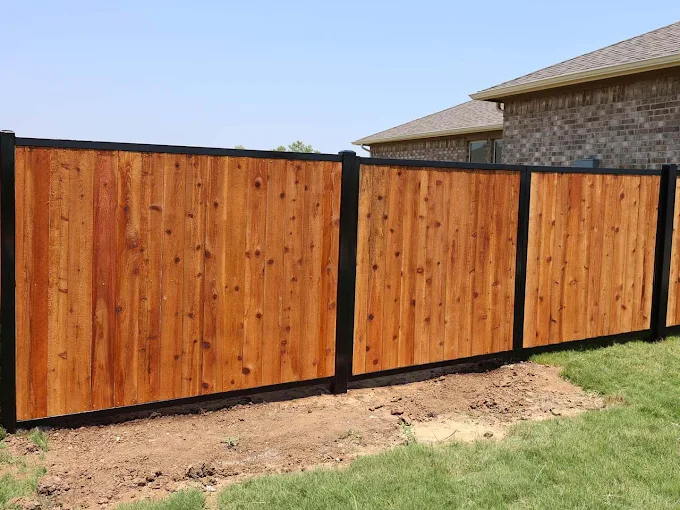
Choosing the Right Fence Staining Service
North Texas sun is no joke. If you’ve lived in Plano for more than one summer, you’ve seen what our heat, UV exposure, and sudden storms can do to unprotected wood. A new fence can go from rich and beautiful to gray, cracked, and warped in just a couple of seasons if it’s not stained and maintained properly.
Industry studies show that properly stained and maintained wood fences can last 30–50% longer than untreated fences, and homeowners in the DFW area routinely spend thousands of dollars on premature Fence Replacement simply because the original fence was never protected the right way.
Choosing the right fence staining service in Plano isn’t just about looks. It’s about protecting your investment, maintaining curb appeal, and even complying with HOA standards and neighborhood expectations.
In this guide, you’ll learn how to evaluate staining contractors, what products and methods actually stand up to our North Texas climate, how staining differs for homes, businesses, and rural properties, and what questions you should ask before anyone touches your fence.
Key Insight: The right staining service is less about price and more about process, products, and local expertise—especially in a climate as tough on wood as Plano’s.
Why Fence Staining Matters So Much in Plano’s Climate
Plano sits in a zone where you can get triple-digit heat, high UV, heavy rain, and winter freezes—all in the same year. That constant expansion and contraction is brutal on wood. Without a quality stain and sealer, your fence is exposed on all fronts:
- UV rays bleach and dry out wood, causing graying and surface cracking
- Moisture seeps in, leading to warping, cupping, and rot
- Wind-driven dust and debris erode the surface over time
For homeowners who’ve invested in new Wood Fence Installation, skipping stain is like buying a new truck and never changing the oil. It might look fine for a while, but the damage is happening underneath.
A Plano family in the Deerfield neighborhood learned this the hard way. Their 7-foot cedar privacy fence looked great when installed, but it was left unstained for three years. By year four, the boards had warped, nails were popping, and sections had to be replaced. After finally calling a professional staining contractor, they were able to save most of the fence—but at a higher cost than if they’d stained it right after installation.
“UV and water are the two biggest enemies of exterior wood. The only realistic way to fight both is a quality stain and sealer applied correctly and maintained on a schedule.” — Veteran Fence Contractor
A professional staining service understands local conditions: soil movement, irrigation overspray, HOA rules, and neighborhood aesthetics. That local knowledge is what separates a quick “spray and go” job from a long-lasting protective system.
How to Evaluate a Fence Staining Contractor (Beyond Price)
Price matters, but it shouldn’t be your only filter—especially when you’re protecting a major asset like a large Commercial Fence Installation or a long residential perimeter. Two Plano homeowners can get bids that look similar on paper but represent very different levels of quality and longevity.
Here’s what to look at beyond the number on the estimate:
- Local experience: Ask how many years they’ve worked in North Texas and what percentage of their work is fence-specific. Someone who mostly paints interiors and “also stains fences” is not the same as a fence-focused company.
- Surface prep process: Proper cleaning, mildew treatment, and drying time are critical. Stain on a dirty or damp fence will fail quickly.
- Product line: Professional-grade, oil-based or high-performance hybrid stains behave differently than big-box consumer products. Ask what brand and type they use and why.
- Application method: Sprayer only? Sprayer plus back-brushing? Hand-brushing detail areas? Each affects coverage and penetration.
- References and photos: You want to see projects that are 2–5 years old, not just yesterday’s work.
A Plano small business owner off Legacy Drive recently had their perimeter Security Fence Installation stained by a cut-rate contractor. The crew power-washed in the morning, stained that afternoon, and left. Within a year, the stain was peeling in sheets because the wood was still saturated when the finish went on. They ended up paying a professional company to strip, neutralize, and re-stain—essentially paying twice.
CALLOUT: A detailed, written scope of work (prep, product, coats, and cleanup) is often a better predictor of quality than the quote amount itself.
When you compare bids, look for these specifics:
- Will they replace or repair damaged boards and hardware?
- How long do they expect the stain to last in Plano’s conditions?
- Do they offer maintenance plans or just one-time service?
- Are they insured and familiar with HOA and city guidelines?
A thoughtful contractor will walk your fence line with you, point out problem areas, and suggest realistic solutions—not just promise that one coat of stain will magically fix everything.
Choosing the Right Stain Type and Color for Your Property
Not all stains are created equal, and the right choice for a Collin County subdivision may be very different from what’s best for a rural Farm Fencing project north of Plano. A knowledgeable staining service will walk you through three major decisions: transparency, color, and base (oil vs. waterborne or hybrid).
Transparency Levels
- Transparent: Shows the most wood grain, offers the least pigment and UV protection. Best for newer, high-grade wood if you’re willing to recoat more often.
- Semi-transparent: A popular Plano choice—good grain visibility with more pigment and better UV defense.
- Semi-solid / Solid: Hides more grain, provides strong color and protection, often used on older or mismatched fences.
Color Choices and Local Aesthetic
In many Plano neighborhoods—like Ridgeview Ranch or Whiffletree—HOAs may specify stain colors or require pre-approval. Warm cedar tones and medium browns tend to blend well with brick exteriors and landscaping. Darker tones can add drama and contrast but may show dust or water spots more readily.
A homeowner near Preston and Spring Creek recently upgraded from an aging Residential Fence Installation to a new board-on-board cedar privacy fence. They initially wanted a very dark espresso stain, but after seeing samples in the afternoon sun, they chose a medium walnut semi-transparent instead. The result looked rich without overpowering their lighter brick and bright landscaping.
Oil-Based vs. Waterborne/Hybrid
| Stain Type | Pros in Plano Climate | Cons / Considerations |
|---|---|---|
| Oil-Based | Deep penetration, great water resistance, rich color | Longer dry time, stronger odor during install |
| Waterborne | Faster dry, lower odor, easier cleanup | Less penetration on older, dry wood |
| Hybrid/Pro-Grade | Balance of penetration and durability | Product quality varies by manufacturer |
A professional will recommend different systems for a new Wood Fences vs. an older structure, or for a highly visible Decorative Fence Installation around a pool versus a long side-yard run that mainly needs protection.
The Staining Process: What a Quality Job Actually Looks Like
A good fence staining service operates with a clear, repeatable process. If a contractor can’t describe their steps in detail, that’s a red flag. Here’s what a professional approach typically looks like for Plano properties:
1. Inspection and minor repairs
- Replace broken or severely warped pickets
- Tighten or replace hardware, check posts for movement
- Address any issues around Security Fence Installation or gates so moving parts aren’t compromised
2. Cleaning and prep
- Gentle washing to remove dirt, mildew, and old failed stain if necessary
- Use of wood cleaners and brighteners as needed
- Protection of landscaping, hardscapes, pools, and nearby structures
3. Drying time
- This is where many “budget” jobs cut corners. Wood needs to reach an appropriate moisture content before stain goes on. In Plano’s humidity, that often means at least 24–48 hours of dry weather after washing.
4. Application
- Sprayer for broad coverage, with back-brushing to work stain into the grain
- Hand-brushing on detail areas, tops of boards, and end grains (critical for longevity)
- Even, consistent coverage—no lap marks or overspray
5. Final walk-through and cleanup
- Check for missed spots, drips, or light coverage
- Clean work area, remove masking and debris
- Provide maintenance guidance and expected recoat timeline
A Plano family near Oak Point Park recently had their 8-year-old fence professionally cleaned and stained. The crew spent an entire first day just on prep—cleaning, minor Fence Repair, and protecting the nearby playset and landscaping. The homeowner later said the prep work alone was more thorough than the entire previous staining job done by another company. Two years later, the fence still looks fresh, with no peeling or patchiness.
“Rushing dry time or skipping back-brushing is where most stain jobs fail. The product needs time and contact to bond with the wood fibers.” — Exterior Finishes Specialist
Residential vs. Commercial vs. Farm: Different Needs, Different Strategies
Fence staining isn’t one-size-fits-all. A professional service in Plano should approach a backyard privacy fence differently than a commercial perimeter or a rural property. Each has distinct priorities.
Residential Properties
For homeowners, the focus is often on:
- Curb appeal and property value
- HOA compliance and neighborhood consistency
- Privacy and integration with landscaping
A typical suburban Residential Fence Installation in Plano might include:
- A warm, semi-transparent stain for privacy fences
- Coordinated finishes for Residential Fence Installation and gates
- Attention to sections near pools, patios, and outdoor kitchens where aesthetics matter most
Commercial Properties
For businesses, staining is as much about durability and brand image as it is about color. A Plano office park or retail center may prioritize:
- Long-lasting protection for large linear footage
- Uniform appearance across Commercial Fence Installation and Commercial Gates
- Minimal downtime or disruption to operations
A logistics company off the George Bush Turnpike recently had their perimeter Security Fence Installation stained. The contractor scheduled work in phases, coordinating with shift changes and truck delivery windows. They used a more robust, darker stain system chosen for longevity and lower visibility of dust and grime from truck traffic.
Farm and Rural Properties
A ranch outside Plano with Farm Fencing has a different set of priorities:
- Large distances and cost per linear foot
- Livestock safety and product selection
- Ease of maintenance and re-coating over time
Here, a contractor might recommend a more economical, field-proven stain system with simpler maintenance, focusing on high-impact areas like corrals, pens, and roadside fences that shape first impressions.
CALLOUT: An experienced staining contractor will ask how you use your property, not just what your fence looks like today. That conversation often changes the product and strategy they recommend.
Cost, Maintenance, and Long-Term Value in Plano
Staining should be viewed as a maintenance program, not a one-time event. In Plano’s climate, even the best stain will gradually wear and need refreshing. Choosing the right partner means looking at total cost of ownership over 5–10 years, not just the first visit.
Typical Local Cost Drivers
- Fence height and linear footage
- Wood type and age (new cedar vs. older pine)
- Condition (light cleaning vs. heavy restoration)
- Accessibility (tight side yards, slopes, landscaping)
Here’s a simplified comparison of “cheap today” vs. “smart long-term” approaches commonly seen in Collin County:
| Approach | Upfront Cost (Plano) | Expected Outcome (5–7 Years) |
|---|---|---|
| No stain / DIY only | Lowest | Graying, warping, earlier Fence Replacement |
| One-time bargain stain | Low–Medium | Uneven wear, peeling, early re-do needed |
| Pro stain + maintenance | Medium upfront, lower over time | Consistent look, extended fence life, fewer repairs |
A homeowner in West Plano paid for a professional stain and then followed the recommended light maintenance schedule—quick inspections and touch-ups every 2–3 years. Their 12-year-old fence still looks solid and attractive, while several neighbors have already had to invest in full Fence Replacement due to neglect.
Proper staining also protects adjacent investments:
- Reduces rot and movement around Custom Fence Design features like estate gates
- Helps prevent premature failure of hardware, posts, and rails
- Supports the look and value of patios, pools, and outdoor living areas
For many Plano homeowners, the fence is one of the largest single exterior features. Keeping it in top shape goes a long way toward preserving both pride of ownership and resale value.
What This Means for Businesses in Plano, TX
For Plano businesses, property image and risk management go hand in hand. Whether you’re managing a retail center off US-75, an office campus near Legacy West, or a light industrial site closer to the President George Bush Turnpike, your fence is part of your brand story and your security plan.
A weathered, patchy, or failing perimeter fence sends the wrong message to customers, tenants, and employees. It can also create real problems:
- Compromised Security Fence Installation can increase vulnerability to trespassing or theft
- Rotting posts and rails near parking lots can become liability issues
- Poorly maintained fences may violate lease agreements or municipal expectations
In Plano’s competitive commercial landscape, property managers and owners are under pressure to keep sites looking sharp while controlling operating costs. A thoughtful staining and maintenance plan can help in several ways:
- Extends the life of existing Commercial Gates and fencing
- Spreads costs out over time instead of facing sudden, large replacement bills
- Keeps branding consistent—especially when combined with Metal Fence Installation and railing systems
One Plano medical office complex along Coit Road worked with a professional staining contractor to phase work around patient hours. The crew stained sections of their Commercial Fence Installation and privacy screening in the evenings and weekends, ensuring minimal disruption. The refreshed fence, gates, and railings significantly improved curb appeal and tenant satisfaction without a full replacement.
For local businesses, the key takeaway is this: treating fence staining as a strategic maintenance line item—not an afterthought—helps protect your brand, your budget, and your property.
Frequently Asked Questions
Q: How often should I have my fence stained in Plano’s climate?
A: In Plano, most fences benefit from re-staining every 3–5 years, depending on exposure, product type, and fence condition. South- and west-facing sections often weather faster due to heavier sun. Newer Wood Fences may hold stain longer initially, while older fences or those near sprinklers and pools can require more frequent attention. A professional contractor should inspect your fence and recommend a realistic schedule. Many Plano homeowners choose a light maintenance visit every few years to touch up high-wear areas instead of waiting for the entire fence to look tired and then starting from scratch.
Q: Can you stain a fence that’s already gray or weathered?
A: Yes, in most cases a gray or weathered fence can be cleaned, restored, and stained successfully. The key is proper prep: professional cleaning, mildew treatment, and sometimes the use of wood brighteners to bring back a more natural tone before stain is applied. Severely damaged boards may need Fence Repair or replacement. In Plano, many older fences near irrigation lines or under trees show uneven weathering; a semi-solid or solid stain can help create a uniform appearance while still providing protection. A reputable contractor will be honest about what can be restored and when it’s time to consider partial or full Fence Replacement.
Q: Is there a best time of year to stain my fence in Plano?
A: The ideal times are typically spring and fall, when temperatures are moderate and humidity is manageable. Stain needs a window of dry weather and reasonable temperatures to cure properly. In Plano, summer can work too, but experienced contractors will schedule work to avoid peak heat and intense midday sun, which can cause stain to flash-dry on the surface rather than penetrate. Winter jobs are possible on milder days with no rain, but each project must be evaluated based on forecast and conditions. A local pro will time your project to give the stain the best chance of long-term performance.
Q: Will staining help with warping or leaning fence sections?
A: Staining won’t straighten boards that are already warped or fix posts that are leaning, but it can slow down the moisture cycling that leads to warping, cracking, and rot. Before staining, a professional should inspect your fence and recommend necessary Fence Repair—such as replacing badly warped boards, resetting loose posts, or addressing drainage issues. For Plano properties on expansive clay soils, reinforcing or adjusting posts may be needed periodically. Once structural issues are addressed, a quality stain and sealer helps stabilize the wood and protect that repair investment.
Q: What about metal, composite, or mixed-material fences—do they need staining too?
A: Traditional Metal Fence Installation like Aluminum Fences or Wrought Iron Fences are usually painted or powder-coated rather than stained, but many Plano properties now feature Mixed Material Fences that combine wood with metal or composite. In those cases, the wood components still benefit from staining, while metal and composite sections may require different maintenance (such as rust treatment or cleaning). A contractor experienced with Metal Fence Installation, railings, and Custom Fence Design can recommend a coordinated plan so the entire system ages gracefully together.
Q: Will staining my fence help with privacy and security?
A: Indirectly, yes. While stain itself doesn’t change the structure of your fence, it helps maintain the integrity of boards, rails, and posts over time. A well-maintained privacy fence provides consistent coverage with fewer gaps or broken boards, which supports both privacy and security. For properties with Security Fence Installation or Residential Fence Installation near gates, staining also protects the surrounding wood that supports latches, hinges, and access control components. Over the long run, that means fewer weak points and a more reliable barrier.
Q: Do I need to be home while my fence is being stained?
A: Not necessarily, as long as the crew has access to all areas of the fence and any gates that need to be opened. Many Plano homeowners are at work while staining is done. A professional company will coordinate access ahead of time, protect landscaping, pools, and outdoor furnishings, and update you on progress. For commercial properties, crews can often work outside of business hours to minimize disruption. The most important thing is clear communication and a walk-through—either in person or via photos—so you’re confident in the results.
Ready to Get Started?
Plano’s weather won’t wait, and neither will the wear on your fence. Every season of sun, rain, and temperature swings takes a little more life out of unprotected wood. If your fence is starting to gray, show hairline cracks, or simply doesn’t look as rich as it used to, this is the ideal time to act—before minor cosmetic aging turns into structural damage and costly Fence Replacement.
Partnering with a professional staining service means you get more than just color on wood. You get a thoughtful assessment of your fence, a plan tailored to your property—whether that’s a suburban home, a Plano business, or a rural property—and a clear maintenance roadmap for the years ahead.
Next steps are simple: schedule an on-site evaluation, review your options for colors and products, and choose a time that fits your schedule and the weather. A quality contractor will handle the rest, from prep to cleanup, so you can enjoy a fence that looks great and lasts longer.
About Fence Pros of Texas
Fence Pros of Texas has been serving homeowners, businesses, and rural properties in and around Plano, TX for years with expert fencing, gating, and staining services. From Residential Fence Installation to Commercial Fence Installation, Farm Fencing, and professional Fence Maintenance, the team focuses on durable materials, proven processes, and attentive local service. Backed by industry expertise and a deep understanding of North Texas conditions, Fence Pros of Texas helps protect and enhance your property with fencing solutions built to last.