
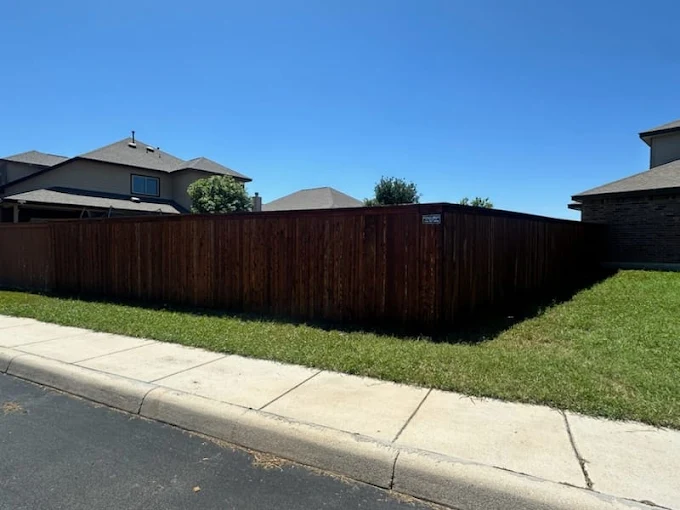
Expert Tips for Lasting Commercial Fencing
A lot of North Texas business owners don’t realize how much money they quietly lose each year because of failing fences—until a section blows down in a spring storm or a security incident forces an emergency repair. In the Plano area alone, insurance claims related to property damage and theft have climbed steadily over the past decade, and perimeter security is one of the first things adjusters look at when evaluating risk. Add in the intense Texas sun, clay soil that shifts with every drought and rain cycle, and high winds across open parking lots, and your commercial fence is under constant attack.
For businesses in Plano, your fence isn’t just a boundary line. It’s a security system, a first impression for customers, and in many cases, a compliance requirement. A well-designed commercial fence protects your property, reduces liability, and can even boost curb appeal and property value.
You’re about to learn how to choose the right materials, design for durability, work with our local soil and climate, and maintain your fence so it lasts years longer than average. You’ll also see real-world examples from North Texas properties and practical steps you can use immediately.
Key Insight: Long-lasting commercial fencing isn’t about picking the “strongest” material—it’s about matching design, materials, and installation to your specific site, use, and North Texas conditions.
Start with Purpose: Security, Privacy, or Presentation?
Every lasting commercial fence starts with a clear purpose. If you try to make one fence do everything—security, privacy, decoration, crowd control—you end up overspending on features you don’t need and underbuilding where it matters most.
For many Plano businesses, needs fall into a few common categories:
- Security-focused: warehouses, distribution centers, equipment yards
- Privacy-focused: medical offices, law firms, daycare centers
- Presentation-focused: retail centers, restaurants, office campuses
- Safety/compliance: pool enclosures, manufacturing facilities, schools
A logistics company near the George Bush Turnpike, for example, came to us after a series of after-hours trespassing incidents. Their existing 4-foot chain link was more symbolic than secure. We replaced it with an 8-foot Security Fence Installation using heavy-gauge steel, privacy slats in key areas, and controlled entry gates. Incidents dropped to zero, and their insurer reduced their premium.
“Form follows function. If you don’t define the job your fence has to do, it will eventually fail at all of them.” — Senior Project Manager, Fence Pros of Texas
When you define purpose up front, you make better decisions about height, material, and layout:
- High-security areas often call for Wrought Iron Fences or welded steel with anti-climb designs.
- Privacy-sensitive sites might lean toward tall Wood Fences, Vinyl Fences, or Corrugated Metal Fences.
- Customer-facing properties often choose decorative Aluminum Fences or mixed-material designs that match the building’s architecture.
Once the purpose is clear, you can start comparing materials based on how well they support those goals in Plano’s climate.
Choosing the Right Material for North Texas Conditions
North Texas is tough on fences. UV exposure, temperature swings, shifting soils, and occasional hailstorms all shorten the life of poorly chosen materials. Longevity comes from matching material to both use and environment.
Here’s a simplified comparison for common commercial options you’ll see around Plano:
| Material | Typical Use | Durability in Plano Climate | Maintenance Level | Approx. Lifespan (Well Maintained) |
|---|---|---|---|---|
| Chain Link Fences | Security yards, utilities, schools | High (galvanized) | Low | 20–30+ years |
| Aluminum Fences | Office parks, retail, pools | Very high (no rust) | Very low | 30+ years |
| Vinyl Fences | Privacy, medical, childcare | High (UV-resistant) | Low | 20–30 years |
| Wood Fences | Privacy, screening, mixed-use | Medium (needs staining) | Medium–High | 15–20 years |
| Wrought Iron Fences | High-end security, estates, campuses | Very high (if coated) | Medium | 30–40+ years |
| Metal Fence Installation (corrugated) | Modern privacy, industrial | Very high (properly coated) | Low–Medium | 25–30+ years |
A Plano medical office near Preston Road chose a tall Vinyl Fence Installation for their rear parking lot. They needed privacy for patients and a clean, low-maintenance look. Vinyl holds color well in the sun, resists moisture, and doesn’t warp like untreated wood can in our heat, so their long-term upkeep is minimal.
On the other hand, a light industrial property off US-75 used Chain Link Fence Installation with barbed wire for perimeter security, then added an inner line of trees to soften the appearance from the street. That combination delivered strong security at a much lower cost per foot than a solid privacy fence.
CALLOUT: Don’t pick material on appearance alone. A beautiful fence that fails in 5–8 years because it wasn’t suited to our climate will cost more in the long run than a slightly higher upfront investment in the right product.
As you evaluate materials, ask specifically about coatings, galvanization, and UV resistance—those details make a big difference in North Texas longevity.
Design Details That Quietly Add (or Subtract) Years of Life
Two fences made from the same material can have radically different lifespans depending on design choices. Smart design anticipates wind, soil movement, traffic patterns, and how people actually use the space.
Some of the most critical design factors for a lasting commercial fence in Plano include:
- Post spacing and depth: Wider spacing reduces upfront cost but increases stress on each panel during high winds. In open parking lots or along fields, tighter post spacing and deeper footings are worth it.
- Wind load considerations: Solid Privacy Fence Installation catches wind like a sail. Adding small gaps, using staggered boards, or mixing materials can reduce wind pressure.
- Traffic and impact zones: Near loading docks, dumpsters, or tight turns, adding bollards or reinforced sections prevents vehicle damage.
- Drainage planning: Standing water at the base of any fence—especially wood or steel—shortens its life dramatically.
We worked with a Plano church that had repeated issues with a wood privacy fence along their parking lot. Every big storm brought new leaning sections. The original builder had set posts too shallow in the expansive clay soil and placed the fence directly in a low spot where water pooled.
We redesigned the layout with:
- Deeper concrete footings below the active soil layer
- Slight elevation changes to keep posts out of standing water
- A board-on-board design to allow limited airflow while maintaining privacy
That same fence has now survived multiple storm seasons with minimal movement.
“Most fence failures aren’t material failures—they’re design and installation failures.” — Lead Installer, Fence Pros of Texas
Thoughtful design also includes how your fence connects to buildings, slopes, and existing structures. Gaps at the bottom of a security fence on a sloped lot, for example, can completely undermine its purpose.
Installation Quality: Where Longevity Is Won or Lost
Even the best material and design won’t hold up if the installation is rushed or done to “residential” standards on a commercial site. Commercial fences see more stress—from vehicles, equipment, crowds, and security demands—so the installation must be up to the task.
Key elements of a long-lasting commercial installation in Plano:
- Soil-aware footings: Our expansive clay swells when wet and shrinks when dry, which can heave shallow posts. We often drill deeper, bell the bottom of the footing, or use larger-diameter holes to resist movement.
- Proper concrete curing: Setting posts in dry mix and “letting the rain do the work” is a shortcut that leads to loose posts. Commercial jobs require measured water, thorough mixing, and adequate cure time.
- Hardware and fasteners: Galvanized or stainless hardware is non-negotiable for longevity. Cheap fasteners are often the first point of failure.
- Alignment and tension: For Chain Link Fences, proper stretching and bracing keep the fabric tight and resistant to sagging and damage.
A Plano manufacturing facility near the tollway learned this the hard way. Their previous contractor rushed a large Commercial Fence Installation to meet a move-in deadline. Two years later, sections were leaning, gates dragged on the pavement, and rust appeared at the base of multiple posts. We were brought in to assess and ended up replacing nearly 40% of the line and all gate posts.
By contrast, when we install a Wrought Iron Fence Installation or heavy steel perimeter, we:
- Core-drill into existing concrete where appropriate
- Use schedule 40 posts for high-stress areas
- Fully weld or use commercial-grade brackets rated for the fence load
- Coordinate with any Access Control systems to protect wiring and components
CALLOUT: Ask your contractor what’s different about their commercial installation standards vs. residential. If the answer is “not much,” that’s a red flag.
Quality installation is also where future Fence Repair and upgrades are made easier or harder. A thoughtful installer plans for eventual replacement of sections and gates without tearing out half your site.
Maintenance: The Small Habits That Double Fence Lifespan
No commercial fence is truly “set it and forget it.” The difference between a fence that lasts 10 years and one that lasts 25 often comes down to simple, regular maintenance—especially in Plano’s harsh sun and seasonal storms.
For most commercial properties, a basic annual maintenance plan should include:
- Visual inspection: Walk the line and look for leaning posts, loose hardware, rust spots, and damaged panels.
- Vegetation control: Keep vines, shrubs, and sprinkler overspray off the fence. Plants trap moisture and accelerate rot or rust.
- Cleaning: Power-wash vinyl, aluminum, and glass surfaces to remove pollutants and mildew.
- Surface protection: For wood, regular Fence Maintenance through staining or sealing is critical in our climate.
A Plano restaurant with a large outdoor patio is a good example. Their original wood screening fence faded and cracked within three years because it was never sealed. When we replaced it, we also set them up on a scheduled Staining program—initial stain after installation, then maintenance coats every 3–4 years. The fence now looks better at year five than the original did at year two.
“A few hundred dollars a year in maintenance can easily extend a commercial fence’s life by 5–10 years.” — Operations Manager, Fence Pros of Texas
For higher-end materials:
- Aluminum Fences: Rinse occasionally, spot-check for damage to powder coating, touch up as recommended by the manufacturer.
- Glass Fences: Use proper glass cleaners and check hardware for corrosion, especially near pools or water features.
- Corrugated Metal Fences: Inspect coating for scratches, especially near high-traffic or loading areas, and touch up promptly.
Proactive maintenance also helps you catch small issues—like a loose hinge on a Commercial Gates system—before they cause a major security or safety problem.
Integrating Fencing with Access, Aesthetics, and the Rest of Your Property
A long-lasting commercial fence doesn’t exist in isolation. It has to work with your gates, access control, landscaping, and even your brand image.
In Plano’s competitive business environment—especially along high-visibility corridors like US-75, Preston Road, and Legacy Drive—appearance matters as much as performance.
Some smart integration strategies we see local businesses using:
- Access control + fencing: Pairing perimeter fences with Access Control systems (keypads, card readers, telephone entry) at vehicle and pedestrian gates. This reduces unauthorized access without overbuilding the fence itself.
- Mixed Material Fences: Combining masonry columns with Metal Fence Installation, or using wood and steel together, to match building architecture while maintaining durability.
- Decorative details: Using Decorative Fence Installation elements—such as finials, custom panels, or color-matched coatings—to reinforce your brand.
A Plano office park near Legacy West recently upgraded from basic chain link to a combination of stone columns, powder-coated Aluminum Fence Installation, and custom Estate Gates at the main entry. They integrated LED lighting into the gate columns and tied the entry gates into an access control system for tenants. Not only did security improve, but occupancy rates and perceived property value increased.
| Traditional Approach | Integrated, Modern Approach |
|---|---|
| Fence chosen in isolation | Fence, gates, and access control planned together |
| One material for entire property | Mixed materials based on function and visibility |
| Manual padlocked gates | Automated Commercial Gates with access control |
| Fence as “necessary expense” | Fence as part of brand, security, and site design |
CALLOUT: Your fence line is often the first and last thing customers, employees, and delivery drivers see. Treat it as part of your overall property experience, not just a barrier.
Thoughtful integration also extends to residential-adjacent properties. If your commercial site backs up to homes, using privacy-friendly materials or coordinating with neighboring Residential Fence Installation can reduce complaints and create a more harmonious boundary.
What This Means for Businesses in Plano, TX
Plano has a unique combination of factors that make investing in long-lasting commercial fencing especially worthwhile.
You’re operating in a high-visibility, high-value market. Many commercial areas—Legacy West, Granite Park, downtown Plano—are surrounded by properties that have invested heavily in appearance and security. A failing or outdated fence stands out immediately and can drag down perceptions of your business.
At the same time, you’re dealing with:
- Expansive clay soil that moves with every wet/dry cycle
- Intense UV exposure that fades and cracks unprotected materials
- Occasional severe storms with high winds and flying debris
Cutting corners on design, materials, or installation in this environment almost guarantees higher long-term costs. On the other hand, businesses that choose the right combination of materials—such as durable Metal Fence Installation for security areas and low-maintenance Vinyl Fence Installation or Aluminum Fences for customer-facing spaces—see lower repair bills and fewer disruptions.
There’s also a compliance and liability angle. Daycares, pools, medical facilities, and certain industrial sites in Plano must meet specific fencing standards. Working with a contractor who understands both local codes and industry best practices helps you avoid costly changes after an inspection.
For property managers overseeing multiple sites across Plano, Richardson, and Frisco, standardizing on proven designs and maintenance schedules can simplify operations and budgeting. Whether you’re managing Garden Fence Installation for a mixed-use development, perimeter security for warehouses, or decorative entries with Residential Gates on a corporate campus, the principles are the same: clear purpose, smart design, quality installation, and consistent care.
Frequently Asked Questions
Q: How do I choose the right fence material for my specific commercial property in Plano?
A: Start with how your property is used and where it’s located. High-traffic industrial areas near US-75 might benefit from durable Chain Link Fences or Metal Fence Installation with added security features, while professional offices near Legacy West often prefer the clean lines of Aluminum Fences or decorative Wrought Iron Fences. Consider visibility, security needs, desired privacy level, and your tolerance for maintenance. In Plano’s climate, UV-resistant materials like vinyl, aluminum, and properly coated steel perform particularly well. A site visit from an experienced contractor can help you compare options and costs side by side for your specific layout.
Q: What kind of maintenance schedule should I budget for to make my fence last?
A: For most Plano commercial properties, an annual inspection and basic service is the minimum. That includes checking for loose hardware, rust, leaning posts, gate operation issues, and any damage from vehicles or storms. Wood fences benefit from professional Fence Maintenance and Staining every 3–4 years to protect against sun and moisture. Metal and Vinyl Fences should be cleaned periodically to remove buildup and checked for coating damage. If you have automated Commercial Gates or Access Control systems, those should be inspected twice a year. Building this into your operating budget helps avoid large, unexpected Fence Repair or early Fence Replacement costs.
Q: Are there special code requirements for pool, daycare, or medical facility fencing in Plano?
A: Yes. Properties with pools must meet specific height, latch, and non-climbable design requirements for Pool Fence Installation. Daycares and schools typically need higher fences with controlled access and limited climbability. Medical facilities often prioritize privacy, driving the need for taller Privacy Fence Installation options like vinyl, wood, or composite. Plano follows international building and safety codes with local amendments, so it’s important to work with a contractor familiar with these standards. They can design Custom Fence Design solutions that meet code while still matching your property’s aesthetics and budget.
Q: How can I balance security and appearance for customer-facing areas?
A: Many Plano businesses accomplish this by mixing materials and using layered security. For example, a retail center might install decorative Aluminum Fence Installation or Decorative Fence Installation along the street frontage, then use taller, more utilitarian Chain Link Fence Installation or corrugated metal along service alleys and loading docks where visibility is lower. Integrating Access Control at entries, using attractive Estate Gates, and coordinating fence colors with the building can create a secure perimeter that still feels welcoming. Thoughtful landscaping also helps soften the look without compromising function.
Q: My current commercial fence is failing. How do I know if I should repair or replace it?
A: The decision comes down to the extent of damage, age, and whether the existing fence still meets your needs. If more than 25–30% of the line is leaning, rusted through, or rotted—especially with older Wood Fences—full Fence Replacement often makes more sense than repeated Fence Repair. We also look at gate function, post condition, and whether the layout still supports current security and privacy requirements. In Plano, many businesses inherit older fences built to lighter standards. Replacing those with modern Commercial Fence Installation that accounts for today’s codes and climate can reduce long-term risk and maintenance.
Q: Can I match my new commercial fence to existing residential-style fencing nearby?
A: Absolutely. This is common when commercial properties back up to neighborhoods in Plano. We often design transitions that respect residential aesthetics—such as using compatible Residential Fence Installation styles or stepping down from tall Security Fence Installation to more neighbor-friendly heights and materials. For example, a business might use 8-foot Wrought Iron Fence Installation along the front and sides, then transition to a 6-foot stained wood or vinyl fence along the rear property line. Thoughtful Custom Fence Design can create security for your site while maintaining good relationships with adjacent homeowners.
Q: Are glass or modern mixed-material fences practical for commercial use here?
A: They can be, especially for high-end retail, hospitality, and office environments. Glass Fences around patios or pools create an upscale, open feel while still providing safety. Mixed Material Fences—such as steel frames with wood or composite infill, or masonry columns with metal panels—offer a modern look with excellent durability. In Plano’s climate, the key is quality materials and professional installation to manage weight, wind loads, and thermal expansion. Maintenance tends to be straightforward: periodic cleaning and inspections, with less frequent need for major work compared to untreated wood.
Ready to Get Started?
Plano’s business landscape isn’t slowing down, and neither are the demands on your property. Every season you wait on upgrading or reinforcing your commercial fencing is another season of exposure—to security risks, weather damage, and potential liability.
Right now is an ideal time to assess your perimeter. Before the next major storm system rolls through North Texas or summer heat pushes materials to their limit, you can have a clear plan in place—whether that’s targeted Fence Repair, a full Commercial Fence Installation, or adding automated Commercial Gates and Access Control to what you already have.
The next steps are simple:
- Walk your property and note problem areas
- Clarify your top priorities: security, privacy, appearance, or all three
- Schedule a consultation to review options and costs tailored to your site
Fence Pros of Texas has years of experience working with businesses across Plano and the surrounding communities, from small offices to large industrial parks and agricultural sites that also need durable Farm Fencing. Our team designs for North Texas conditions from day one, so your investment keeps working for you long after the concrete cures.
About Fence Pros of Texas
Fence Pros of Texas is a locally focused fencing contractor serving Plano and the North Texas region with expert design, installation, and maintenance services. Our team has extensive experience with Residential Fence Installation, Commercial Fence Installation, Farm Fencing, Railings, and custom gate and Access Control solutions. We’re committed to building fences that match both your property’s needs and our challenging Texas climate, using proven materials and industry-best installation practices. To learn more about our services and see examples of our work, visit our homepage.