
Residential Fencing for Pool Areas: Safety First
A backyard pool is one of the best ways to beat the Texas heat, especially in Plano where summer temperatures often hit triple digits. But alongside all that fun comes a serious responsibility: keeping kids, pets, and guests safe around the water. According to the CDC, drowning is the leading cause of unintentional injury death for children ages 1–4, and most incidents happen in residential pools. In Texas, where backyard pools are common, local code and best practices put strong emphasis on secure, code-compliant fencing.
For homeowners in Plano and the surrounding communities, pool safety isn’t just a box to check—it’s a combination of smart design, solid materials, and professional installation. This guide walks you through what you need to know about residential pool fencing: safety codes, material options, design choices, and how to balance aesthetics with protection and privacy.
Key Insight: The safest pool areas pair code-compliant fencing with thoughtful design and professional installation so your backyard feels like a retreat—not a risk.
Why Pool Fencing Matters So Much in Plano, TX
Plano has a high concentration of single-family homes with backyard pools, and many neighborhoods are full of kids, pets, and frequent visitors. That combination makes secure pool fencing more than a legal requirement—it’s a daily safety net.
Texas doesn’t have one single statewide residential pool fence law, but cities and counties typically adopt versions of the International Swimming Pool and Spa Code (ISPSC). Plano follows these standards, which set minimum heights, gate requirements, and restrictions on climbable surfaces. A properly designed pool fence is often the difference between a near-miss and a tragedy.
We often meet families in Collin County after a close call—like the Plano homeowner whose toddler slipped out a back door while they were unloading groceries. The only reason it wasn’t a disaster was the self-closing, self-latching gate on their pool enclosure. That gate, integrated into a professionally built Residential Fence Installation, did its job.
“Pool fencing is one of those investments you hope never has to prove its worth—but when it does, nothing else can take its place.” — Local Safety Inspector
Beyond safety, a well-planned pool fence:
- Helps you stay in compliance with local codes and insurance requirements
- Reduces liability when hosting guests or short-term renters
- Adds structure and value to your landscape design
As Plano continues to grow and backyards get more use than ever, putting safety first around your pool is both a legal and practical necessity.
Understanding Code, Height, and Gate Requirements
Safety around a pool starts with knowing the minimum standards you must meet. While details can vary, most pool fence codes in North Texas share some core requirements.
Typical Code-Based Requirements
- Minimum fence height: Usually at least 48 inches
- Clearance at bottom: Typically no more than 2 inches from finished grade
- Non-climbable design: No footholds or horizontal rails that kids can use as a ladder
- Gate standards:
- Self-closing and self-latching
- Latch mounted at least 54 inches above ground, or shielded
- Gates must swing outward, away from the pool
- Openings: Spacing in pickets or mesh small enough that a 4-inch sphere can’t pass through
These details affect how we design and build everything from Wood Fences to Aluminum Fences around pools.
Real-World Example in Plano
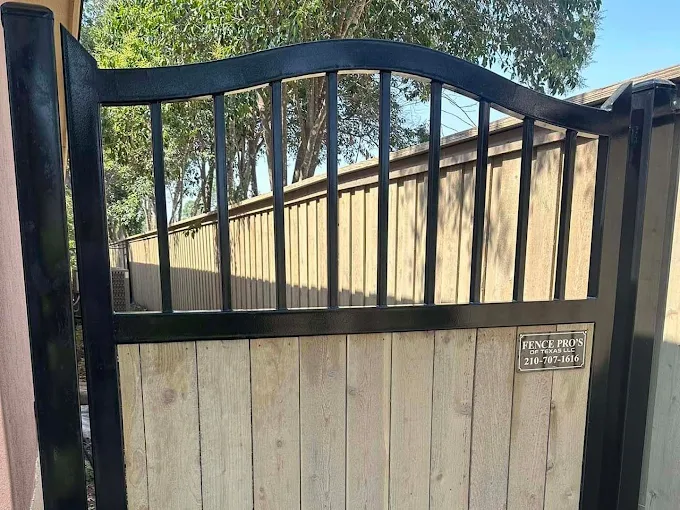
A homeowner in West Plano wanted a decorative metal enclosure around a new pool, with an arched gate and ornate scrollwork. The initial design from their landscaper looked great—but failed key code points: horizontal rails were too close together, and the latch was within reach of a small child.
We redesigned the project using a code-compliant Wrought Iron Fence Installation style:
- Raised and shielded the latch
- Adjusted rail spacing to prevent climbing
- Integrated a self-closing hinge system
The finished fence passed inspection on the first try and still delivered the elegant look they wanted.
CALLOUT: Safety codes are a starting point, not the finish line. Smart design often goes beyond minimum requirements, especially when young children are in the home or frequently visiting.
Choosing the Right Material: Safety, Style, and Maintenance
Once you understand the safety rules, the next step is choosing the right material for your pool fence. Plano homeowners have several strong options, each with its own balance of cost, appearance, and upkeep.
Common Pool Fence Materials
Below is a simplified comparison tailored to typical Plano projects:
| Material | Approx. Cost (Installed, per linear ft) | Pros | Cons | Best For |
|---|---|---|---|---|
| Aluminum / Ornamental | $$–$$$ | Low maintenance, elegant, durable | Less privacy | Modern and traditional yards |
| Wrought Iron | $$$ | High-end look, strong, long-lasting | Higher cost, needs periodic maintenance | Luxury homes, custom designs |
| Vinyl | $$–$$$ | Low maintenance, good privacy options | Can crack with impact, fewer custom shapes | Clean, contemporary looks |
| Wood | $–$$ | Warm, natural, customizable | Requires staining/sealing, more upkeep | Rustic, traditional, or privacy focus |
| Glass | $$$$ | Unobstructed views, modern | High cost, cleaning, code & hardware needs | Premium, view-focused backyards |
| Mixed Material / Metal | $$–$$$ | Custom look, strong structure | Design complexity | Custom, design-forward spaces |
\Local costs vary based on layout, access, and design details.
How This Plays Out in Plano Backyards
- A family in East Plano with a narrow yard chose a sleek black Aluminum Fence Installation to keep the space feeling open while protecting their kids and small dog. The narrow pickets and sturdy gate met safety codes and paired nicely with their existing patio railing.
- In a more established neighborhood near Legacy West, a homeowner opted for a classic Wood Fence Installation around the yard perimeter for privacy, then an interior ornamental metal fence around the pool itself. This “double-layer” solution gave them both seclusion and visibility to the water.
“Material choice should reflect how you use your yard, not just what’s trending on social media.” — Senior Project Manager, Fence Pros of Texas
If you’re concerned about long-term upkeep, pairing a durable structure with professional Fence Maintenance and staining services can extend the life of wood or mixed-material designs significantly.
Balancing Privacy, Visibility, and Aesthetics
Pool fencing has a unique design challenge: it must secure the water, but it also shapes how you experience your backyard. Plano homeowners often want three things at once—privacy from neighbors, clear sightlines to the pool, and an attractive look that complements their home.
Privacy vs. Supervision
For safety, it’s critical that adults can see the pool from key vantage points such as:
- Kitchen or living room windows
- Covered patio or outdoor seating area
- Doors leading to the backyard
Full-privacy fencing right at the pool edge can sometimes limit visibility. That’s why many Plano projects use a layered approach:
- Outer perimeter: Taller Privacy Fence Installation with wood, vinyl, or mixed materials for seclusion from neighbors.
- Inner pool fence: More open style such as Metal Fence Installation, aluminum, or glass to maintain sightlines to the water.
Example: Layered Design in a Plano Cul-de-Sac
A cul-de-sac homeowner with neighbors on three sides wanted to feel “tucked away” while swimming, but also needed to keep eyes on the pool from their kitchen. We installed:
- A 6-foot board-on-board wood fence around the back property lines
- An interior black Decorative Fence Installation in aluminum around the pool
- A matching Residential Gates system with a self-closing pool gate
The result: privacy from the street and neighbors, yet clear views of the pool from the house and patio.
Thoughtful combinations like this allow your pool area to feel like a private retreat without compromising on supervision or safety.
Gates, Access Control, and Smart Safety Features
The gate is the most critical part of any pool fence. It’s also the most common weak point when DIY installations or shortcuts are involved. In Plano, where kids often move between multiple backyards and shared play spaces, controlling who can access the pool area matters just as much as the fence itself.
Gate Best Practices
A safe, code-compliant pool gate typically includes:
- Outward swing, away from the pool
- Self-closing hinges adjusted to fully shut every time
- Self-latching hardware placed out of reach of small children
- Hardware designed for the specific material (metal, vinyl, wood)
- No large gaps at latch points or hinge sides
We frequently upgrade older pool gates that were installed with basic hardware meant for yard gates, not safety enclosures. Replacing that with purpose-built pool hardware is a small cost with a big impact.
Adding Technology and Extra Security
For families who want an extra layer of protection, we often integrate:
- Keypad or card-based Access Control on pool gates
- Self-locking latches that require an adult-level action to open
- Tied-in alerts or chimes when a gate opens
A Plano client with grandchildren who visit regularly asked for an upgraded system. We installed an ornamental metal pool fence with:
- A self-closing gate
- A magnetic, self-latching mechanism
- Electronic access control tied into their home system
This gave them peace of mind when the grandkids were over—and confidence that neighborhood children couldn’t easily wander in.
“Every pool gate should be treated like a front door to the water—secure, reliable, and checked regularly.” — Fence Safety Consultant
For larger properties or estates with multiple entrances to the pool area, our team may recommend combining Estate Gates or Commercial Gates-grade hardware with residential aesthetics to ensure durability.
Integrating Pool Fencing with Your Whole Property
A pool fence doesn’t exist in isolation. It connects with your yard fencing, railings, decks, and sometimes even farm or acreage boundaries. A cohesive plan can improve safety, reduce costs, and make your property feel thoughtfully designed instead of pieced together.
Connecting Perimeter Fences and Pool Enclosures
Many Plano homes already have a perimeter fence—often wood or mixed material. The question is how to tie that into a new or upgraded pool fence:
- Use compatible materials or colors for a unified look
- Ensure any shared sections still meet pool safety code
- Avoid “shortcuts” like using the house wall without addressing doors and windows
For example, a West Plano homeowner with an existing board-on-board fence added a new interior pool enclosure in powder-coated black metal. We matched the height and lines of their stair Railings on the back patio, creating a consistent style from the deck to the pool gate.
Larger Properties and Special Uses
Some properties on the outskirts of Plano and in neighboring communities like Parker or Murphy combine:
- Yard fencing
- Pool fencing
- Farm Fencing or acreage fencing for animals
In one such project, a homeowner with horses needed:
- A safe pool fence for kids and guests
- Separate fencing for the pasture
We installed a metal pool fence near the home and a different style of farm fence farther out. The two systems shared a consistent color palette and gate hardware style, but were optimized for very different needs: child safety near the house, animal containment in the field.
Maintenance, Inspections, and Long-Term Safety
A pool fence that was safe on day one can become a hazard if it isn’t maintained. In Plano’s climate—hot summers, occasional freezing temps, and strong storms—materials and hardware face real stress over time.
Key Maintenance Tasks
- Check gates monthly
- Confirm self-closing hinges still work properly
- Test latches for secure closure
- Inspect for gaps or damage
- Warped or broken pickets in Wood Fences
- Rust or loose fasteners in Metal Fence Installation
- Cracks or broken pieces in Vinyl Fences
- Maintain protective finishes
- Stain and seal wood regularly with professional Fence Maintenance services
- Touch up chips in coated metal to prevent rust
“Treat your pool fence like safety equipment, not just landscaping. If something breaks, it deserves the same urgency as a broken lock on your front door.” — Operations Manager, Fence Pros of Texas
Example: Preventative Care in Action
A Plano client with a 6-year-old ornamental metal pool fence scheduled a routine inspection. We found:
- One hinge starting to sag
- A latch catch that had shifted slightly due to soil movement
- A few small rust spots near sprinkler heads
We adjusted the gate, replaced worn hardware, and treated the rust before it could spread. The cost was modest, and the fence is now set for several more years of reliable service.
For older pools or fences installed by previous homeowners, a professional safety audit is especially valuable. We can evaluate whether your current system still meets modern code and best practices and recommend targeted Fence Repair or Fence Replacement where needed.
What This Means for Homeowners in Plano, TX
Plano’s growth, family-friendly neighborhoods, and hot climate make backyard pools a natural feature of many homes. That also means local officials, insurance companies, and real estate professionals pay close attention to pool safety features—especially fencing.
For homeowners, that translates into several practical realities:
- Home value and resale: Buyers with children (or planning families) often look for secure, attractive pool fencing as a must-have, not a nice-to-have. Code-compliant Residential Fence Installation around your pool can be a selling point.
- Insurance considerations: Carriers may ask about pool fences and gates when setting or renewing policies. Some even require a certain level of Security Fence Installation for pools.
- Neighborhood standards: Many Plano HOAs have design guidelines that affect fence height, material, and color. Working with a local contractor familiar with these rules avoids costly revisions or violations.
Because Plano is part of a larger North Texas metro area, your pool fence has to stand up to intense sun, occasional hail, and shifting soil. Choosing durable materials, quality hardware, and professional installation is an investment in both safety and longevity.
For families who entertain frequently, have multi-generational households, or share fences with neighbors, a well-designed pool fence offers daily peace of mind. It’s the quiet line of defense that lets you enjoy your backyard retreat without constant worry.
Frequently Asked Questions
Q: Does Plano require a specific type of fence around residential pools?
A: Plano generally follows the International Swimming Pool and Spa Code, which focuses on performance rather than a single “type” of fence. That means several materials—such as Aluminum Fences, Vinyl Fences, and Wrought Iron Fences—can all be compliant if designed correctly. What matters most is height, gate function, spacing of pickets, and non-climbable design. During a site visit, we review local code, HOA rules, and your property layout, then recommend a pool fence design that satisfies all requirements while still fitting your style and budget.
Q: Can my existing backyard fence count as my pool fence, or do I need a separate enclosure?
A: Sometimes your existing fence can serve as the pool barrier, but only if it meets all pool safety standards. Many Plano homes have perimeter Wood Fences that are great for privacy but may fall short for pool safety—especially at gates and along sloped areas. We often add an interior Pool Fence Installation around the immediate pool area while leaving the yard fence as-is. This layered approach keeps costs down and maintains privacy, while ensuring the water is secured even if a perimeter gate is accidentally left open.
Q: What is the safest gate option for families with young children?
A: The safest pool gates combine multiple features: self-closing hinges, a self-latching mechanism, and a latch location that’s out of reach for small children. Many Plano families also opt for enhanced Access Control, such as keypads or magnetic locks, especially if the pool area is frequently used for gatherings. We recommend testing gates regularly—at least monthly—to ensure they close and latch reliably. For households with toddlers, we often suggest higher latch placement, shielded latches, and sometimes alarms or chimes that notify you when a gate opens.
Q: Are glass pool fences a good idea in North Texas weather?
A: Glass pool fences can work well in Plano for homeowners who want unobstructed views and a modern aesthetic, but they require careful planning. High-quality tempered glass panels and sturdy posts are essential to handle wind and temperature swings. Maintenance is also a factor—glass shows water spots and dust more than Metal Fence Installation or vinyl, so you’ll need to clean it more often. When designed and installed correctly, glass can meet safety codes and perform well here, but it tends to be more expensive than aluminum or Chain Link Fences configured for pool use.
Q: How much does a typical residential pool fence cost in Plano?
A: Costs vary widely depending on material, layout complexity, and total footage. A straightforward Aluminum Fence Installation around a standard suburban pool will usually fall in the mid-range price bracket, while custom Wrought Iron Fence Installation or glass systems can be higher. Wood or certain Chain Link Fence Installation options may be more budget-friendly, but may not deliver the same aesthetics. During an on-site consultation, we provide a detailed quote that includes materials, hardware, and labor, and we can discuss ways to phase or adjust the project to match your budget without compromising safety.
Q: What if my pool fence is older—do I need to replace it to meet current standards?
A: Not always. Many older fences can be brought up to current safety expectations with targeted Fence Repair and hardware upgrades. Common improvements include replacing worn gate hinges, adding self-closing and self-latching mechanisms, reducing gaps, or adjusting picket spacing. In some cases, especially with very low or deteriorated fences, Fence Replacement is the safest and most cost-effective option. We offer safety inspections in Plano to evaluate your existing fence and outline whether repairs, upgrades, or full replacement make the most sense.
Q: Can I get a decorative pool fence that still meets code and looks good with my home?
A: Absolutely. Modern Decorative Fence Installation techniques allow for stylish designs in aluminum, wrought iron, and even mixed materials without sacrificing safety. We regularly design custom solutions that echo architectural details from your home, coordinate with porch Railings, or complement existing Residential Gates. The key is starting with code requirements, then working design elements—like finials, arches, and color—within those parameters. This approach gives you a fence that protects your family and enhances curb appeal at the same time.
Ready to Get Started?
Pool season in Plano comes early and stays late, which means the best time to address fencing is before temperatures climb and the pool is in constant use. Contractors’ schedules also fill up quickly in spring and early summer, so planning your project now helps ensure your fence is in place when you need it most.
If you’re adding a new pool, upgrading an older enclosure, or simply not sure whether your current fence is safe, a professional assessment is the first step. Our team at Fence Pros of Texas can walk your property, review local code and HOA requirements, and recommend a tailored plan—whether that’s a new Residential Fence Installation, a focused Fence Repair, or a complete Fence Replacement.
You’ll get clear pricing, material options that fit Plano’s climate, and design ideas that blend safety with style. Take the step now so your family, friends, and neighbors can enjoy your backyard retreat with confidence all season long.
About Fence Pros of Texas
Fence Pros of Texas is a locally focused fencing contractor serving Plano and the greater North Texas area. Our team specializes in pool-safe Residential Fence Installation, Commercial Fence Installation, custom gates, and long-lasting finishes tailored to the Texas climate. With years of experience navigating local codes, HOA standards, and complex property layouts, we help homeowners create outdoor spaces that are both beautiful and secure. Learn more about our services and projects at our website.