
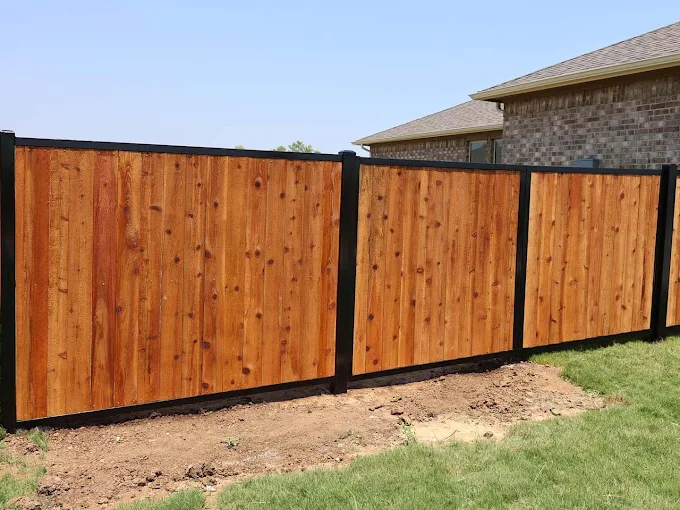
Prevent Cracking and Rot with Proper Fence Staining
If your wood fence around your Plano, TX property is starting to look dry, rough, or prematurely worn, the finish you choose and the way it’s applied can make a major difference. This guide walks you through what to check, how staining helps against cracking and rot, and how to time maintenance so your fence holds up season after season.
You pressure-wash your yard after pollen season, and the fence looks fine for a few weeks. Then the boards start to look faded, hairline cracks appear near the edges, and some posts seem to hold moisture longer than they used to.
In Plano, that cycle can be frustrating because your fence is dealing with sun exposure, temperature swings, and wetting-drying patterns. This guide helps you understand what causes cracking and rot, what to inspect before you stain, and how to pick the right approach for wood fence maintenance.
- Quick answer
- What to check first
- Main things customers should understand
- Why this matters in Plano, TX
- Common mistakes to avoid
- Customer checklist
- Frequently asked questions

Quick Answer
Proper staining helps protect wood fences by reducing how much water soaks into the grain and by adding a protective film that slows weathering. Start by cleaning the fence, letting it dry fully, and checking for any soft or rotting boards. If the wood is bare or unevenly weathered, a penetrating stain is often the best fit for long-term protection. For the most consistent results, choose a stain appropriate for exterior wood and apply it with attention to end grain and fence pickets. If you see rot, repair first, then stain.
What to Check First
Before you buy stain or schedule a weekend project, walk the fence line slowly and look for the issues that staining cannot fix on its own. The goal is to stain a sound surface so the finish can do its job.
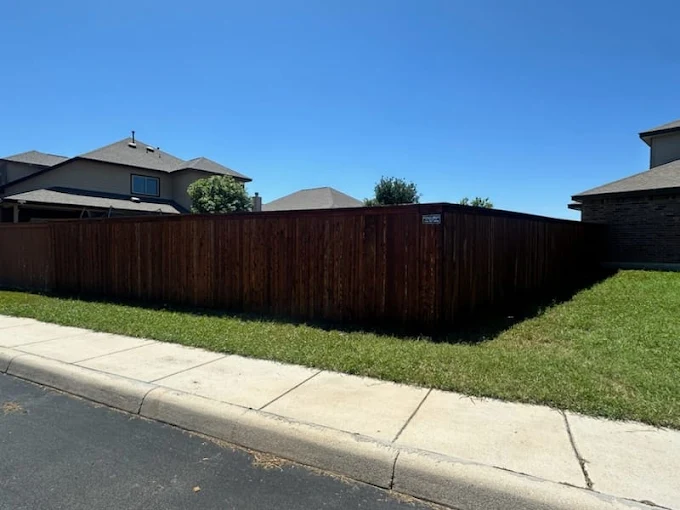
Check for rot and softness
Press gently on boards and rails. If wood feels spongy, crumbles, or shows deep discoloration, repair those sections first.
Look at end grain and edges
End grain absorbs moisture faster. Cracking often starts near edges where water can sit and cycle.
Confirm the fence is dry
Staining too soon after rain or cleaning can trap moisture. Plan for a stretch of dry weather in Plano.
Main Things Customers Should Understand
Staining is more than changing the color. It’s a protective maintenance step that affects how water moves through wood, how the fence weathers under sun, and how long the finish lasts before it needs attention again.
Professional observation: Cracking and early rot usually show up where water lingers. When homeowners stain without addressing that moisture pathway, the finish can wear unevenly and the underlying problem returns.
1) Use the right approach for your current finish
If your wood already has an older stain or sealer, you may need surface prep so the new product bonds properly. Uneven coating, peeling, or heavy residue can lead to patchy protection. A consistent, well-prepped surface helps the stain penetrate and form a durable barrier.
2) Don’t skip the cleaning step
Algae, mildew, and dirt reduce how well stain adheres. Cleaning also helps you see what’s actually going on. In many cases, the boards that look “mostly okay” reveal rough texture or minor damage after cleaning.
3) Pay attention to rails, posts, and horizontal surfaces
Horizontal rails and top edges tend to collect moisture. That’s where you often see discoloration first, followed by roughness and cracking. When applying stain, make sure these areas get full coverage.
4) Match the stain to an exterior wood fence
Wood fences are constantly exposed to sun and wetting-drying cycles. Choose a stain meant for exterior use on wood fencing, and use it according to label directions for application and drying time.
| Fence condition you notice | What it usually means | Practical next step |
|---|---|---|
| Hairline cracking along edges | Wood is drying and weathering faster than the protection can handle | Clean, dry fully, then re-stain with an exterior-appropriate product |
| Dark spots or soft sections | Moisture intrusion may be causing early rot | Repair affected boards or posts before staining |
| Uneven color or patchy coverage | Old coating may be failing or prep may be incomplete | Prep to a consistent surface so the new stain can perform uniformly |
| Stain looks dry quickly after application | Dry conditions, but possible surface contamination or thin coverage | Confirm proper prep and apply stain consistently, including end grain |
Why This Matters in Plano, TX
In Plano, wood fences commonly experience cycles of bright sun and periodic wetting that can speed up surface drying and moisture movement. That’s why you’ll often see cracking start where water can collect, like rails and the ends of pickets.
Another local reality: many fences in Plano neighborhoods are part of the everyday landscape. If you can’t afford long downtime, you still need a plan that fits dry weather windows and realistic drying times. A properly timed staining schedule helps the protective layer set before the next heavy wetting cycle.
Customer-focused tip: If you’re noticing new splits after rain, don’t wait for “major damage.” Addressing prep and coverage sooner can reduce the chance that moisture reaches deeper into the boards.
Need help deciding between fence repair and staining?
If you’re unsure whether your wood fence needs board replacement or just a finish refresh, Fence Pros of Texas can help you sort out what’s happening before you spend time and materials. We serve Plano, TX and the surrounding areas.
Talk to Fence Pros of Texas about stainingCommon Mistakes to Avoid
Most staining problems come from skipping steps or assuming the finish will cover up wood issues. These are the mistakes we see most often with wood fence maintenance.
- Staining over soft or rotting sections: A stain finish cannot restore structural soundness. If the wood is compromised, repair first.
- Applying stain before the fence is fully dry: Moisture trapped under the finish can contribute to uneven wear and faster deterioration.
- Relying on coverage only on the “front face” of the boards: End grain and edges take in water differently. If they’re missed, cracking can return sooner.
- Using the wrong product for exterior fencing: Interior or general-purpose coatings are not designed for outdoor weathering.
- Ignoring the rail and post areas: Water often lingers on horizontal surfaces and at post transitions. Those spots deserve extra attention.
Customer Checklist
Use this checklist to plan your staining project for your wood fence. If anything here looks uncertain, it’s a good sign to get a professional look before you start.
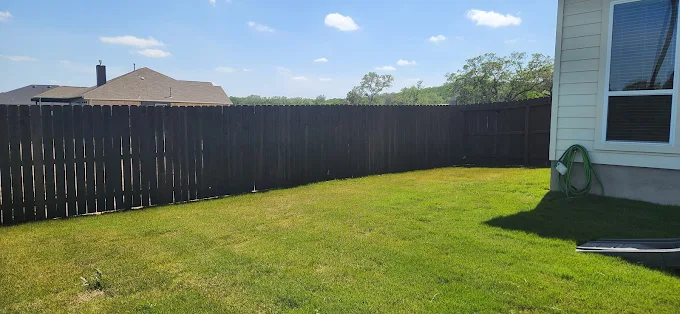
- Walk the entire fence line and identify any soft, damaged, or deeply discolored boards or posts.
- Clean the fence thoroughly to remove dirt, mildew, and residue that can block stain adhesion.
- Allow the wood to dry completely before staining.
- Inspect end grain, edges, and horizontal rails for signs of cracking or moisture retention.
- Choose an exterior wood stain appropriate for fencing and apply it per the product label.
- Apply stain consistently, including areas that are easy to miss, like board ends and transitions.
- Plan for a dry weather window so the finish can set without getting washed or disrupted.
A Representative Scenario (What This Looks Like on a Plano Property)
A homeowner in Plano noticed the fence around their backyard started to look rough along the edges of several pickets. After a rain, the area near the top rail looked darker for longer than the rest of the fence. They cleaned the fence and planned to stain right away, but when they pressed on a few boards, the wood felt slightly soft near the ends.
Instead of staining over the problem, they had those boards repaired first. Once the repaired sections were stable and the fence was fully dry, staining was applied with extra care on the rail areas and end grain. That sequence helped the fence look more even and reduced the speed at which new cracks appeared.
Frequently Asked Questions
How do I tell if my wood fence needs repair before staining?
If you find boards that are soft when pressed, show deep discoloration, or have areas that crumble or flake, treat that as a repair-needed sign. Staining can protect sound wood, but it cannot rebuild weakened structure. In practice, homeowners often notice moisture-related dark spots first, then cracking near board ends, and finally softness in the affected areas.
Can I stain my fence right after cleaning?
Usually not. After cleaning, you need enough dry time for the wood to return to a condition where the stain can bond and penetrate properly. If you stain while the fence still holds moisture, you can end up with uneven color and faster wear. Your best approach is to clean, confirm the fence is fully dry, and then stain during a stretch of weather that supports proper drying.
What parts of a fence should I focus on most during staining?
Give extra attention to horizontal rails, post transitions, and board end grain. Those areas tend to hold moisture longer and are common starting points for cracking. If you only coat the front faces, protection may be uneven. Consistent coverage across edges and ends helps slow weathering and reduces the chance of early splits showing up again.
Will staining stop rot completely?
Staining is designed to reduce moisture intrusion and slow weathering, but it cannot reverse rot that has already progressed into the wood. If rot is present, repair the affected boards or posts first, then stain to protect what remains. Think of staining as ongoing protection for sound wood, not a substitute for fixing compromised sections.
How do wood fences compare to other fence materials for maintenance?
Wood fences typically require periodic cleaning and staining to help manage moisture and sun exposure. Other materials are maintained differently. If you’re also considering upgrades or mixed-material fencing, you may be comparing options like residential fencing styles, including wood, metal, and chain link. The right plan depends on your goals for privacy, security, and upkeep.
Get the right fence maintenance plan for your property
If you’re planning staining for your wood fence and want a clear path forward, Fence Pros of Texas serves Plano, TX and surrounding areas. We can help you identify what needs repair, what needs prep, and how to approach staining so your fence looks better and stays protected.
(210) 707-1616
Fence Pros of Texas
Fence Pros of Texas provides fence and gate solutions for homeowners and businesses in Plano, TX and the surrounding areas, including railings, residential gates, and access control. If you’re working on a wood fence maintenance plan, our team can help you address cracking and rot risks with the right repair and staining approach.
Looking for a related fence type? Explore commercial fencing options to compare materials and maintenance needs.