

Fence Staining Frequency: How Often Should You Recoat
If your wood fence in Plano, TX looks dull, uneven, or feels rough after a season, you are not alone. This guide helps you spot the right recoat timing, understand what speeds up wear, and choose a maintenance rhythm that fits how your fence is exposed.
Last summer, you noticed the stain on your backyard wood fence started to fade faster than you expected. By the time fall rolled around, some sections looked darker and others looked washed out, especially where the sun hits most.
You are also wondering if you should recoat now, or wait until it looks “bad enough.” Overdoing it can be messy, but waiting too long can leave the wood exposed.
This guide will help you understand how to judge staining frequency based on real condition, what factors in Plano can shorten or extend the recoat window, and how to plan a re-stain schedule that keeps your fence looking good and performing well.
- Quick answer
- What to check first
- Main things customers should understand
- Why this matters in Plano, TX
- Common mistakes to avoid
- Customer checklist
- Frequently asked questions
Quick Answer
Most wood fences benefit from re-staining when the finish starts to fade, thin out, or look uneven, often somewhere around every 2 to 4 years for many residential setups. In Plano, Texas, sun exposure and repeated wet-dry cycles can make some boards need attention sooner than others. A practical approach is to inspect a few representative sections each season, then plan a recoat once the surface shows early wear (loss of color uniformity, roughness, or visible dryness). If you see flaking or deep greying, start with prep first, not just a topcoat.
What to Check First
Before you pick a schedule, check the fence like you would check a paint job: look for the earliest signs of finish failure, then match your plan to the condition you see. Start with the areas that get the most sun and weather, plus any spots that stay shaded or trap moisture.
Color and sheen
If the fence looks blotchy, faded, or dull compared to the rest of the run, the stain film is thinning. That is often the first “recoat” signal.
Surface feel
Run your hand across a few boards. If it feels rough, dry, or less sealed than it used to, it is time to evaluate re-staining.
Water behavior
After a rain, observe whether water beads more on some sections than others. Uneven beading can mean uneven coverage or wear.
Professional observation: In real Plano neighborhoods, we often see fences that “look fine” from the street but show early wear along the sun-facing edge and around gate hardware. That is why condition checks should include corners and the areas near hinges or latch points.
Main Things Customers Should Understand
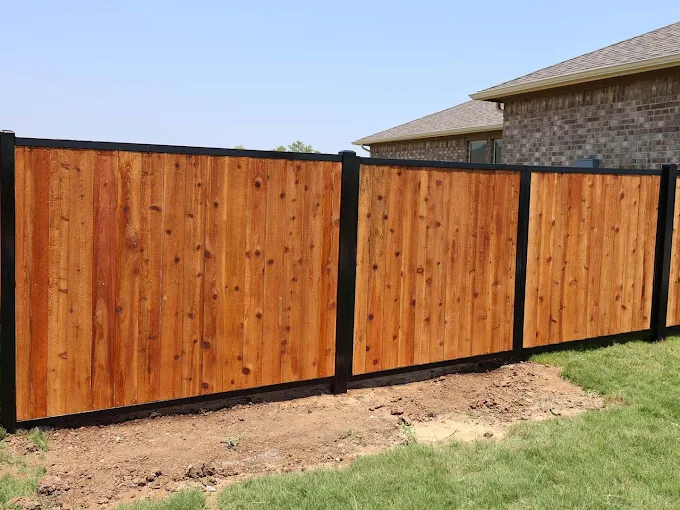
Staining frequency is not only about time. It is about how quickly your fence loses the protective film, which depends on wood type, exposure, and how the fence was previously finished. Even within the same yard, two fence sections can age very differently.
| What you notice | Likely meaning | What to do next |
|---|---|---|
| Stain color is fading evenly | The finish film is thinning but still bonded overall | Plan a recoat with proper cleaning and light prep |
| Blotchy or uneven color | Coverage is inconsistent or boards are absorbing at different rates | Spot-prep affected areas so the new stain bonds evenly |
| Rough, dry surface | Protective layer has worn down | Re-stain after cleaning and sanding as needed |
| Water soaks in quickly | Seal is failing and wood is taking in moisture | Do not delay; prioritize thorough prep before coating |
| Peeling, flaking, or thick buildup | Previous finish may be failing or layered incorrectly | Assess prep requirements before applying a new topcoat |
There is also the “system” approach. A wood fence is more likely to maintain its finish when the surrounding details are right: gates align properly, water does not run directly against fence boards, and vegetation is not constantly holding moisture against the wood.
Why This Matters in Plano, TX
In Plano, Texas, fences often experience strong sun exposure, repeated wetting after storms, and drying between seasons. That wet-dry pattern speeds up wear on the sections that face prevailing weather and the areas near the ground line. If you are relying on a single annual inspection, you can miss the early fade that starts on the most exposed boards.
Need help deciding when to recoat?
If you want your wood fence to look consistent again, Fence Pros of Texas can help you evaluate staining condition and plan a maintenance approach for your property in Plano and surrounding areas.
Request staining support from Fence Pros of TexasCommon Mistakes to Avoid
When homeowners re-stain too early or too late, the finish usually does not last as long as it should. The goal is to recoat at the right time and with the right prep so the new stain can bond and protect the wood.
- Recoating over failing areas without prep. If the old finish is breaking down, fresh stain can sit on top instead of bonding.
- Ignoring uneven exposure. Full-yard schedules often fail when one side gets more sun or weather than the other.
- Staining over dirty or mildew-prone surfaces. Contaminants can reduce adhesion and lead to premature fading.
- Forgetting gates and hardware zones. Hinges, latches, and frequent touch points can wear finishes faster than you expect.
- Using the wrong approach for the finish condition. Light fading and peeling require different prep and expectations.
Customer Checklist
Use this checklist to decide whether you are due for a recoat and what to address before you start. It is designed for quick, realistic homeowner checks, not lab testing.
- Pick 3 to 5 sample boards across sun-facing, shaded, and corner areas.
- Check color uniformity and note where the stain looks faded or uneven.
- Feel the surface for roughness or dryness compared to newer sections.
- Look at the bottom edge where moisture influence is most common.
- Inspect gate areas around hinges, latches, and frequent contact points.
- Confirm water behavior after rain and watch for sections that soak in faster.
- Decide if prep is needed before any re-stain plan (cleaning, sanding, or spot treatment).
A representative Plano homeowner scenario
A homeowner in Plano with a residential wood fence noticed the far section looked lighter than the rest after a hot, sunny stretch. The boards near the gate also felt rough where hands routinely contact them. Instead of recoating the entire fence on a fixed calendar, they inspected the sun-facing edge and gate-run sections, then focused prep and re-staining where wear was most visible. The result was a more uniform look because the recoat timing matched the fence condition, not just the date.
Frequently Asked Questions
How often should I re-stain a wood fence in Plano?
Many wood fences are re-stained on a general cycle of about every 2 to 4 years, but Plano conditions can create earlier wear on sun-facing runs and areas near gates. The best indicator is not the calendar alone. Look for fading, roughness, uneven color, or water soaking in more quickly on certain boards. If you are seeing early surface wear, it is usually better to recoat sooner with proper cleaning and prep than to wait until the finish is failing.
Can I just add a new coat without prep?
Sometimes you can refresh a finish, but it depends on what is happening to the existing stain. If the surface is still bonded and only lightly faded, cleaning and light prep may be enough. If you see peeling, flaking, or thick buildup, applying stain directly over it can reduce adhesion and shorten the life of the new coat. A quick inspection of roughness, water behavior, and uniformity helps determine whether prep is required before re-staining.
What parts of the fence usually need attention first?
In many Plano yards, the areas that wear first are the sun-facing sections, corners, and the lower portion of boards where moisture influence is most common. Gate runs are also frequently affected because of repeated contact and movement. If you are trying to monitor staining frequency, focus your checks on those areas because they reveal finish failure earlier than sections that are more sheltered.
Does fence type change how often I should stain?
Yes. This guide is focused on wood fence staining, which is driven by how the wood absorbs and how the coating holds up. Aluminum fences, chain link fences, vinyl fences, and wrought iron fences typically do not require staining in the same way wood does. If you are deciding between materials or maintaining mixed material fencing, your maintenance plan should match each surface type. For wood components, recoat timing is based on wear signs and exposure.
How do I know whether I need recoat or repair?
Re-staining helps when the finish is thinning, fading, or drying out, but it does not fix structural problems. If you notice loose boards, damaged pickets, or gate alignment issues, repair should come first so the fence is stable and the coating can be applied properly. If you are unsure, start with a close look at board condition and gate movement, then address repair needs before planning a re-stain.
Keep your fence looking sharp in Plano
When staining frequency is based on actual condition, you avoid wasted effort and get a more consistent finish. If you want a professional assessment for your wood fence or gate areas, contact Fence Pros of Texas.
(210) 707-1616
Fence Pros of Texas
Fence Pros of Texas provides fence and gate services for homeowners and property managers across Plano, TX & surrounding areas. Whether you need fence staining support or help maintaining the look and function of your gates, our team focuses on practical solutions that fit how your property is used and exposed.
You can also explore related services like railings, residential gates, commercial gates, and residential fencing.