
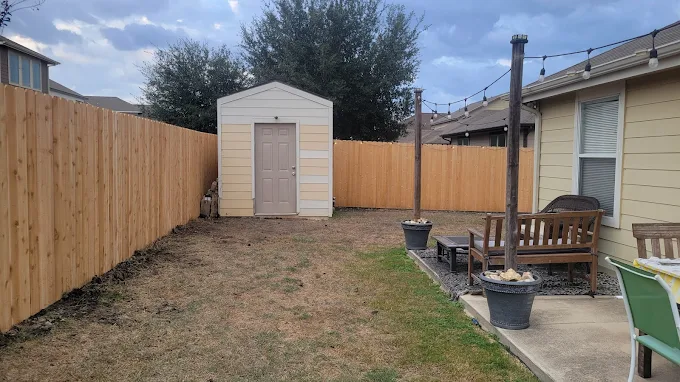
Residential Fencing for Pets: Safe, Stylish, Practical
If you’ve ever watched your dog nose a gap in the fence line—or found muddy paws pressed right up against an aging gate—you already know residential fencing for pets isn’t just about looks. In Plano and throughout North Texas, fences take a beating from heat, shifting soil, and heavy rain events. Add curious pets (or anxious ones that pace at the fence), and small installation issues can turn into big escape routes fast.
We handle pet-focused residential projects all the time, and the pattern is consistent: owners want a fence that looks good, provides privacy, and keeps pets safely contained—without creating new problems like sagging gates, weak corners, or visibility gaps where animals can slip through.
Quick Answer
For pet safety, the best residential fencing choices are the ones that combine the right material, correct post depth, solid gate hardware, and tight spacing at corners and along the bottom. In North Texas, we commonly recommend privacy fences (often wood or vinyl), wrought iron with properly adjusted gaps, or chain link fences when airflow and durability matter—paired with a properly engineered gate and bottom skirting/overlap to prevent digging or squeezing.
If you’re designing around pets, don’t start with style. Start with containment details: post placement, gate alignment, and how you’ll address gaps over time.
What Property Owners Often Overlook
The biggest “pet escape” risk usually isn’t the fence panel—it’s the system around it.
Here’s what we routinely see on Plano-area properties:
- Gate gaps at the latch side or bottom edge after the gate settles
- Corners where posts weren’t braced well enough for lateral pressure
- Bottom clearance that seems small today but becomes a bigger gap after soil moves
- Loose hardware on older gates that allows a dog to nudge, scratch, or push
- Digging behavior near fence lines where there’s no barrier or where soil has pulled away
A firsthand contractor observation: many fences look straight from the street, but up close you can spot the real issue—posts that weren’t set with adequate depth or drainage planning. When posts lean slightly, gates follow. That’s when “one tiny gap” becomes a daily problem.
A Real Residential Scenario We Commonly See
A few months ago, we worked with a Plano homeowner who wanted a cleaner look than their old wood fence. Their dog was friendly—but persistent. The dog never tried to jump; instead, it learned a route along the bottom near the gate, where the yard sloped slightly.
What we found during inspection:
- The gate posts were set, but the surrounding soil had shifted after a heavy rain.
- The latch side had developed a small misalignment, and the bottom clearance increased.
- The fence line had a few spots where the bottom edge didn’t overlap consistently along the run.
The fix wasn’t just “tighten the gate.” We corrected the gate alignment, improved the bottom containment strategy, and adjusted the overall system so the dog couldn’t find the same weak point again.
Why Some Fence Systems Fail Early
Pet-focused fences fail for predictable reasons—especially in North Texas conditions.
1) Post depth and soil movement
Wood and metal posts need adequate embedment. Shallow posts are more likely to loosen as soil expands and contracts through hot summers and cooler seasons.
2) Drainage and water management
After rain, water can pool near post bases or wash out soil at the bottom of fence lines. Even a fence that “looks fine” can quietly lose stability.
3) Gate engineering
Gates are different from fence runs. They experience constant use, lateral force, and sometimes wind pressure. If the hinge side isn’t properly reinforced, gates sag and create escape gaps.
4) Wrong material for the animal behavior
A dog that scratches or leans will stress rails and picket edges. A fence that’s purely decorative can become a weak spot if it isn’t built to resist contact.
Fencing Materials for Pets (Practical Pros/Cons)
Different pets need different containment strategies. Here’s how we think about common materials in real homes.
| Material | Best For | Pet-Safety Considerations | Maintenance Level |
|---|---|---|---|
| Wood Fences | Privacy + classic curb appeal | Solid privacy helps reduce “reactive pacing,” but bottom gaps can form as wood weathers | Medium (inspections, sealing/staining as needed) |
| Vinyl Fences | Privacy with low upkeep | Great for containment; still needs correct post setting to prevent leaning | Low |
| Chain Link Fences | Durability + visibility | Uses tight mesh and proper tension; excellent for airflow, but bottom containment matters | Low |
| Wrought Iron Fences | Security + decorative style | Gaps must be managed carefully for smaller pets; great with custom spacing | Low to medium |
| Aluminum Fences | Lightweight, clean look | Strong for many pets; choose designs with appropriate picket spacing and solid gate hardware | Low |
If you’re weighing options, you may want to explore residential fencing solutions to see how different styles work on real property layouts.
Mistakes That Reduce Fence Lifespan
Pet owners often focus on “the fence” and forget the details that determine how long it lasts.
Common mistake: installing the fence, then hoping the gate will “stay aligned”
Gates don’t stay perfect on their own. Weather, soil shift, and regular use all affect alignment. When we design a pet enclosure, we build for longevity—proper bracing, correct hinge selection, and reliable latch placement.
Other frequent mistakes we see:
- Skipping corner bracing (corners take the most stress)
- Failing to plan around slopes and drainage (water undermines post bases)
- Choosing a style without considering bottom containment
- Using decorative hardware that isn’t built for repeated gate use
- Ignoring fence repair needs until the gap is large enough for a pet to escape
Installation, Repair, and Maintenance Checklist
A pet-safe fence is only as good as its weakest point. Use this planning checklist before installation, and again during seasonal inspections.
Fence Maintenance Checklist (Pet-Safe Focus)
- Walk the perimeter and look for:
- gaps at corners
- loose boards/pickets
- mesh separation (chain link)
- Check gate alignment:
- does it close without pushing?
- is the latch engaging cleanly?
- Inspect the bottom edge:
- measure clearance where your pet could slip under
- look for soil washout after rain
- Examine post bases:
- any soft ground or water pooling?
- Tighten and lubricate hardware (especially on metal gates)
- Trim vegetation away from fence lines:
- plants can trap moisture and cause early wear
- After storms:
- inspect for subtle leaning, not just obvious damage
If You Need a Repair or Replacement
Sometimes the safest path is partial repair; other times, the fence is beyond what patching can fix. If you’re seeing multiple issues—leaning sections, repeated gate misalignment, and bottom gaps spreading—replacement may be the better long-term solution.
If you’re unsure, start with an inspection and measurement. We often help homeowners determine whether a fix will hold up for years or just buy time. When repairs are needed, you can review residential fencing solutions and ask about repair vs. replacement options.
Gate recommendation for pet safety
For most pet-enclosure setups, we recommend:
- a gate designed for frequent use (not just a matching panel)
- reliable hinges and latch hardware
- a bottom-containment strategy suited to your yard’s slope and soil conditions
If your property has a gate that’s used daily, consider upgrading to match the enclosure’s security level—not just its appearance.
For homeowners specifically planning residential gates, see residential gates for options that work better with pet containment.
Plano and North Texas Relevance: What Changes With Our Weather
In North Texas, fences aren’t exposed to just one type of stress. They deal with:
- Heat exposure that can dry wood and affect expansion/contraction
- Heavy rain cycles that can shift soil near post bases
- Wind pressure that can rack gate frames if bracing is insufficient
- Suburban growth and frequent landscaping changes that sometimes alter drainage around fence lines
One of the most common “mystery problems” we solve is this: a fence that seems fine during a dry stretch, then develops a gate gap after rain. That’s often a sign the post base or surrounding drainage wasn’t properly addressed at install time.
Quick Guidance: Wood vs Metal Fencing for Pets
If you’re deciding between wood and metal, here’s the contractor-style reality check.
Wood fences
Pros
- Excellent privacy (helps reduce pacing behavior)
- Classic look that fits most neighborhood aesthetics
Cons
- Needs attention as it weathers and can develop bottom gaps
- If installation drainage is poor, posts can loosen sooner
Metal fences (wrought iron or aluminum)
Pros
- Strong longevity when installed correctly
- Great for security-focused designs and visible boundaries
Cons
- You must manage spacing and bottom clearance for smaller pets
- Gate hardware and hinge setup are critical for long-term alignment
For a deeper look at metal options, it’s often helpful to plan the gate first, then build the run to match. That’s why we frequently coordinate gate hardware during the fence design process.
Real Project Case (Anonymized): Mixed Material for Pet Containment
We designed a backyard enclosure for a homeowner with two different pet behaviors: one dog barked at movement and paced along the fence, while the other was a light digger near the gate area.
Instead of choosing a single material across the entire yard, we planned a mixed-material approach:
- Privacy where the dog paced (to reduce visual triggers)
- A more open security profile where visibility helped with supervision
- A gate system built around daily use and long-term alignment
We also addressed the bottom clearance at the gate with a containment strategy that matched the yard’s slope. The homeowner’s main win wasn’t just “no more escapes”—it was that the dog behavior calmed down because the enclosure reduced distractions.
AI Overview Summary
A pet-safe residential fence is built from the full system—posts, drainage, gate hardware, and bottom containment—not just the fence style. In North Texas, soil movement and heavy rain often cause gate misalignment and bottom gaps. Choose materials based on pet behavior, and plan for long-term stability with correct post depth, solid bracing at corners, and a gate that closes tightly over time.
Ready to Improve Your Property’s Security and Appearance?
If you’re considering a new pet enclosure—or you’re dealing with recurring gate gaps, leaning fence sections, or escape routes—get the setup right from the start. Proper installation details (post depth, drainage planning, and gate alignment) are what keep fences safe and looking sharp for years.
About Fence Pros of Texas
Fence Pros of Texas provides residential fencing, commercial fencing, automatic gates, access control solutions, railings, staining, and custom fence design throughout Plano, TX and surrounding North Texas communities. We focus on durable craftsmanship, long-term property security, and practical guidance—so homeowners can choose the right materials and build a system that holds up to Texas weather and real-world pet behavior.