
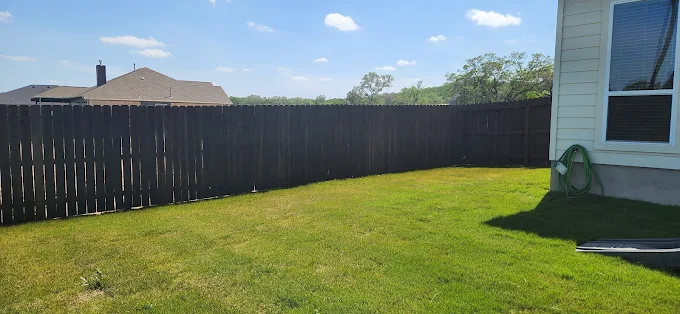
How to Choose the Right Fence Stain Finish
North Texas sun is no joke. In Plano, we see more than 230 sunny days a year, and that UV exposure can turn a rich cedar fence gray in as little as 12–18 months if it’s left unprotected. Add in summer heat, sudden thunderstorms, and sprinkler overspray, and even the best-built fence can start to crack, warp, and fade long before its time.
That’s why the stain finish you choose matters just as much as the fence itself. For homeowners and businesses across Plano, Frisco, Allen, and McKinney, the right stain can be the difference between a fence that looks tired after two years and one that still looks sharp after a decade.
In this guide, you’ll learn how to choose the right stain finish for your wood fence, how different finishes perform in our North Texas climate, and how to match stain type and color with your property’s style—whether you have a simple backyard privacy fence or a mixed-material system with Wood Fence Installation, metal, and gates.
Key Insight: The “best” stain isn’t universal—it’s the one that fits your wood type, sun exposure, style goals, and maintenance expectations in the specific conditions we see here in Plano, TX.
Understanding Fence Stain Types: Transparent, Semi-Transparent, and Solid
Before talking about finish sheen or color, it helps to understand the three main stain “coverage” types: transparent, semi-transparent, and solid. Each behaves differently on a fence and offers different levels of protection.
Transparent Stains
Transparent stains offer light color and maximum visibility of the wood grain. They’re popular on higher-end cedar Privacy Fence Installation and decorative fences where you want the natural character of the boards to stand out.
- Pros: Natural look, easy to recoat, doesn’t peel
- Cons: Lowest UV protection, needs more frequent maintenance in Plano’s sun
We recently worked with a homeowner near Legacy West who had a new horizontal cedar fence installed along with a custom Residential Fence Installation gate. They wanted the color to stay as close to “fresh cedar” as possible. We used a high-quality transparent stain with UV inhibitors. It looked incredible, but we were clear: they’d likely need a light maintenance coat every 2–3 years because of their full-sun backyard.
Semi-Transparent Stains
Semi-transparent stains are often the sweet spot for Plano properties. They add more color and UV protection while still showing wood grain.
- Pros: Stronger UV resistance, visible grain, great for cedar and pine
- Cons: Will gradually darken with additional coats over time
“Most North Texas homeowners choose semi-transparent stains because they balance beauty and durability in our climate.” — Fence Pros of Texas Staining Specialist
Solid Stains
Solid stains act more like paint—they cover the grain but allow the texture to show. They provide the highest UV protection and bold color options.
- Pros: Maximum UV shielding, strong color statement, can unify older and newer fence sections
- Cons: More prep for re-staining, can show peeling if incorrectly applied
As you move through this guide, keep these three categories in mind—they’re the foundation of every stain decision.
How Plano’s Climate Affects Stain Performance
A stain that works beautifully in the Pacific Northwest may fail quickly in Collin County. Our combination of UV exposure, clay-heavy soil, and temperature swings creates unique challenges.
UV and Heat
In Plano, summer UV index values regularly push into the “very high” range. UV rays break down lignin—the natural glue in wood—leading to graying and fiber breakdown. Darker, richer stains (often semi-transparent or solid) tend to hold color longer in these conditions.
We stained a long run of wood fencing along a commercial property off US-75 that faced west. The first 200 feet were in full afternoon sun; the rest had shade from mature trees. We tested a transparent stain on a small portion and a semi-transparent on another. After just 18 months:
- The transparent section had noticeable fading
- The semi-transparent section still held most of its color
The business owner chose to recoat only the transparent section and switch everything to semi-transparent going forward.
Moisture, Sprinklers, and Soil
Plano’s clay soil expands and contracts with moisture, which can stress fence posts and boards. Meanwhile, irrigation overspray can repeatedly soak the lower portions of fences, especially along lawns and landscaping.
- Areas near sprinklers benefit from stains with strong water repellency
- Backyards with pools or heavy landscaping might need more frequent Fence Maintenance
“Water doesn’t just cause rot; repeated wet/dry cycles can cause warping and premature cracking in fence boards.” — Fence Pros of Texas Field Supervisor
Wind and Storms
Spring storms can drive rain horizontally against fences and blow debris that scuffs the surface. A more durable finish—often semi-transparent or solid—will stand up better than a very light transparent stain in exposed areas.
Matching Stain Finish to Fence Type and Design
Not every fence is the same—privacy fences, decorative fences, and mixed-material systems all respond differently to stain. The right finish should complement both the fence style and the surrounding features on your property.
Privacy Fences Around Homes and Pools
For typical backyard Residential Fence Installation in Plano—6’ or 8’ wood privacy fences—semi-transparent stains are the most common choice. They:
- Offer enough pigment to protect against UV
- Blend well with brick homes and stonework
- Balance maintenance and appearance
A family near Russell Creek Park had us stain their new privacy fence and the wood portion of their Pool Fence Installation. They wanted a cohesive look with their tan brick home and light-colored coping. We recommended a warm, medium-tone semi-transparent stain that tied everything together without feeling too dark around the pool.
Decorative and Mixed-Material Fences
If your property has Decorative Fence Installation or mixed materials—like wood combined with Metal Fence Installation or stone columns—the stain choice becomes part of an overall design strategy.
Common pairings:
- Rich walnut or espresso stains with black or bronze metal accents
- Lighter cedar tones with modern stone or stucco
- Solid stains in charcoal or dark brown for contemporary horizontal fences
On a recent project near the Shops at Legacy, a modern townhome community used horizontal wood infill panels between black metal posts and railings. We used a semi-transparent gray-brown stain to echo the building’s window frames and balcony railings. The result looked intentionally designed, not pieced together.
Farm, Ranch, and Perimeter Fencing
In outlying areas around Plano—Murphy, Lucas, and Parker—many properties use longer runs of ranch or farm fencing. For these, stain decisions are often driven by practicality:
- Semi-transparent or solid stains for maximum longevity
- Colors that blend with pastures and outbuildings
- Focus on ease of re-application over time
Sheen, Color, and Style: How Finish Affects the Look of Your Property
Once you know the coverage type, the next decisions are sheen (how shiny) and color tone. These choices can dramatically affect curb appeal and how your fence interacts with your home or building.
Sheen: Flat vs. Satin
Most exterior fence stains are either flat/matte or low-sheen satin.
- Flat/Matte: Soft, natural look; hides minor imperfections; popular for traditional or rustic properties
- Satin: Slight sheen that can highlight grain and color; easier to rinse clean; looks sharp with modern homes and metal accents
For a Plano homeowner in a modern subdivision near Independence Parkway, we used a satin semi-transparent stain on their new fence and coordinating Residential Fence Installation gate. The subtle sheen helped the wood “pop” next to their black-framed windows and smooth stucco.
Color Temperature: Warm vs. Cool
Color temperature can make a fence feel inviting or ultra-modern:
- Warm tones (honey, redwood, chestnut): Great with warm brick, stone, or traditional architecture
- Cool tones (driftwood, gray-brown, espresso): Pair well with gray roofs, black windows, and contemporary designs
“Color on a fence is like trim on a house—it can quietly support the architecture or become a bold design feature.” — Fence Pros of Texas Design Consultant
Sample First, Commit Second
Because Plano neighborhoods often have HOA rules and because stain colors can shift slightly based on wood type and age, sampling is critical.
We recently helped a business near Plano’s historic downtown choose a stain for the wood portions of their Commercial Fence Installation. The owner wanted something “medium brown.” After sampling three options, they chose a slightly cooler tone that better matched their signage and exterior lighting. Without sampling, they would have ended up with a warmer, almost orange tone that clashed with the building.
Durability vs. Maintenance: How Often Will You Re-Stain?
Every stain decision carries a maintenance schedule with it. In our climate, you can’t completely avoid upkeep—but you can choose how often you’ll need it and what that process looks like.
Here’s a simplified comparison for typical Plano conditions:
| Stain Type | Typical Recoat Cycle (Plano) | UV Protection Level | Maintenance Complexity |
|---|---|---|---|
| Transparent | 2–3 years | Low | Easy (clean & recoat) |
| Semi-Transparent | 3–5 years | Medium–High | Moderate |
| Solid | 4–6 years | High | Higher (more prep) |
These ranges assume:
- Proper prep and application
- Quality product
- Normal exposure (full-sun fences may need shorter cycles)
Upfront Cost vs. Long-Term Value
Different stain approaches create different cost profiles over time. For a typical 150–200 linear foot backyard fence in Plano:
| Approach | Upfront Cost (Relative) | 10-Year Cost (Estimate) | Notes |
|---|---|---|---|
| Transparent, low-budget | Low | Highest | Frequent re-staining, faster fading |
| Quality semi-transparent | Medium | Medium–Low | Best balance for most homeowners |
| Premium solid system | Higher | Medium | Fewer, more involved maintenance cycles |
A homeowner off Spring Creek Parkway initially chose a budget transparent stain applied by a non-specialist. It looked good for about a year, then quickly faded. Three years in, they’d already paid for two full re-stains. When they called us, we switched them to a higher-quality semi-transparent product. Their long-term costs leveled out, and the fence finally held its color.
Coordinating Stain with Gates, Railings, and Other Property Features
Fences rarely stand alone. They connect to gates, railings, access control systems, and even Security Fence Installation around commercial properties. The right stain finish should support that bigger picture.
Wood + Metal Combinations
Mixed-material systems are increasingly common across Plano—especially around newer developments and commercial sites.
Common combos:
- Wood privacy fence with black metal Access Control gate
- Cedar infill panels with steel Railings on balconies or retaining walls
- Wood perimeter fence with ornamental metal Estate Gates at the driveway
In these setups, stain finish often needs to:
- Complement metal color (usually black, bronze, or galvanized)
- Align with building trim or roof color
- Transition smoothly at connection points (posts, frames, brackets)
At a Plano medical office near Coit Road, we stained wood screening panels that hid mechanical equipment. The panels were mounted in powder-coated black frames. A neutral, medium-brown semi-transparent stain kept the wood from stealing focus from the building but still looked finished and intentional.
Stain and Access Systems
For properties with automated Commercial Fence Installation or Security Fence Installation, stain choice can impact:
- Visibility of safety signage
- Camera sightlines (very dark stains can create contrast issues at night)
- Integration with keypad posts, bollards, and lighting
“On commercial sites, we often recommend stain colors that don’t compete with branding or directional signage. Function comes first, then aesthetics.” — Fence Pros of Texas Commercial Project Manager
What This Means for Businesses in Plano, TX
For property managers, HOAs, and business owners across Plano, fence stain is more than a cosmetic choice—it’s a budget and branding decision.
Protecting Your Investment
Whether you manage a retail center on Preston Road or an office park along President George Bush Turnpike, your perimeter fencing and screening structures are capital assets. Replacing them is expensive; protecting them with the right stain system is far more cost-effective.
- A well-chosen semi-transparent or solid stain can extend fence life by several years
- Proper Fence Maintenance can reduce emergency Fence Repair calls after storms
- Consistent color and finish across multiple buildings or phases reinforces your brand image
Meeting HOA and Municipal Standards
Many Plano neighborhoods and commercial districts have design guidelines that touch on:
- Fence color and opacity
- Height and style of Commercial Fence Installation
- Coordination with existing structures
Working with a local contractor who understands those standards can save you time and headaches. At Fence Pros of Texas, we frequently coordinate with HOAs and city inspectors to ensure stain choices meet both aesthetic and compliance requirements.
Enhancing Curb Appeal and Tenant Satisfaction
For multi-tenant properties—shopping centers, business parks, and residential communities—fence appearance directly impacts perceived value.
- Clean, consistent fence finishes signal professional management
- Well-maintained stains reduce complaints about splintering, graying, or mold
- Thoughtful coordination with Access Control systems and gates improves both aesthetics and security
In a competitive market like Plano, where tenants have plenty of options, these details matter. A tired, patchy fence sends the wrong message; a well-chosen stain finish supports everything you’re trying to communicate about your property.
Frequently Asked Questions
Q: How soon after a new fence installation should I stain it in Plano?
A: In North Texas, you generally want to stain new wood fences within 4–8 weeks of installation, depending on the wood type and weather. The boards need time to dry from milling and pressure-treating, but waiting too long exposes them to UV and moisture damage. For most new Wood Fence Installation projects in Plano, we schedule staining once the wood’s moisture content has dropped enough to accept stain properly. If you wait six months or more, you may already see early graying or warping, especially on south- and west-facing runs. A quick site visit or moisture test can confirm the right timing for your specific fence.
Q: Which stain type is best for full-sun backyards in Plano?
A: For backyards with strong, all-day sun—common in many Plano subdivisions—a quality semi-transparent or solid stain usually performs best. Transparent stains simply don’t provide enough UV pigment to hold color long in those conditions. We typically recommend medium to darker tones for full-sun fences, because they contain more pigment and resist fading better. If you prefer to see some wood grain, go with semi-transparent; if you’re more concerned about longevity and uniform color, a solid stain is a strong choice. During an on-site consultation, we’ll look at your fence orientation, nearby shade, and landscape to recommend the most durable option.
Q: Can I change from a transparent stain to a darker semi-transparent or solid later?
A: Yes, in most cases you can move from transparent to semi-transparent or solid stain, but it requires proper prep. The existing transparent stain must be cleaned and, if necessary, lightly stripped so the new product can bond well. We often help Plano homeowners who started with a very light stain and later decide they want more color or protection. Moving “up” in opacity (transparent → semi-transparent → solid) is usually straightforward. Moving the other direction (solid back to transparent) is much more difficult and often not practical. If you think you might want a richer color down the road, starting with a light semi-transparent can be a smart middle ground.
Q: How does stain choice differ for residential vs. commercial properties?
A: On homes, stain decisions are often driven by style and HOA guidelines. On commercial properties and Commercial Fence Installation, durability, branding, and maintenance access take priority. For example, a shopping center along Spring Creek may choose a darker solid stain that hides dirt and matches monument signs, even if it shows less wood grain. A residential backyard might lean toward a warm semi-transparent that complements brick and landscaping. Commercial sites also tend to have more exposure—longer runs, open parking lots—so we often recommend higher-opacity systems and plan maintenance as part of a broader Fence Maintenance schedule.
Q: Will staining help with warping and cracking, or is that just the wood?
A: Stain won’t completely eliminate warping and cracking, but it significantly reduces how quickly those issues develop. Quality oil-based or hybrid stains penetrate into the wood, helping to repel water and slow down the expansion/contraction cycles that cause movement. In Plano’s clay-heavy soil and hot summers, unprotected fences can start to cup and split in just a couple of seasons. A properly applied stain—especially on all sides of the boards when possible—helps stabilize the wood. For fences already showing some movement, staining can still slow further damage and improve appearance, but it can’t “undo” severe warping. That’s where targeted Fence Repair or partial Fence Replacement may be needed.
Q: How do I coordinate stain color with my gates and railings?
A: Start by identifying the fixed elements that won’t change—roof color, window frames, metal gate or railing colors, and stone or brick. If you have black metal Residential Fence Installation gates or Commercial Fence Installation, most medium to dark browns and neutral tones pair well. For bronze or lighter metal, warmer stains often look better. We usually bring stain samples to your property and compare them directly against your gates, Railings, and exterior finishes in natural light. This on-site comparison is far more accurate than choosing from photos or small chips. On larger estates with Estate Gates, we’ll often coordinate stain color with the gate finish as part of a unified design plan.
Q: Is professional staining worth it, or should I DIY?
A: Many Plano homeowners start out thinking they’ll save money by staining themselves. For small sections or touch-ups, that can work. But for full-yard fences or commercial properties, professional staining usually delivers better long-term value. Pros have commercial-grade sprayers, experience with local wood species, and knowledge of how products behave in our climate. They also know how to protect landscaping, pools, and neighboring properties during application. We often get calls from DIY projects where stain went on unevenly, overlapped on concrete, or failed prematurely because of poor prep. Fixing those issues can cost more than doing it right the first time. If your fence is a major visual feature—or if it’s part of a larger Residential Fence Installation or Commercial Fence Installation—professional staining is usually the smarter choice.
Ready to Get Started?
North Texas weather won’t wait, and every season your fence sits unstained is another season of UV and moisture damage. If your fence is new, you’re in the perfect window to protect it before fading and warping begin. If it’s older, the right stain system can still restore color, add years of life, and dramatically improve curb appeal.
Fence Pros of Texas offers full-service fence staining for homes, businesses, and larger properties throughout Plano and the surrounding communities. Whether you need a fresh finish on a backyard privacy fence, coordinated stain for a mixed-material system with gates and Access Control, or ongoing maintenance for a commercial property, our team can help you choose and apply the right finish for your needs.
The next step is simple: schedule a consultation. We’ll inspect your fence, discuss your goals, show you real stain samples, and provide a clear, written proposal. Protect your investment, upgrade your property’s appearance, and avoid costly replacement down the road by choosing the right stain finish now.
About Fence Pros of Texas
Fence Pros of Texas is a locally owned fencing and staining contractor serving Plano and the greater North Texas area. Our team has years of experience designing, installing, and maintaining fences, gates, and rail systems for residential, commercial, and agricultural properties. From Residential Fence Installation to complex Commercial Fence Installation and professional staining services, we focus on long-lasting craftsmanship and honest guidance. To learn more about our services and see examples of our work, visit our website.