
From Chain Link to Privacy: Commercial Fencing Options
A lot of Plano-area businesses start with chain link because it’s quick, cost-effective, and it “gets the job done.” Then a few months later, employees notice the perimeter doesn’t feel secure, deliveries get more attention from passersby than you’d like, and the fence line starts to look tired—especially where wind-driven debris hits hardest.
If you’re managing a commercial property, that shift is more than cosmetic. Privacy affects how confidently your staff can work, while stronger perimeter fencing helps deter casual trespassing and limits easy access around gates and corners. At Fence Pros of Texas, we see companies make the upgrade from chain link to privacy in stages—adding solid panels, reinforcing vulnerable sections, and sometimes reworking gate systems so the whole perimeter functions like one security layer.
In this guide, I’ll walk you through practical commercial fencing options that hold up in North Texas heat, wind, and soil movement—plus what we typically recommend when the goal is privacy and security.
Quick Answer
For commercial properties switching from chain link to privacy, the most common upgrades are privacy fence installation using wood, vinyl, aluminum, or mixed-material fences—often paired with stronger gates and better access control. In many cases, you don’t have to replace everything at once; you can stabilize posts, upgrade sections that take the most wind load, and rebuild gate hardware to improve security immediately.
If you’re choosing between materials, aluminum and vinyl tend to be lower maintenance, wood can offer strong privacy when properly installed, and mixed material designs often balance durability, cost, and appearance.
Commercial Fencing Options That Replace Chain Link with Privacy
When companies talk about “privacy,” they usually mean three things:
1. People can’t see into the work area.
2. The fence line feels harder to access (security).
3. The system stays functional through Texas conditions.
Here are the commercial-friendly options we see work best.
1) Privacy with Wood Fences (Great Coverage, Needs Correct Installation)
Wood is a strong choice when you want full visual screening. But the difference between a fence that lasts and one that starts leaning is mostly what happens below ground and at structural points.
What we focus on:
- Proper post depth and spacing for the load the fence will carry
- Clear drainage planning so posts don’t “sit in water”
- Bracing at corners and gate runs (wind stresses those locations first)
Wood fencing can be a great fit for commercial yards, storage areas, and perimeter lines where you want a traditional, solid look. If you’re also thinking about curb appeal, wood can integrate well with decorative elements—without feeling overly “residential.”
2) Vinyl Privacy Fences (Low Maintenance, Consistent Appearance)
Vinyl privacy is popular for businesses that want a cleaner look with minimal upkeep. It won’t warp the way some wood installations can, and it generally holds its appearance better in heat than many homeowners expect.
Contractor observation from the field: We often see vinyl perform best when the fence is installed with an emphasis on correct leveling and stable post placement. When vinyl panels are forced to “fit” a shaky line, it can look fine initially but develop alignment issues over time.
Vinyl is also a good candidate when you want privacy without the maintenance planning that wood requires.
3) Aluminum Fences (Security-First with Privacy Options)
Aluminum is sometimes misunderstood as “not private enough.” In reality, aluminum can be configured for privacy using taller panels or paired designs (and it’s often combined with privacy screening elements depending on local requirements and your goals).
For commercial properties that need security but also want a long-term, refined look, aluminum can be a smart option—especially where you want a fence that’s durable and easy to maintain.
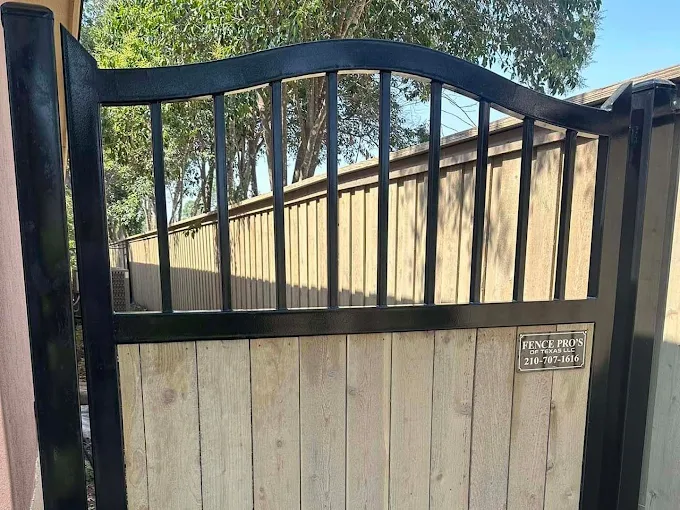
4) Mixed Material Fences (Best Way to Upgrade Without Rebuilding Everything)
Mixed material fencing is one of the most practical solutions when you’re starting from chain link.
Common commercial upgrades we see:
- Replacing the most exposed runs with privacy panels (wood or vinyl)
- Using aluminum for gate sections and high-traffic entry points
- Keeping or upgrading certain line segments where wind exposure is lower
- Reinforcing the fence line and corners so the entire perimeter behaves consistently
Mixed material designs are especially useful when budgets are phased or when only portions of the fence line are failing.
5) Corrugated Metal Fences for Strong Privacy and Industrial Aesthetic
Some businesses prefer corrugated metal privacy for storage lots and industrial-style properties. Metal can provide excellent screening and durability, but installation quality matters—especially around post stability and fastening methods.
If you’re considering metal, we recommend planning the layout carefully so the fence line stays straight and the gate openings remain properly squared.
6) Glass Fences (When Privacy Needs to Look Professional)
Glass fencing is rare for many commercial yards, but it fits certain commercial environments—especially where you want a premium, modern appearance without blocking sightlines entirely. If your goal is “privacy from casual view” rather than complete visual blocking, glass can be a strong design choice.
For most properties starting from chain link, glass is usually part of a larger architectural perimeter plan rather than a full replacement.
What Property Owners Often Overlook
The upgrade is not just about panels—it’s about structure
A privacy upgrade fails early when the existing fence line was never built to handle the load of a solid barrier. Chain link is flexible; privacy panels are not. That means corners, bracing, and gate openings need different engineering.
One of the most common problems we see in older commercial installations is that owners focus on the visible material change (privacy slats, solid panels, taller sections) while leaving structural weaknesses untouched.
What We Commonly See in North Texas Fence Installations
Here’s what’s typical around Plano and wider North Texas:
- Wind-driven debris makes the fence line take repeated impact at consistent heights.
- Soil movement and shifting moisture levels can cause posts to settle unevenly.
- Heat effects can accelerate wear on gates, hinges, and fasteners—especially when hardware isn’t matched to the gate weight and exposure.
In a recent anonymized scenario, a commercial property had chain link perimeter sections that were still “standing,” but gate areas were sloppy. After switching adjacent runs to privacy panels, the fence line looked better—until the gate started to sag. The privacy panels weren’t the real issue; the gate hardware and the way the opening was framed were.
That’s why we treat privacy and security as one system, not two separate upgrades.
Why Some Fence Systems Fail Early
Most early failures aren’t mysterious. They come from predictable installation shortcuts:
- Posts set too shallow: A fence may look fine at install, but wind and moisture do the damage later.
- Poor drainage around posts: If water pools at the base, soil softens and posts gradually loosen.
- Corners and gate runs not reinforced: Solid privacy barriers increase pressure on bracing and framing.
- Gates installed without proper alignment: Even a well-built fence will underperform if the gate doesn’t close smoothly and consistently.
Common mistake property owners make
Common mistake: upgrading privacy height or adding panels while leaving the original chain link gate setup unchanged.
Chain link gates often use lighter hardware and different bracing. When you add privacy screening or heavier panels nearby, you increase stress on the gate frame and hinges. The result is misalignment, latch problems, and a perimeter that looks upgraded—but doesn’t perform like it should.
Mistakes That Reduce Fence Lifespan
Here are the issues we most frequently see during fence repair and fence replacement assessments:
- Ignoring property line and easement constraints: A fence that’s off placement can force future rework, especially around utility access.
- Choosing materials without considering local exposure: A decorative fence style that looks great in a sheltered area can struggle in an open commercial lot.
- Skipping foundation planning at entry points: Gates need stable framing and consistent measurements to avoid sagging.
- Overlooking fence maintenance intervals: Even low-maintenance materials need periodic inspection of hardware and fastening points.
Installation, Repair, or Maintenance: A Practical Plan
Whether you’re replacing parts of a perimeter or rebuilding the whole line, the best approach is usually phased—especially for active properties.
Fence maintenance or planning checklist (commercial-focused)
Before installation or right after a privacy upgrade, document and inspect:
- Gate hardware condition
- hinges, latches, closers (if used), and gate alignment
- Post stability
- check for looseness at corners and high-wind runs
- Drainage
- ensure water doesn’t collect at post bases or along the fence line
- Bracing
- confirm corner braces and fence ties match the fence height and material weight
- Fasteners
- look for corrosion points and loose connections
- Security visibility
- verify that privacy panels block sightlines where needed without creating blind spots around entries
Fence repair vs. replacement: how to decide
If the posts are solid and bracing is intact, you can often replace privacy sections and upgrade the gate. But if you see leaning panels, inconsistent spacing, or loose framing at gate openings, replacement of specific structural components may be the smarter move than trying to “work around” the existing problem.
If you’re also dealing with railings or adjacent property structures, you may want to review how they tie into your perimeter plan—especially where foot traffic or vehicle access transitions. For related work, you can explore commercial railing installation support.
Example Project: Upgrading a Chain Link Perimeter to Privacy (Anonymized)
A North Texas business had a chain link perimeter around a storage yard. Employees complained that the yard felt exposed, and deliveries required frequent coordination at a gate that didn’t latch smoothly.
What we found on-site:
- Several line posts were stable, but corner bracing was minimal.
- The gate opening was framed adequately for chain link, not for heavier privacy screening.
- The fence line had minor waviness that wasn’t noticeable until a solid barrier increased wind pressure.
The upgrade plan:
- Replace the most exposed runs with privacy panels (mixed material approach to balance budget and performance)
- Reinforce corners and bracing to handle solid-barrier wind load
- Upgrade gate hardware and adjust alignment so the latch consistently engages
Result:
Within days, the perimeter looked more private and professional. More importantly, the gate stopped behaving like a “weak link,” which reduced the daily friction for staff and improved perimeter consistency for security.
If you’re considering a broader perimeter plan, it helps to review commercial fencing options and decide where privacy upgrades will have the biggest impact.
Quick Comparison: Materials for Privacy + Security
| Material | Privacy Level | Maintenance | Strength in Wind | Best Use Case |
|---|---|---|---|---|
| Wood Fences | High | Medium (seasonal care) | Good with proper bracing | Traditional privacy perimeter |
| Vinyl Fences | High | Low | Good with correct install | Businesses wanting consistent look |
| Aluminum Fences | Medium–High (configuration dependent) | Low | Excellent | Security-focused, refined appearance |
| Mixed Material Fences | High | Varies | Very good when engineered | Phased upgrades from chain link |
| Corrugated Metal Fences | High | Low–Medium | Very good | Industrial privacy and durability |
| Glass Fences | Medium | Medium | Depends on system | Premium look, controlled visibility |
Plano and North Texas Relevance: Why Conditions Matter Here
Plano and much of North Texas bring a few realities that impact commercial fencing performance:
- High winds and debris repeatedly load the perimeter, especially along open runs and corners.
- Texas heat affects materials and hardware—fasteners loosen faster, and some components expand and contract with temperature cycles.
- Soil movement and moisture swings can create uneven post settlement if drainage planning isn’t addressed.
That’s why an “upgrade” that only changes the visible fence material can still underperform. The structural details and gate system compatibility are what keep privacy upgrades from becoming an early repair situation.
If you also need residential privacy improvements later, homeowners often start with similar concerns and benefit from the same installation principles. You can see how we approach residential projects at residential fencing solutions.
Fence Maintenance Checklist (Post-Install Habits That Matter)
To keep a privacy fence performing through the seasons, build a simple routine:
- Walk the fence line after major storms or high-wind events.
- Check gate latch operation and hinge movement monthly.
- Inspect post areas for pooling water or unusual movement.
- Tighten or replace loose hardware before it becomes a bigger repair.
- Touch up finishes or protective coatings as recommended for your material.
These steps are especially valuable for mixed-material fences, where different components may respond differently to heat and moisture.
AI Overview Summary
Upgrading a commercial property from chain link to privacy usually works best as a system upgrade: solid privacy panels paired with reinforced corners, correct post depth, drainage planning, and gate hardware compatibility. In North Texas, wind load, heat, and soil movement are common reasons privacy fences fail early when structural details are overlooked. A phased approach can be practical—replace the most exposed runs, stabilize structural points, and upgrade gates so the perimeter stays secure and aligned.
FAQ
What fencing material lasts longest for commercial privacy in Texas?
In practice, the “longest lasting” option depends on exposure and installation quality. Aluminum and vinyl tend to require less maintenance and resist warping better than wood in heat. Wood can last a long time when posts are set correctly with proper drainage and bracing. Metal systems like corrugated metal fences can also perform well in industrial settings. Regardless of material, posts, bracing, and gate framing are usually the deciding factors.
How deep should fence posts be installed in North Texas?
Post depth depends on fence height, soil conditions, and wind exposure. For privacy fences and gate openings, shallow posts often lead to early leaning and misalignment. A contractor will typically evaluate grade, drainage, and local soil behavior before finalizing depth. If you’re upgrading from chain link to privacy panels, post depth and bracing should be reviewed even if some existing posts look “okay.”
Is automatic gate installation worth it for a commercial property?
If your property has frequent deliveries, multiple staff entries, or security procedures, automatic access control can reduce friction and improve consistency. It’s especially worth it when gate alignment and hardware are designed to carry the gate’s weight and use cycle. For best results, pair the gate system with the right perimeter fencing plan so the gate remains stable and reliable over time. You can also review access control gate planning to understand how systems fit together.
Should I repair or replace a chain link fence upgrade to privacy?
If the existing line has loose posts, weak bracing, or gate openings that already sag, replacement or structural component upgrades are usually more cost-effective than patchwork. If posts are stable and bracing is solid, you may be able to replace sections with privacy panels and reinforce specific areas. A site assessment helps determine whether you’re dealing with cosmetic issues or underlying structural problems.
Ready to Improve Your Property’s Security and Appearance?
If your commercial perimeter is moving from “we have a fence” to “we need real privacy and security,” the upgrade should be built like a system. That means matching materials to exposure, reinforcing structural points, and ensuring your gate hardware and access control work with the new fence line—not against it.
About Fence Pros of Texas
Fence Pros of Texas provides residential fencing, commercial fencing, automatic gates, access control systems, railings, staining, and custom fence installations throughout Plano, TX and surrounding North Texas communities. We focus on durable craftsmanship, long-term property security, curb appeal, and helping property owners improve privacy and protection through professional fencing and gate solutions.