
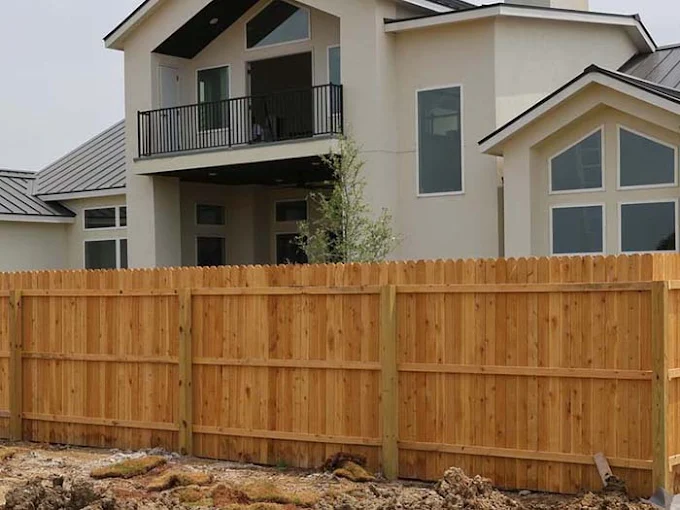
Commercial Fencing That Looks Professional and Performs
A retail center on the edge of Plano had a problem most business owners don’t notice until it’s expensive: the perimeter looked “fine” from the street, but behind the scenes the fence system was loosening at the posts and sagging between supports. Trash day became a headache, deliveries took longer because staff had to manage open gates manually, and the property manager started hearing the same complaint—“It doesn’t feel secure.”
Commercial fencing has two jobs at once. It needs to look professional for tenants and customers, and it has to perform against the realities of North Texas: heat, heavy rain, high winds, soil movement, and constant daily wear. When those structural details are wrong, the fence becomes a liability—whether it’s a chain link fence that won’t stay tight or a privacy fence that starts leaning long before it should.
Quick Answer
For commercial properties, the best-looking and longest-lasting fence systems usually come down to proper post depth, correct bracing, and the right material for your security level and local conditions. Most businesses in North Texas choose between chain link fences (high-security, practical), aluminum fences (clean appearance, moderate security), and mixed-material fence designs (privacy where you want it, security where you need it). Regardless of material, professional installation and planning for water drainage and gate hardware are what prevent early failure.
Why Commercial Fencing Is Different (and What We See Most Often)
Residential fences are often built around aesthetics and backyard separation. Commercial fencing is built around control—control of access, control of liabilities, and control of how the perimeter responds when weather and traffic hit it.
In the field, we commonly see early issues come from the “invisible” parts:
- Posts set too shallow or without enough bearing in the soil
- Gaps forming at the fence line because drainage wasn’t considered
- Bracing that doesn’t match the fence height or wind load
- Gate hardware installed without accounting for gate weight and alignment
- Materials chosen for appearance only, not for the security and durability you actually need
One firsthand observation from our crews: even when the fence looks straight during installation, movement often shows up after the first major seasonal swing—especially where water repeatedly pools near post locations. If the base isn’t protected from repeated saturation and freeze/thaw isn’t the only concern (in Texas, it’s more about swelling/softening and runoff patterns), the fence can gradually “walk” out of alignment.
If your goal is a perimeter that stays tight and professional-looking, plan for performance first, then refine the appearance.
What Property Owners Often Overlook
1) Drainage and water flow at the fence line
A fence doesn’t just resist wind—it resists what the ground does. In North Texas, runoff after heavy rain can undermine post support or wash out backfill if the design doesn’t manage water properly.
2) Gate planning as part of the fencing system
A gate is not “just hardware.” A gate is a structural element that must match:
- fence height and stiffness
- opening width and traffic frequency
- expected impact loads (deliveries, carts, forklifts nearby)
- how the gate will be used daily (manual vs. automated)
If the gate frame and posts aren’t sized correctly, the fence can be perfect and the gate still becomes the weak point.
3) Choosing a style without matching the security intent
Many businesses want a “clean look” and end up with a material or configuration that doesn’t meet their real security needs. The result is a fence that may look good up front but fails to deter the behavior you’re actually trying to stop.
Common Mistakes That Reduce Fence Lifespan
Here are the mistakes we most frequently see on commercial sites—mistakes that shorten lifespan even when the material itself is decent.
Mistake #1: Underestimating wind and bracing needs
Tall fence runs, corner sections, and areas exposed to open traffic lanes require stronger bracing. If bracing spacing and end-post anchoring are off, the fence can loosen over time.
Mistake #2: Ignoring soil conditions during layout
“Same depth everywhere” rarely works. Soil bearing capacity can change across a property due to compaction, drainage patterns, or recent grading.
Mistake #3: Installing gates without alignment strategy
Gate sag and latch misalignment often come from:
- posts not set for the load
- frames not squared
- hardware mounted without accounting for slight movement over time
Mistake #4: Treating fence repair like a quick patch
When commercial fences loosen, it’s usually not just one section. If you replace one damaged panel but the line remains out of alignment, the repair becomes temporary.
If you’re dealing with an aging perimeter, you may want to review whether your situation calls for targeted repairs or a full replacement plan. For more on that, you can explore commercial fencing solutions and the typical build approach we use for long-term performance.
What Actually Improves Property Security and Privacy
A professional-looking commercial fence is the result of matched components: line fabric, posts, bracing, and gates working together.
For security-first perimeters:
- Chain link fences for visibility and strong deterrence
- Proper tensioning on line fabric
- Reinforced end posts and corner posts
- Security-focused gate design that resists sag and misalignment
If your business needs high-visibility security, commercial fence installation is often the most practical direction because it balances strength, maintenance reality, and site visibility.
For a cleaner, “more refined” perimeter:
- Aluminum fences with a tighter, professional appearance
- Options for privacy sections where needed
- Hardware designed for smooth daily operation
Many tenants like the look of aluminum, but it still must be engineered for wind exposure and gate operation. If you’re considering a metal system, we can talk through whether aluminum is the right fit for your security goals.
For mixed needs (privacy + security):
A mixed-material approach can be ideal when you want privacy around offices, break areas, or customer-facing privacy zones—but still need security at the perimeter line. We commonly discuss mixed material fences for exactly this reason: appearance where people care, and durability where security matters most.
Our Experience Installing Fences in Texas Conditions
North Texas weather tends to stress fence systems in predictable ways:
- Hot, dry periods can tighten some materials while leaving others more vulnerable to shrinkage or surface wear.
- Heavy rain can soften soil around post bases, especially if runoff concentrates near the fence line.
- High winds can “test” bracing and fabric tension, particularly across long runs and corner areas.
One anonymized example we see regularly: a commercial property with an aging fence that “seemed fine” until the first major rainy season. After that, the fence line began to show uneven tension and small gaps at the posts. When we inspected the base areas, the issue wasn’t the top rail or the fabric—it was the post support. In those cases, replacing only the visible sections doesn’t fix the underlying movement. The correct solution is to rebuild the line where the post foundation and alignment are compromised, and then reset tension and hardware so the system holds.
Installation, Repair, or Maintenance: Fence Maintenance Checklist
A strong fence can last for years, but commercial properties operate on schedules. Here’s a maintenance and planning checklist that helps keep your perimeter looking professional and working as intended.
Fence Maintenance Checklist (Commercial)
- Walk the perimeter monthly (or weekly during extreme weather seasons)
- Inspect for:
- leaning posts
- gaps at fence line intersections
- sagging chain link or loose tension
- rust-through (especially on metal gates and hardware)
- Check gate operation:
- Does the latch line up consistently?
- Any scraping or rubbing spots?
- Does the gate close fully without assistance?
- Look at the base area:
- is water pooling near posts?
- has the soil washed out or settled?
- Verify attachments:
- hinges, hinges pins, and latch hardware
- tension hardware on chain link sections
- Clean and protect:
- for metal components, keep coatings intact
- for wood or mixed systems, address early wear before it spreads
Repair vs. Replacement: a practical rule
If multiple sections share the same underlying issue (post movement, repeated misalignment, or base failure), replacement can be more cost-effective than continuous patching.
For businesses considering updates beyond fencing—like railings around elevated areas—our team also supports railing installation that matches commercial durability needs.
Quick Material Guidance for Commercial Properties
Below is a simple way to think about materials based on typical commercial goals. Your exact best choice still depends on your security level, visibility needs, and site conditions.
| Material | Common Use | Strengths | Watch-outs |
|---|---|---|---|
| Chain Link Fences | Perimeter security, storage areas | High visibility, practical security, strong performance | Needs correct tensioning and bracing for wind exposure |
| Aluminum Fences | Clean, professional look | Appearance, low visual weight | Gate hardware and alignment must be engineered for daily use |
| Wood Fences | Privacy and aesthetics | Classic look | Requires more ongoing maintenance and protection in heat/rain cycles |
| Wrought Iron Fences | Decorative security | Strong deterrence and style | Coatings and hardware must be maintained to prevent corrosion |
| Corrugated Metal Fences | Industrial privacy | Durable appearance | Wind and attachment details matter for long runs |
| Glass Fences | Modern aesthetics | High-end appearance | Requires careful engineering and impact safety considerations |
If you’re trying to balance privacy and security, we often recommend evaluating a site walk first—because “looks good online” doesn’t always translate to how wind, runoff, and gate traffic behave on your property.
Plano and North Texas Relevance: What Changes on Local Sites
In Plano and across North Texas, commercial sites often face a mix of:
- frequent deliveries and higher gate usage
- open exposure in some commercial corridors
- rapid runoff after storms that can concentrate near fence lines
- HOA-adjacent expectations (even for commercial areas) where curb appeal still matters
That combination is why we treat commercial fencing as a system. When the posts, bracing, drainage approach, and gate hardware are aligned, the fence stays tight and the property looks maintained instead of “managed temporarily.”
Fence and Gate Recommendation for Most Commercial Properties
If your main goal is a perimeter that looks professional and stays functional under daily use, we typically recommend:
1. Choose a secure fence fabric matched to your security level (chain link is common for visibility and deterrence).
2. Design gate openings correctly for delivery traffic and daily access.
3. If you want automation, plan for it during the initial build—not as an afterthought.
For businesses exploring smoother access and reduced manual handling, access control systems can be integrated around your specific gate layout and operating needs. And if your site requires larger or more robust openings, our commercial gates support is geared toward the realities of commercial traffic and long-term alignment.
Signs You Need Fence Repair (Before It Becomes a Security Issue)
Sometimes a fence still looks presentable, but the system is already failing. Watch for these signs:
- A gate that closes slower than it used to
- Latch not catching consistently
- Fence line that appears “wavy” between posts
- Rust spots spreading on metal components
- Chain link that’s no longer tight
- Posts that look tilted after rains or storms
When you catch issues early, repairs are usually simpler and cheaper. When the system continues to move, the fix becomes foundation-and-alignment work rather than hardware replacement.
A Realistic Project Case (Anonymized)
A property manager for a small commercial office complex reached out after tenants complained about inconsistent gate operation and a perimeter that felt less secure after storms. The fence line looked mostly fine during calm weather, but after heavy rain the gate would sag slightly and the latch wouldn’t align.
Our inspection showed two contributing factors:
- Gate posts were not set with enough tolerance for the load and alignment over time.
- Drainage runoff had been concentrating near the base of the gate structure, contributing to gradual movement.
The fix wasn’t just replacing hinges. We rebuilt the gate post support area, re-aligned the gate frame, upgraded the gate hardware for consistent daily use, and corrected the fence line tension where it had shifted. The result: the gate stayed aligned and the fence line looked uniform again, not “patched.”
FAQ
What’s the most professional-looking commercial fence material?
Many businesses choose aluminum or mixed-material designs for a cleaner, more refined look, especially around customer-facing areas. If your primary goal is security with visibility, chain link often provides a more straightforward perimeter solution. The professional look comes from correct post spacing, consistent bracing, and hardware that matches the fence style—so the system stays straight and properly aligned over time.
How do I know if I need fence repair or full replacement?
If you’re seeing repeating issues—like multiple leaning posts, recurring gate sag, or fence sections that keep going out of alignment—repairing one panel usually won’t solve the underlying cause. Replacement is often the better route when post support or drainage at the base has been compromised across multiple sections.
Is automatic gate installation worth it for commercial properties?
For many commercial sites, yes—especially when deliveries are frequent or when you want tighter access control. Automation reduces manual handling, improves consistency, and can integrate with access systems. The key is planning the gate structure and hardware correctly so alignment and performance don’t degrade with daily traffic.
What maintenance should a business schedule for its perimeter fence?
A practical approach is a monthly perimeter walkthrough plus a quick gate check (hinges, latch alignment, and closing behavior). After major storms, inspect base areas for soil washout or pooling water. Early attention to small shifts often prevents larger alignment and security problems later.
Ready to Improve Your Property’s Security and Appearance?
Commercial fencing should look sharp and hold up under real-world use—wind, rain, deliveries, and daily traffic. When the foundation details and gate planning are done right, you don’t just get a fence you can see. You get a perimeter you can trust.
If you’re planning a new perimeter, updating aging fencing, or troubleshooting gate performance, the next step is a site-focused inspection and material-and-layout recommendation built around your security goals and North Texas conditions.
About Fence Pros of Texas
Fence Pros of Texas provides residential fencing, commercial fencing, automatic gates, access control systems, railings, staining, and custom fence installations throughout Plano, TX and surrounding North Texas communities. We focus on durable craftsmanship, long-term property security, curb appeal, and practical guidance for homeowners and businesses who want a fence and gate system that performs for years—not just months.