
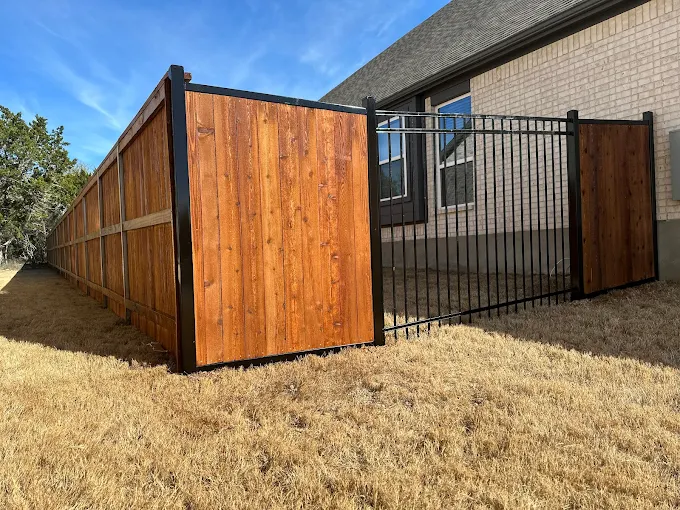
Choosing the Right Residential Fencing for Texas Heat
If you’ve lived in North Texas long enough, you’ve seen what the heat does to an “okay” fence. Boards cup, fasteners loosen, and posts start leaning just enough that you notice it every time you pull into the driveway. In Plano neighborhoods—especially those with HOA-style sightlines and lots of afternoon sun—homeowners end up balancing privacy, curb appeal, and security while trying to avoid the kind of fence failure that happens after a single brutal summer.
I’ll walk you through how to choose the right residential fencing for Texas heat, what we commonly see during installs and replacements, and what actually extends the life of your fence in Plano soil and weather.
Quick Answer
For Texas heat, the best long-term residential fencing choices usually come down to material + installation details:
- Vinyl fences and aluminum fences tend to handle heat well with less warping and rust.
- Wood fences can look great but require better planning for airflow, staining, and post stability.
- Wrought iron (or aluminum with a similar look) offers strong security with minimal heat-related distortion.
- Chain link is practical for visibility and cost, though privacy screening may be needed.
- Many of the earliest fence problems we see aren’t about the fence style—they’re about post depth, drainage, and how the fence was anchored.
If you’re deciding between options, focus on whether you need privacy fence installation, decorative curb appeal, or security fence installation, then match the material to your yard’s sun exposure and ground conditions.
What Property Owners Often Overlook
Most homeowners shop for appearance first—height, color, picket spacing, or the “look” of a wrought iron style. That’s understandable. But in Texas, the fence’s performance is driven by the parts you don’t see:
1) Your fence posts are the foundation
We see a lot of early leaning fences where the post depth or soil prep wasn’t designed for North Texas movement. Clay soils can expand and shrink with moisture changes, and fence systems take the stress every time the ground shifts.
2) Drainage matters more than people think
If water sits around the post holes or runs directly at the fence line, the fence system has to fight constant moisture. Over time, that loosens anchoring and accelerates movement—especially with wood and mixed material fence builds.
3) Heat affects fasteners and surface integrity
Even “good” materials can fail early if the wrong hardware was used or if the fence was installed without considering sun exposure patterns. In uncovered areas that bake all afternoon, we typically recommend thinking long-term from day one—before the first summer warps the finish.
What We Commonly See in North Texas Fence Installations
Here’s a realistic scenario we run into often:
A homeowner in a growing Plano subdivision replaces a tired wood fence that had been “holding up” for a few years. The fence looked fine in spring, then by mid-summer the boards started to cup and the gate began to drag. The gate wasn’t necessarily “bad”—it was reacting to the rest of the fence system moving.
When we removed the old sections, the pattern was clear:
- posts near downspout runoff had less stable footing,
- the fence line had areas where water pooled,
- and the gate frame alignment was off because the fence posts weren’t set and braced to resist seasonal soil movement.
That’s the kind of failure that makes a fence replacement feel frustrating—because the homeowner did everything they could to pick a nice style. But the stability came down to installation engineering.
Wood vs Metal Fencing (Texas Heat Reality)
Below is a practical way to compare the common residential materials we install. This isn’t just about “what lasts longest”—it’s about what’s easiest to maintain and what behaves best under Texas sun.
| Material | Heat/Sun Performance | Privacy Options | Typical Maintenance | Best For |
|---|---|---|---|---|
| Vinyl Fences | Excellent; resists warping | High (solid panels) | Wash/inspect | Neat, low-maintenance privacy |
| Aluminum Fences | Excellent; won’t rust like steel | Medium to high (depends on design) | Light inspection | Security + curb appeal |
| Wood Fences | Moderate; can cup/warp in extreme sun | High | Staining/sealing + hardware checks | Classic look if maintained |
| Wrought Iron Fences | Good; strong structure | Medium (often decorative) | Occasional coating touch-ups | Security and elegance |
| Chain Link Fences | Good; stable structure | Low unless screened | Minimal | Budget-friendly security, airflow |
| Corrugated Metal Fences | Good; strong barrier | High | Coating/inspection | Ranch-style privacy and durability |
If you’re weighing a specific style, you can also browse our residential fencing solutions to see how different materials fit different yards and privacy goals.
Why Some Fence Systems Fail Early
In my experience, early fence failure usually comes from a few repeat causes:
1) Posts set without accounting for soil movement
If posts weren’t placed deep enough and the base wasn’t stabilized properly, you’ll often see:
- leaning sections,
- sagging rails,
- and misaligned gate latches.
2) Not planning for expansion and contraction
Texas heat swings can be hard on materials and hardware. Wood expands and contracts differently than metal or vinyl, and if the system wasn’t built to tolerate movement, you’ll feel it in the joints.
3) Fence design that blocks airflow around wood
Wood fences last longer when airflow and water shedding are considered. When designs trap moisture at the wrong points—or when landscaping keeps the fence constantly damp—wood can deteriorate faster than expected.
4) Fence line water management ignored
If the fence line catches runoff from a slope, sprinklers, or downspouts, even premium materials won’t perform as well long-term.
Mistakes That Reduce Fence Lifespan
Let’s be direct about the common mistake property owners make:
Common mistake: choosing the look, not the structure
Homeowners often pick a fence style based on photos or HOA preferences, then trust that “any installer can build it the same way.” But fence longevity in North Texas is rarely about the visible design. It’s about the structural decisions—post depth, spacing, bracing, anchoring, and how water is handled.
Other mistakes we frequently see:
- Skipping a site walk and assuming your fence line is uniform.
- Ignoring gate alignment until it starts dragging.
- Not planning for future maintenance access (especially around corners and gates).
- Using the wrong material for the yard conditions—for example, wood in the most sun-baked, runoff-heavy area without airflow consideration.
Our Experience Installing Fences in Texas Conditions
We design residential fence installs around the reality that Texas doesn’t keep a steady temperature. The ground changes, water patterns change, and the fence has to stay aligned through it all.
One contractor observation that’s consistent: the corners and gate areas are where fencing systems show their weaknesses first. When corners aren’t properly braced or when gate openings aren’t engineered to resist racking, homeowners notice sagging and latch issues faster than they do with straight runs.
For families who want reliable access, we also pay attention to the gate hardware and frame rigidity. If you’re considering upgrade options beyond standard swing gates, it can help to understand modern access setups—like access control for gated properties—especially if you’re reducing manual gate operation during busy mornings or deliveries.
Installation, Repair, or Maintenance: What to Do Next
Before you schedule work, it helps to make a quick plan. Here’s a checklist we use to keep homeowners from missing the details that prevent premature movement and weather damage.
Fence Maintenance Checklist (North Texas-Friendly)
Inspect (every 6–12 months)
- Check for loose posts or fence sections that feel “soft” when pushed.
- Look for gaps that are widening along rails or pickets.
- Test gate operation: does it drag, sag, or fail to latch smoothly?
- Inspect hardware: hinges, latch plates, and fasteners.
Maintain (seasonally)
- Wood fences: plan staining/sealing based on the condition of the boards and sun exposure.
- Keep vegetation trimmed back so airflow isn’t blocked.
- Ensure sprinklers aren’t constantly wetting the fence line.
Plan ahead
- If you have drainage runoff near the fence line, consider grading corrections or adjustments so water doesn’t pool at posts.
If your fence has reached the “repair vs replace” threshold, you’ll want to evaluate whether it’s isolated damage or system-wide movement. We handle both residential fence installation planning and repairs depending on what’s failing—because the right fix depends on whether the problem is cosmetic or structural.
Plano / North Texas Relevance: Why Heat + Soil Change Your Options
In Plano and surrounding North Texas communities, it’s not just the summer temperature—it’s how that heat interacts with:
- clay-rich soil movement,
- sprinkler schedules and runoff paths,
- and long stretches of direct sun.
That combination can turn a fence into a seasonal project if it wasn’t built to resist movement. It’s also why we frequently recommend materials and designs that tolerate thermal stress better—like vinyl or aluminum for low-warping performance—or sturdy metal systems where security and alignment are priorities.
For homeowners who want a specific style (decorative look, privacy, and security), we often see best results with carefully planned material choices and a reinforced gate approach.
A Realistic Case Example (Anonymized)
A local family replaced a failing wood fence with a mixed approach: privacy where they needed it and open visibility where they didn’t. The goal was a cleaner front look without sacrificing backyard privacy.
What made the difference wasn’t just the material selection—it was the build details:
- upgraded post anchoring at corners,
- improved drainage around the most runoff-exposed segments,
- and reinforced gate framing so the latch alignment held steady through temperature shifts.
By the next summer, the fence still looked straight and the gate latched properly. That’s the practical outcome homeowners care about: fewer adjustments, fewer warped sections, and a fence that functions the way it’s supposed to.
Fence Material Recommendations by Your Goal
If you want privacy with minimal hassle
- Vinyl fences are a strong option for Texas heat.
- A solid-panel layout reduces airflow issues and keeps the line looking consistent.
If you want curb appeal + security
- Aluminum fences or wrought iron fences provide a sturdy perimeter look.
- These are also great when you want visibility without giving up structure.
If cost and airflow are priorities
- Chain link fences can be a smart foundation for security.
- Pairing with garden screening or privacy additions can match your aesthetic goals.
If you want a ranch-style barrier with bold durability
- Corrugated metal fences can handle rugged conditions well when installed with correct anchoring and coatings.
And if you’re considering a fence plan that blends materials for the best of both worlds, that can be a smart path for long-term satisfaction—especially when you want different performance zones across the property. Some homeowners also choose decorative elements that complement their home style; if you’re in that stage, you might also explore wood staining options to protect the areas that need extra attention.
Ready to Improve Your Property’s Security and Appearance?
The right residential fence for Texas heat isn’t just about picking a material—it’s about choosing a system built for North Texas soil movement, sun exposure, and water patterns. If you’re planning a replacement, upgrading privacy, or fixing recurring gate and alignment issues, professional planning upfront usually saves money and frustration later.
About Fence Pros of Texas
Fence Pros of Texas provides residential fencing, commercial fencing, automatic gates, access control systems, railings, staining, and custom fence installations throughout Plano, TX and surrounding North Texas communities. We focus on durable craftsmanship, long-term property security, curb appeal, and helping homeowners and businesses improve privacy and protection through professional fencing and gate solutions.