
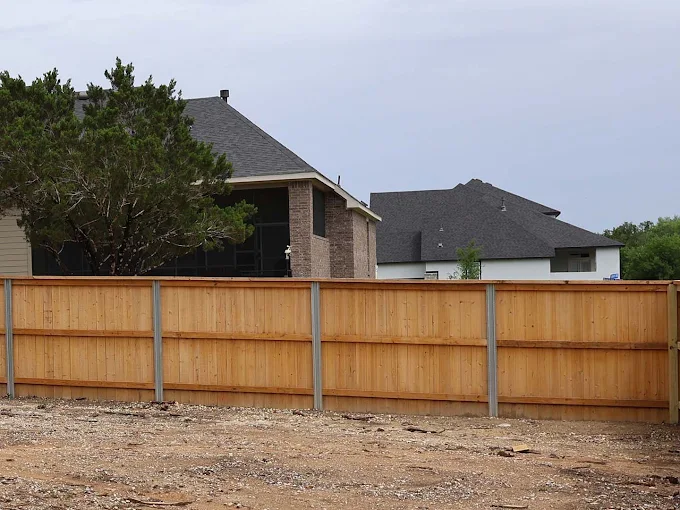
Commercial Fencing Height Options for Texas Compliance
If you manage a commercial property in Plano, TX, you’ve probably felt the pressure from two directions: customers want an inviting perimeter, and your business needs real security. The problem is that “security” doesn’t mean one universal fence height—Texas compliance (and local requirements) often hinges on the property’s use, visibility needs, and how the fence is classified and installed.
We see it most often at retail centers and office parks where older fencing has sagged, privacy panels have warped, or gates have become unreliable. When that happens, businesses either overbuild (and fight aesthetics/HOA-style concerns) or underbuild (and leave access points exposed). The right height isn’t just a number—it’s part of the overall security plan.
Quick Answer
For commercial properties in Texas, fence height requirements vary based on local rules, zoning, and how the fence relates to safety (especially around public access, drive lanes, and any special-use areas). In practice, many businesses choose:
- 3–4 ft for low-profile perimeter definition where visibility matters
- 6 ft for balanced security and screening
- 8 ft for higher-security needs and stronger deterrence
- Gates that match the fence height and are designed for the traffic flow (pedestrian vs. vehicle)
The safest path is to confirm the requirement for your specific site and then design the fence and gates as a system—posts, bracing, gate hardware, and access control all have to work together.
What Property Owners Often Overlook
Commercial fencing height planning usually starts with “How tall should it be?” but the compliance and security outcomes depend on details most owners don’t think about:
- Where the fence sits relative to property lines and easements. Even if your height is correct, setbacks and utility clearances can change what’s allowable.
- Visibility requirements near entrances, intersections, and pedestrian routes. Some sites need lower heights or specific sightline considerations.
- Gate design. A tall perimeter fence is only as secure as the gate—if the gate doesn’t latch consistently, or the hinges aren’t rated for the load, the “secure” height becomes meaningless.
- Material and panel strength. A chain link fence at a given height can provide strong deterrence, while a privacy fence of the same height can behave differently under wind load depending on bracing and wind exposure.
A realistic commercial scenario we see in Plano
A property manager at a small office/warehouse complex called us after a contractor-grade fence installation began to lean and gaps appeared near the gate. The business had chosen a 6 ft perimeter for screening and deterrence, but the gate posts were undersized and the latch alignment was off. After a couple of Texas thunderstorm seasons, the gate began to sit unevenly—creating a “soft spot” at the exact point employees and vendors used most.
That’s the pattern: the fence height looked right on paper, but the system wasn’t installed to last.
What We Commonly See in North Texas Fence Installations
North Texas weather is hard on fence systems in ways people underestimate:
- Hot summers + freeze-thaw cycles in the broader region cause expansion and contraction. Even though Plano doesn’t get constant freeze-thaw like colder climates, temperature swings still stress materials.
- Heavy rainfall and drainage issues can undermine posts. When soil stays saturated, it loses bearing strength.
- High winds during storms test bracing and panel strength.
From a contractor’s perspective, one of the most important “height-adjacent” factors is wind exposure. A taller fence on an open edge behaves very differently than the same height behind existing structures. In those situations, builders often need heavier posts, stronger bracing, or a material choice that resists wind load better.
Why Some Fence Systems Fail Early
When businesses call us for fence replacement or fence repair, the cause is rarely “the fence was too short.” It’s usually something structural:
1) Post depth and soil bearing
In North Texas soils, fence posts need enough depth and stable bearing. Too shallow, and the fence starts to drift and lean.
2) Poor drainage around footings
Water should be able to move away from the base. When it pools, it accelerates movement—especially around gates where traffic and repeated vibration occur.
3) Gate hardware not matched to the fence system
A common misconception is that gates “just swing.” In reality, gate weight, frame stiffness, hinge placement, latch style, and gate alignment determine whether the gate closes fully every time.
4) Material selection mismatch
For example:
- Privacy fences often need strong bracing because wind pressure pushes against solid panels.
- Chain link fences can be very effective, but if the framework and tension aren’t done right, the fence can sag and create easy access points.
Mistakes That Reduce Fence Lifespan
Here are the most common mistakes property owners make—especially at commercial sites:
1. Choosing fence height without confirming the site classification
A “security fence” isn’t the same as a barrier for safety around specific hazards. If your site has special use areas, requirements can change.
2. Installing gates that don’t match the traffic pattern
If you expect frequent vendor access, a gate that’s fine for occasional use can still fail early due to stress on hinges and latches.
3. Ignoring the fence as an engineered system
Height affects wind load and structural demands. If posts, bracing, and gate construction aren’t designed for that height, you’ll see movement sooner.
4. Delaying repairs
A small sag at the gate or a loosened post becomes a bigger problem after the next storm. We often see issues start as “minor,” then turn into full panel replacement.
5. Skipping routine inspections
Commercial properties with high traffic benefit from scheduled checks—not just when something breaks.
What Property Owners Should Know (practical planning)
Before you decide on height, plan for these outcomes:
- deterrence (how difficult it is to enter)
- screening (visibility control)
- control (gates and access points)
- durability (resistance to wind and moisture)
A properly designed perimeter typically includes the right height and the right gate/access-control strategy.
Installation, Repair, and Maintenance Checklist
Use this checklist when planning a commercial fence upgrade, or when you’re evaluating whether a repair is enough.
Pre-install planning (for new work)
- Confirm site constraints: property line, easements, and any local zoning considerations.
- Match gate type and width to your traffic needs (pedestrian vs. vehicle, frequency, and turning clearance).
- Choose material based on security + wind exposure:
- Chain link fences for strong perimeter definition and airflow
- Privacy fence installation (wood or vinyl) where screening matters most
- Wrought iron fences or aluminum fences when you want a rigid, clean look with security
- Plan post layout for stability at corners, runs, and gates.
Ongoing maintenance (what we recommend for commercial sites)
- Inspect gate latches and hinges monthly during peak seasons.
- Check for fence movement after major storms.
- Confirm gates close fully and latch without forcing.
- Look for missing fasteners, loose posts, and leaning sections.
- Keep drainage clear around the fence base—especially near gates.
Common “repair vs. replace” guidance
If fence sections are only slightly out of alignment but the posts are solid, a repair may be enough. If posts are leaning, footing integrity is compromised, or the gate frame has shifted, replacement is often the better long-term decision.
Material & Height Options: What Works for Different Security Goals
Below is a practical way to think about height and material selection for commercial sites. Your compliance needs should always be verified for your specific property.
Typical commercial height targets
- 3–4 ft: perimeter definition, low-profile boundary, good for visibility
- 6 ft: balanced security and screening for many business types
- 8 ft: stronger deterrence and privacy where threats or visibility concerns are higher
Material notes (contractor perspective)
- Chain link fences: Great for security with minimal wind “sail” effect compared to full solid panels (when tension and framework are correct).
- Aluminum fences: Clean look with strong rigidity for many commercial entrances; best when you need security without heavy visual mass.
- Wood fences: Provide privacy and a classic look, but require quality installation and maintenance planning to resist Texas heat and moisture cycling.
- Vinyl fences: Often hold appearance well, though the installation quality (posts and bracing) still determines long-term performance.
- Wrought iron fences: Strong deterrence and visibility control for entrances and premium frontages.
- Corrugated metal fences / mixed material fences: Can be excellent for privacy and security, but they demand careful bracing and post engineering due to wind load.
If you’re comparing materials for different zones of your property—like a more decorative frontage and a more secure rear perimeter—mixed material fencing often gives you the best of both worlds.
Recommended next step for many businesses
Start by dividing your property into zones:
- front entrances (visibility + curb appeal + controlled access)
- side/rear perimeter (security + screening)
- loading/vendor access (gate reliability + traffic flow)
For a commercial perimeter plan, you can also review our overview on commercial fencing solutions to see how we approach different site goals and materials.
Plano and North Texas Relevance: Why Height Decisions Aren’t “One Size Fits All”
In Plano and across North Texas, commercial properties often sit in mixed-use development patterns—office buildings next to retail, warehouses near residential pockets, and shared access drives. That affects what people expect from fencing:
- Businesses want privacy without creating unsafe blind corners.
- Owners want deterrence, but also need clear lines for parking, pedestrian walkways, and vehicle turning.
- The soil and drainage conditions around your specific fence line can accelerate movement if install depth and footing details aren’t right.
So even when a fence height seems to “fit” on paper, the real-world performance comes from how it’s built for your site conditions.
Example Case (Anonymized): Upgrading a Gate-Driven Perimeter
A mid-sized distribution company in the region had a 6 ft perimeter fence that looked fine from a distance, but their access points weren’t secure. The gate was the weak link—employees and vendors reported it didn’t latch consistently after rain.
We assessed the system and found:
- gate posts were not properly braced for the load,
- latch alignment drifted over time,
- and the gate approach created repeated stress that loosened hardware.
The upgrade plan included:
- reinforcing gate structure to match the fence line,
- selecting hardware for consistent closure under load,
- and designing the gate swing and clearance for everyday traffic.
After the installation, the perimeter provided the intended security posture—not just visual height.
For teams considering upgrades at entrances and access points, we also support commercial gate installation support and help ensure the gate system is built to last with real operating conditions in mind.
Signs Your Fence Needs Repair
Not every issue requires replacement. Here are clear signs to schedule an inspection:
- Fence posts leaning or visibly shifting
- Gaps forming near the gate or along bottom rails
- Sagging fence sections (especially after storms)
- Latches not catching consistently
- Rust, warping, or cracking in panels/frames
- Uneven fence line that exposes entry points
If you’re seeing any of these, it’s usually better to address the problem sooner—before it spreads along the fence run.
Quick Comparison: Repair vs. Replacement (Commercial Reality)
| Situation | Often Best Choice | Why |
|---|---|---|
| Minor panel damage, posts still solid | Fence repair | Targeted fixes restore integrity without rebuilding the line |
| Gate frame shifted, latch misaligned | Replacement/major repair | Gate alignment issues rarely “stay fixed” after partial repairs |
| Multiple leaning posts or footing failure | Fence replacement | Structural integrity is compromised; repairs won’t hold long-term |
| Fence line compromised after storm | Inspection + plan | North Texas storm impacts can cause hidden movement at footings |
If you’re trying to decide, you can explore our farm fencing experience as a reference for how we think about long-run stability and post performance across different property types.
FAQ
How tall should a commercial fence be in Texas for security?
There isn’t one universal “Texas number” because requirements can depend on zoning, site use, and local rules. Many commercial properties choose 3–4 ft for perimeter definition, 6 ft for balanced security and screening, and 8 ft for higher deterrence. The best approach is to confirm requirements for your specific location and then design a fence-and-gate system that matches your actual access patterns and wind exposure.
Do gate heights need to match the fence height?
Yes—functionally, gates should match the perimeter height and be built to the same security intent. If the fence is 6 ft and the gate is effectively “shorter” due to sagging, poor latch alignment, or frame gaps, you lose the security benefit. For best results, we design gates as part of the full fence system.
What fence material holds up best in Plano’s weather?
All materials can perform well if installed correctly, but North Texas conditions punish poor post depth, drainage, and weak bracing. Many businesses like chain link for airflow and wind behavior, aluminum for clean rigidity, and wood/vinyl when privacy is the priority. Material choice should be paired with structural planning.
Is automatic gate installation worth it for commercial sites?
If you have frequent access control needs, automatic gates can reduce unauthorized entry and improve operational consistency. The key is planning power, wiring routes, gate sizing, and hardware capacity. We often pair gate automation with access control systems so the gate isn’t just automatic—it’s reliable.
Ready to Improve Your Property’s Security and Appearance?
Commercial fencing height is only one piece of a successful perimeter. The real difference comes from building the fence and gates as a coordinated system—right height, correct structural design, dependable latching, and maintenance planning that holds up through North Texas weather.
About Fence Pros of Texas
Fence Pros of Texas provides residential fencing, commercial fencing, automatic gates, access control systems, railings, staining, and custom fence design throughout Plano, TX and surrounding North Texas communities. We focus on durable craftsmanship, long-term property security, and practical planning so your fence and gates look good—and keep working—season after season.