
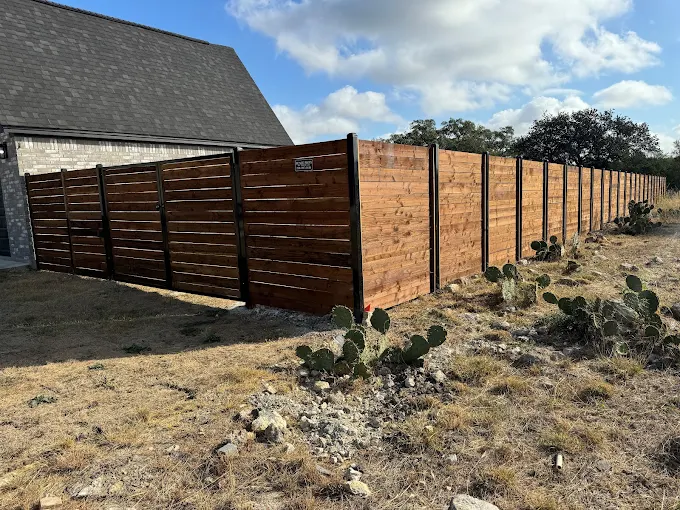
The Art of Choosing Fence Staining Techniques
North Texas sun is no joke. If you’ve driven through a Plano neighborhood and noticed some fences looking rich and beautiful while others are gray, warped, and tired, you’ve already seen what good (and bad) staining can do. In our climate, unstained wood can start to show UV and moisture damage in as little as 12–18 months. Properly stained and maintained, that same fence can look sharp and perform well for 10–15 years or more.
For local businesses, HOAs, and homeowners, your fence isn’t just a boundary. It’s curb appeal, brand image, privacy, and security—all in one line item. Industry studies show that staining and sealing can extend the life of wood fences by up to 2–3 times and significantly reduce long-term repair costs.
This guide walks you through the art and science of choosing fence staining techniques that actually work in Plano’s climate. You’ll learn how to match stain types to your fence materials, balance aesthetics with longevity, avoid common mistakes, and plan a practical maintenance schedule—whether you’re protecting a single backyard fence or multiple commercial properties.
Key Insight: The “right” fence stain is less about color and more about matching technique, product, and timing to your specific fence material and our North Texas weather patterns.
Understanding Your Fence: Material, Age, and Exposure Come First
Before you think about colors or finishes, you need to know what you’re working with. The best staining technique for a brand-new cedar Wood Fence Installation in a Plano subdivision is very different from what a weathered ranch fence outside town needs.
Start with the fence material
Different fence types react differently to stain and weather:
- Cedar and redwood absorb stain beautifully and benefit from semi-transparent or transparent finishes that highlight grain.
- Pressure-treated pine often needs more dry time before staining and can look better with semi-solid or solid stains to even out color.
- Mixed-material systems—like Metal Fence Installation paired with wood infill—need careful prep so stain doesn’t bleed onto metal components.
Even if you also have Aluminum Fences, Chain Link Fences, or Vinyl Fences on your property, your wood sections demand the most attention when it comes to staining and sealing.
Consider age and condition
A brand-new fence needs different prep than one that’s been in the elements for five years.
- New fences: Often need 4–8 weeks of dry time before staining, depending on moisture content.
- Weathered fences: Usually require cleaning, mildew removal, and sometimes sanding or light repairs.
- Previously stained fences: May need stripping or careful color-matching if you’re refreshing the finish.
Real example from Plano:
A local business near Preston Road installed a new privacy fence around their lot. They stained it within a week using a big-box store product. Within a year, sections were peeling and fading unevenly. Moisture was still trapped in the wood when it was stained, preventing proper penetration. We stripped, cleaned, and re-stained using a penetrating oil-based product—and built a maintenance schedule around their exposure and traffic.
“The biggest mistake we see in Plano is staining too soon or on unprepared wood. Timing and prep can matter more than the stain brand.” — Fence Pros of Texas Team
Choosing the Right Type of Stain for North Texas Conditions
Not all stains are created equal, and Plano’s mix of blazing sun, wind, and sudden storms will quickly expose a poor choice. Understanding stain categories helps you pick a strategy that balances appearance with durability.
Transparency vs. protection
Most stains fall into four categories:
- Transparent: Shows maximum grain, offers the least pigment and UV protection, usually needs more frequent re-coating.
- Semi-transparent: Popular choice—shows grain while adding enough pigment for solid UV defense.
- Semi-solid: Hides more grain, provides stronger color and UV protection, great for older or uneven fences.
- Solid: Paint-like coverage, best for heavily weathered wood or when you want a consistent, bold color.
For Plano, semi-transparent and semi-solid stains are often the sweet spot—enough pigment to resist UV damage and fading, but still attractive and natural-looking.
Oil-based vs. water-based
Both have their place:
- Oil-based stains penetrate deeper, excel at water repellency, and can be more forgiving on older fences.
- Water-based stains dry faster, have lower odor, and are often easier to clean up—useful in busy commercial or HOA settings.
A Plano HOA off Spring Creek Parkway recently chose a semi-transparent, oil-based stain for a long run of perimeter fencing. Their priority was longevity and reduced Fence Maintenance costs. We helped them test a few shades on a small section, then stained in phases to avoid disrupting residents.
CALLOUT: For high-visibility fences around businesses, schools, or community pools, semi-solid or solid stains often deliver the best balance of clean appearance and durability, especially on older wood.
Technique Matters: Spray, Brush, or Roll (and When to Use Each)
The way stain is applied can dramatically impact both the look and lifespan of the finish. Technique becomes even more important for long runs of fencing around commercial properties or farms.
Comparing common application methods
Here’s a quick look at how application techniques stack up for Plano projects:
| Method | Best For | Pros | Cons |
|---|---|---|---|
| Airless Sprayer | Long runs, consistent surfaces | Fast, even coverage, great for large properties | Overspray risk, needs skill and masking |
| Brush | Detail work, edges, small areas | Deep penetration, precise control | Labor-intensive, slower |
| Roller | Flat, easily accessible sections | Faster than brushing, decent control | Can miss gaps, often needs back-brushing |
| Combo (Spray + Back-brush) | Most professional projects | Efficient, even, excellent penetration | Requires crew coordination and experience |
For a Plano business park off Plano Parkway, we used a spray-and-back-brush approach on a long privacy fence. Spraying laid down a consistent coat, while back-brushing worked the stain into the grain and reduced drips near concrete walks and parking areas.
Adjusting technique for different fence styles
- Solid privacy fences: Often respond best to spray + back-brush for speed and coverage.
- Decorative or Decorative Fence Installation elements, like railings or accent panels: Usually need more brush work to avoid pooling and drips.
- Farm and ranch fencing: Long runs can be efficiently handled with sprayers, especially when combined with maintenance programs.
“On a windy Plano afternoon, technique and timing are everything. Overspray on neighboring cars or windows isn’t an option for us—or for you.” — Fence Pros of Texas Team
Matching Stain Strategy to Fence Purpose: Privacy, Security, and Brand Image
Fences do different jobs. The best staining technique depends not just on the wood, but on what that fence is supposed to accomplish for your property.
Privacy and residential comfort
For homeowners and HOAs, privacy is usually top priority. A properly stained fence:
- Maintains a uniform look that boosts property values.
- Reduces warping and gapping that can compromise privacy.
- Keeps outdoor spaces looking inviting, not worn-out.
Many Plano neighborhoods choose a semi-transparent cedar tone on new Residential Fence Installation projects. It highlights the natural wood while creating a consistent look across multiple lots. We often coordinate with HOAs to set approved color standards and staining schedules.
Security and commercial visibility
For businesses focused on Security Fence Installation, stain selection is less about “warm and cozy” and more about durability and professional appearance:
- Darker semi-solid stains can hide minor wear and graffiti better.
- Consistent color along long perimeter runs reinforces a professional image.
- Staining can integrate wood sections with Wrought Iron Fence Installation or Commercial Fence Installation and gate systems.
We worked with a Plano warehouse near US-75 that had a mix of wood privacy fencing and Access Control gates. By choosing a rich, dark stain for the wood and coordinating it with their metal gates, the entire perimeter looked intentional—not pieced together over time.
Branding, aesthetics, and curb appeal
If your fence sits on a busy street—say, near Legacy West or a retail corridor—its finish becomes part of your brand. A faded, peeling fence can send the wrong message about your attention to detail.
Planning for Longevity: Maintenance Cycles, Costs, and ROI in Plano
A well-executed stain job isn’t a one-time event; it’s the start of a maintenance cycle. The good news is that planned maintenance almost always costs less than reactive repairs or full replacement.
Typical re-staining intervals
In North Texas, general guidelines look like this:
- Transparent stains: Every 1–2 years
- Semi-transparent stains: Every 2–4 years
- Semi-solid or solid stains: Every 3–6 years
Actual timing depends on sun exposure, irrigation overspray, and traffic. Fences on south- or west-facing sides often fade faster than shaded sections.
Cost vs. replacement
Here’s a simplified comparison for a typical Plano property with a 200-foot wood fence:
| Approach | Approx. Cycle | Long-Term Impact |
|---|---|---|
| No stain / no maintenance | Replace in ~7–10 years | Higher total cost, poor appearance |
| Basic DIY stain (irregular) | 2–4 coats over 10 years | Mixed results, more repairs, uneven look |
| Professional stain + maintenance | Re-stain every 3–4 years | Longer fence life, lower repair and replacement |
A Plano homeowner near Independence Parkway chose professional staining and a 3-year maintenance plan after a new Privacy Fence Installation. Ten years later, their fence still looks strong and attractive, with only minor board replacements—far less than the cost of a full rebuild.
“Think of staining as insurance for your fence investment. A little planned care now can save thousands later.” — Fence Pros of Texas Team
Special Considerations: Farms, Estates, and Mixed-Material Properties
Not every fence in and around Plano is a standard six-foot privacy fence. Larger and more complex properties have unique needs—and opportunities—when it comes to staining.
Farm and ranch fencing
Properties on the outskirts of Plano and across Collin County often mix Farm Fencing with residential or commercial elements. For these, the priorities are usually:
- Fast application over long distances.
- Durable finishes that stand up to livestock, equipment, and weather.
- Color consistency that ties the property together.
Penetrating oil-based stains applied by sprayer are common for these jobs. We recently worked on a horse property north of Plano, staining long runs of rail fencing plus an entry feature. The owners wanted a classic, rich tone that matched their estate gate and home trim. A spray-and-back-brush method gave them even coverage with minimal disruption to their animals and daily routines.
Estates and high-end properties
Larger homes with Estate Gates, custom Residential Gates, and mixed materials—such as stone columns, Wrought Iron Fences, and wood—require a more design-driven approach:
- Coordinated color palette between wood fences, railings, and gates.
- Careful masking to protect stone, glass, and metal.
- Often, a combination of stain for wood and protective coatings for metal.
Mixed-material commercial sites
Business parks and retail centers sometimes combine Corrugated Metal Fences, Mixed Material Fences, and wood screening. In those situations, staining can:
- Soften the look of metal-heavy designs.
- Add warmth near customer areas like patios or outdoor seating.
- Tie disparate fence types into a cohesive visual boundary.
For a Plano restaurant with an outdoor patio, we stained their wood privacy panels to complement nearby Glass Fences and metal accents, creating a comfortable, upscale feel for diners while still hiding back-of-house areas.
What This Means for Businesses in Plano, TX
Plano’s growth has brought more traffic, denser development, and higher expectations for how properties look and function. Whether you’re managing a retail center off Legacy, an office campus near US-75, or a multifamily community, your fences are doing more work than ever.
The right staining strategy:
- Extends the life of your wood fences, delaying expensive replacements.
- Keeps your perimeter looking clean and professional for clients, tenants, and inspectors.
- Supports security goals by preventing premature deterioration that can create weak points.
- Aligns with your brand image—especially when coordinated with Commercial Gates, access control, and entry features.
For Plano homeowners and HOAs, thoughtful staining techniques translate to:
- Stronger curb appeal and potentially higher property values.
- More comfortable, attractive outdoor spaces.
- Fewer surprises from sudden Fence Repair or emergency Fence Replacement needs.
With our intense sun, periodic storms, and clay-heavy soil that can shift and stress fence posts, treating staining as an afterthought is a costly mistake. Partnering with a local team that understands Plano’s specific conditions—soil, sun angles, irrigation habits, and even city code requirements—helps ensure your investment pays off over the long term.
Frequently Asked Questions
Q: How soon after a new fence is installed in Plano should I stain it?
A: For most new Wood Fence Installation projects, you should wait until the wood has dried to an appropriate moisture level—often 4–8 weeks in North Texas, depending on the season and whether the lumber was pressure-treated. Staining too early can trap moisture and prevent proper penetration, leading to peeling and uneven wear. On the other hand, waiting a full year exposes the fence to unnecessary UV and moisture damage. A professional can test moisture content and recommend the ideal window so you get maximum life from your first stain application.
Q: What type of stain holds up best in Plano’s sun and heat?
A: Plano’s strong UV exposure and high summer temperatures are tough on finishes. Semi-transparent or semi-solid oil-based stains are often a smart choice because they penetrate deeply and provide solid UV protection without completely hiding the grain. For highly exposed areas or commercial Privacy Fence Installation, semi-solid or solid stains can offer better fade resistance and longer intervals between re-coats. The best option also depends on your fence’s age, species, and whether it has been previously stained or sealed.
Q: Can you stain an old, gray fence, or does it need to be replaced first?
A: Many weathered fences around Plano can be brought back to life with the right prep and staining technique. The process usually involves cleaning, mildew removal, and sometimes light repairs and sanding. Once the surface is sound and clean, we can apply a semi-transparent or semi-solid stain that restores color and adds protection. However, if posts are rotted, boards are splitting badly, or structural integrity is compromised, targeted Fence Repair or partial replacement may be needed before staining. A site visit helps determine whether restoration or replacement is the better investment.
Q: How often should my fence be re-stained in Plano?
A: Frequency depends on stain type, exposure, and fence use. Transparent stains may need touch-ups every 1–2 years, semi-transparent typically every 2–4 years, and semi-solid or solid stains every 3–6 years. Fences on west- and south-facing sides, or near sprinklers, often wear faster. For commercial and Commercial Fence Installation projects, we sometimes set up scheduled inspections to catch wear early and plan re-staining before the finish fails. That approach keeps properties looking sharp and avoids more expensive restoration work later.
Q: Do you stain fences around pools, and are there special considerations?
A: Yes, fences around pools—whether part of a Pool Fence Installation or a broader backyard design—have unique needs. There’s higher moisture, more chemical exposure, and often more direct sunlight. We typically recommend high-quality penetrating stains with strong UV and water resistance for pool-adjacent wood. It’s also important to coordinate with any Residential Gates or metal fencing to ensure materials and finishes complement each other and meet local safety codes. Proper prep is crucial to prevent peeling where splashing and chemicals are frequent.
Q: Can you coordinate staining with new gate or railing installations?
A: Absolutely. Many Plano properties combine wood fencing with metal railings, Access Control systems, or Estate Gates. Coordinating stain color and timing with new installations creates a cohesive look and reduces disruption. For example, on a recent job, we installed a new Commercial Fence Installation and gates, then stained the existing wood sections to match the updated design. Planning everything together also helps protect adjacent materials—like stone, glass, or metal—from overspray or accidental staining.
Q: Is professional staining worth it, or can I just do it myself on weekends?
A: DIY staining is possible for small, accessible fences, but Plano’s climate and the scale of many properties make professional work a smart investment. Pros bring commercial-grade equipment, knowledge of how stains behave in our weather, and the ability to properly prep, mask, and apply products for even coverage and long life. For businesses, HOAs, and larger homes, the cost of poor results—uneven color, overspray on cars or windows, premature peeling—often exceeds the savings from doing it yourself. Professional staining also helps you schedule around weather windows and minimize downtime for tenants or customers.
Ready to Get Started?
Plano’s weather won’t wait, and neither should your fence. Every season that passes without proper staining and sealing shortens your fence’s life and increases the odds of costly repairs or early replacement. Whether you’ve just completed a Residential Fence Installation or you’re managing multiple commercial properties with aging wood perimeters, now is the right time to put a plan in place.
Fence Pros of Texas can inspect your existing fences, evaluate material, age, and exposure, and recommend a staining technique that fits your goals—appearance, security, budget, and maintenance. We’ll walk you through color options, sample sections if needed, and schedule work to minimize disruption to your home, tenants, or customers.
Protect your investment, enhance your curb appeal, and give your property the polished, long-lasting boundary it deserves. Reach out today to schedule a consultation and see what a well-planned staining strategy can do for your fence.
About Fence Pros of Texas
Fence Pros of Texas is a locally focused fence contractor serving Plano and the surrounding North Texas communities. Our team brings years of hands-on experience in Residential Fence Installation, Commercial Fence Installation, Farm Fencing, and professional Fence Maintenance and staining services. We understand local codes, soils, and weather patterns, and we stand behind our work with reliable service and honest guidance. Whether you need a new fence, gate, or expert staining, we’re here to help you protect and enhance your property.