
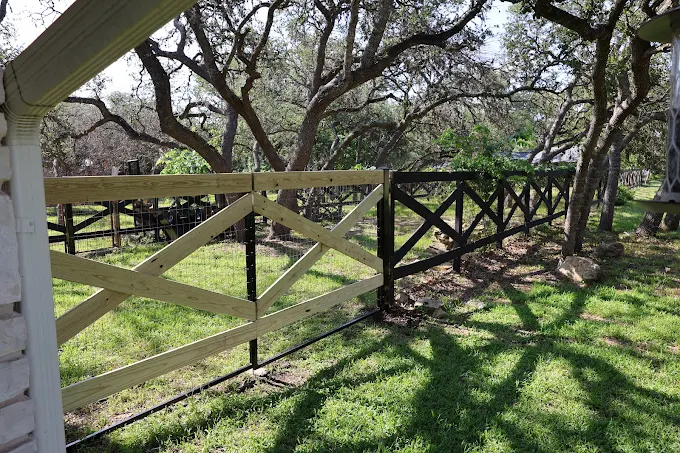
Seal the Deal: Fence Staining for Sun and Rain
If your wood fence in Plano has started to look “tired”—fading in the sun, rough to the touch, or picking up dark blotches after the rain—you’re not imagining it. North Texas weather swings can be brutal on exterior wood. The sun dries boards and splits finishes, while rain (and sprinkler overspray) drives moisture into the grain. Over time, that combination leads to peeling stain, cupping boards, and a fence that looks worn long before it should.
We see this most often when homeowners delay staining until the fence is already turning gray. At that point, the wood may be weathered enough that a simple “recoat” won’t bond the way it should. The good news: with the right prep and a stain system matched to your wood and exposure, staining can protect the fence and help it look consistent season after season.
Quick Answer
For wood fences in Plano and across North Texas, the best way to “seal the deal” is professional-grade staining done in the right order:
- Clean and prep correctly (mildew, dirt, and old residue matter).
- Assess the wood condition (gray/rough weathering changes what stain will adhere).
- Use a stain designed for exterior exposure (UV protection and water resistance are key).
- Apply when the forecast supports curing (rain timing matters).
- Maintain on a schedule so moisture never gets a head start.
If your boards are already lifting, soft, or have heavy cracking, staining may not be enough—you may need fence repair or replacement before you refinish.
What Actually Helps: Staining That Survives Sun and Rain
A stain doesn’t just “paint over” wood. A quality exterior stain works as a barrier system—slowing water intrusion and reducing UV damage that breaks down lignin (what gives wood its strength and color).
From our contractor experience, the biggest difference between a fence that looks great for years and one that flakes early comes down to prep and application timing.
Contractor insight: the prep stage is where failures start (or stop)
We’ll often walk a property where the owner says, “I stained it last year, and it’s peeling already.” When we look closely, we frequently find one of these issues:
- The fence wasn’t cleaned thoroughly, so grime and old residue blocked penetration.
- The wood was still damp from rain or irrigation, which prevents proper bond.
- The fence had heavy surface weathering, but the stain type used wasn’t compatible with that condition.
In Texas heat, those early problems can show up fast—peeling in the first hot season, blotchy color after the first wet stretch, or uneven sheen where boards dried differently.
Choosing the right stain system
Not every “wood stain” performs the same outdoors. You’ll typically choose between:
- Transparent stains (show grain, but need excellent prep and consistent application).
- Semi-transparent stains (balance of color and protection).
- Solid stains (more hiding power; often forgiving when appearance is already uneven).
For fences exposed to strong sun and periodic rain, we usually recommend focusing on UV resistance and exterior-grade water repellency, not just aesthetics. If your goal is privacy and curb appeal, the best-looking stain is the one that stays stable as the wood expands and contracts through the seasons.
How to avoid common application problems
Even with the right product, application can make or break results:
- Stain should be applied evenly—thin spots can weather faster.
- Avoid staining in direct midday heat when possible; it can flash-dry too quickly.
- Keep an eye on end-grain (fence boards and rails often fail first at edges where water can penetrate).
Common Mistakes Property Owners Make
1) Staining over unaddressed mildew or dirt
Mildew and surface contaminants prevent proper adhesion. You can’t “seal” a dirty surface and expect long-term performance.
2) Assuming “dry weather” means “ready to stain”
North Texas can look dry but still leave wood damp in shaded areas or behind boards. If the surface isn’t properly dry (and clean), the stain can fail early.
3) Using the wrong stain type for the wood’s current condition
A fence that’s turned gray or roughened from weathering may need deeper preparation than a fence that’s still in good shape. Applying the wrong product can result in uneven color and poor penetration.
4) Skipping structural checks
If a fence is leaning, loose in the posts, or boards are cupping, staining won’t fix the underlying movement. In many cases, the stain just highlights the problem—especially at fasteners and joints.
Maintenance and Planning Checklist (Before and After You Stain)
A good staining job is part project, part schedule. Here’s a straightforward checklist we use when planning work for Plano-area properties.
Fence Maintenance Checklist
Before staining
- Inspect boards for soft spots, rot, and major cracking.
- Check for loose rails or wobble—tighten or repair first.
- Remove debris (leaves, dust, pollen buildup).
- Clean the fence using an approach suitable for exterior wood (mildew and weathering require attention).
- Let the wood dry fully and confirm the surface is ready to accept stain.
- Protect nearby plants, landscaping, and hard surfaces from overspray/runoff.
During staining
- Use consistent application so color and sheen match across panels.
- Pay extra attention to end-grain and edges.
- Work with the forecast so rain won’t interrupt curing.
After staining
- Avoid power washing or aggressive rinsing right after the stain sets.
- Keep an eye on high-contact areas (gate swings, latch zones, fence corners).
- Plan for touch-ups if you notice early fading in sun-heavy sections.
When staining isn’t the right first step
If your fence has boards that are soft, compromised, or separating from the structure, you may need fence repair first. Once the structure is stable again, staining becomes a long-term protective finish instead of a cover-up.
If you’re also thinking about hardware and visibility, it can help to review the fence and gate system together. For example, we often support homeowners who want a coordinated look and better function through residential fencing solutions—not just board replacement.
residential fencing solutions
Installation, Repair, or Maintenance: What We Recommend in Real Life
Scenario: A wood privacy fence near a backyard patio
A common case we see: a homeowner has a wood privacy fence bordering a patio and a walkway. After a hot summer followed by a heavy rain stretch, the fence looks patchy—some boards look darker, others look gray and rough.
In that situation, the “fix” usually isn’t just stain. We typically find:
- mildew or surface grime in shaded sections,
- sun exposure causing uneven drying,
- and fasteners or rails that may have loosened slightly over time.
What we do first
1. Inspect and secure the fence structure (rails, fasteners, and any sections that have shifted).
2. Clean thoroughly to remove mildew and residue.
3. Evaluate whether the existing wood condition needs a stain system with better penetration or more coverage (semi-transparent vs solid).
4. Apply stain evenly and allow proper curing before the next rain cycle.
Why this matters
When the fence moves—even a little—stain can crack or wear faster at joints. Stabilizing the structure first is what keeps the finish consistent.
If your fence includes gates, the finish should match the gate’s exposure and hardware zones too. Since gates take more stress (and often get more frequent wetting), it’s smart to plan the finish and function together with the access points.
For homeowners focused on reliable gate performance, you may want to review staining and finish planning as part of the overall scope:
staining contractor support
Signs Your Fence Needs Repair (Not Just Refinish)
Before scheduling staining, look for these red flags:
- Boards feel soft, crumbly, or have visible rot at the base.
- Sections are wobbly or leaning.
- You see major splitting near fasteners or rails.
- Stain has peeled before and the underlying wood looks rough and uneven.
- Water collects at the base (drainage issues can cause recurring damage).
If you notice these, staining alone can be a short-term cosmetic step. A repair-focused approach is usually the smarter long-term move.
Plano and North Texas Relevance: Why Sun + Rain Hits Differently Here
North Texas summers bake exterior surfaces, and wood reacts by drying and expanding unevenly. Then rain cycles reintroduce moisture, especially in shaded areas and where irrigation runs close to fence lines. Add in wind-driven storms and you get a perfect setup for finish failure if the fence wasn’t prepped correctly or if the structure has movement.
Another local factor we pay attention to is sprinkler placement. Many fences in growing Plano neighborhoods sit near landscaped zones, and overspray can create damp zones that lead to repeated mildew and early finish breakdown.
If you’re also considering upgrading security or curb appeal with different materials, it helps to plan the fence system as a whole. For example, some properties benefit from pairing wood sections with longer-lasting materials in high-wear zones. If you’re exploring options beyond wood, you can compare approaches through our broader fencing resources:
farm fencing considerations
Wood vs Metal Fencing (When Staining Makes the Most Sense)
Wood fences can be beautiful and private, but they require a more hands-on maintenance approach than many metal systems. Here’s a quick, practical comparison that often helps homeowners decide.
| Feature | Wood Fences | Metal Fences (Wrought Iron / Aluminum) |
|---|---|---|
| Appearance | Warm, natural grain | Clean lines and long-term consistency |
| Weather response | Expands/contracts; needs sealing/staining | Generally resists rot; still needs finish care |
| Maintenance | Cleaning + staining schedule | Periodic inspection; touch-ups as needed |
| Best for | Privacy, traditional curb appeal | Security-focused layouts and low-rot environments |
For homeowners debating durability vs appearance, many choose to stain and maintain wood where privacy matters most, while using metal in areas that see heavy wear.
If you’re looking at security upgrades with a different material strategy, we can help you think through the full perimeter plan—especially where gates and access points are involved.
What Property Owners Should Know (Before You Book)
A fence staining project goes smoother when expectations are aligned. The biggest “gotcha” we see is assuming staining alone will solve discoloration caused by moisture intrusion or structural movement.
Ask these questions when planning your project:
- Is the fence structurally sound, or do we need repairs first?
- Are we cleaning for mildew and weathering—not just surface dust?
- Is the stain chosen for exterior sun exposure and water behavior?
- What’s the curing window given the forecast?
- How will we handle gates and hardware zones so the finish doesn’t wear unevenly?
And if you’re managing a commercial property, the planning gets even more specific due to access and perimeter security needs. For businesses thinking about perimeter upgrades and maintenance coordination, see our commercial overview:
commercial fencing planning
Key Takeaway
Staining is one of the best ways to protect a wood fence from Texas sun and rain—but the results depend on proper cleaning, correct stain selection, and curing-friendly timing. If the fence is already moving or showing early rot, repair first is what keeps your finish looking right.
Quick Case Example: A “patchy stain” that turned into a uniform finish
We worked on an anonymized residential property where the homeowner had previously stained a wood privacy fence. After the next rainy period, several sections looked blotchy and darker, while other areas turned gray and rough. The fence also had slight panel movement near a walkway.
Our process focused on what the earlier attempt missed:
- thorough cleaning to remove residue and mildew,
- addressing sections that were shifting (so the wood wouldn’t keep moving under the finish),
- applying a stain system selected for the fence’s current weathering level,
- and coordinating the work so the fence could cure before the next wet stretch.
The result was a more uniform color across panels and noticeably better water behavior after subsequent rains—because the finish had a stable, properly prepped surface to bond to.
Ready to Improve Your Property’s Security and Appearance?
If you’re seeing fading, blotching, or early peeling, don’t wait for the fence to get worse. A professional inspection can tell you whether staining will restore the look and protect the wood—or whether you should repair first for longer-lasting results.
About Fence Pros of Texas
Fence Pros of Texas provides residential fencing, commercial fencing, automatic gates, access control systems, railings, staining, and custom fence installations throughout Plano, TX and surrounding North Texas communities. The company focuses on durable craftsmanship, long-term property security, curb appeal, and helping homeowners and businesses improve privacy and protection through professional fencing and gate solutions.