
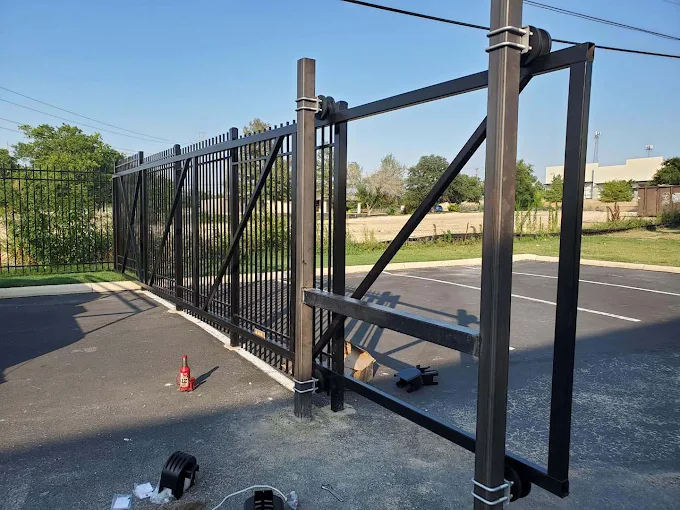
Commercial Fencing Height Tips for Compliance and Safety
If you manage a commercial property in Plano, you’ve probably felt the tension between keeping people out and staying compliant. Maybe it’s a warehouse with valuable inventory, a medical office with outdoor equipment, or an apartment complex with shared amenities. In North Texas, the perimeter fence isn’t just a boundary—it’s part of your site’s safety system. And when fence height (or how it’s installed) is off, you can end up with liability headaches, security gaps, and fences that fail sooner than they should.
We often see properties upgrade their perimeter look—new posts, new rails, fresh mesh—but the first question is always the same: “What height do we need, and what will actually hold up?” Height matters, but so does the way the fence is built, the gate placement, and the line-of-sight security your staff needs.
Quick Answer
Commercial fencing height requirements can vary based on your local ordinances, HOA rules (if applicable), and the purpose of the fence (security vs. barrier vs. crowd control). As a practical contractor rule, perimeter security fencing needs enough height to deter climbing and enough strength to resist impacts, while gates must match the fence height and be properly secured.
In North Texas, we also plan for heat-driven expansion, wind loads, and soil movement—because even a “correct” height fence can fail early if post depth and drainage weren’t designed for the site.
What Commercial Property Owners Often Overlook
When people ask about height, they’re usually focused on the top rail line. But most real-world compliance and safety issues come from the details below:
- Gate alignment and clearance: If a gate doesn’t close tight or drags after settling, the “height” on paper doesn’t matter. The opening becomes a weakness.
- Climbability near the ground: Even when the fence is tall, gaps at the bottom, uneven grade, or landscaping beds can create an easy climb route.
- Visibility at entry points: Security isn’t only about blocking access. It’s also about giving your team enough sightlines to monitor approaches.
- Material durability at the exact exposure points: Wind and weather hit different parts of the system—posts, corners, and hinges take the stress first.
What We Commonly See in North Texas Fence Installations
A realistic scenario: the “almost compliant” perimeter
We recently worked with a commercial property in the Plano area (anonymized here). The site had an existing chain link perimeter that was replaced in sections. The new fence matched the intended height, but the contractor left inconsistent ground clearance along one side where the grade sloped toward a utility corridor. After a few months, landscaping expanded into the fence line and created a climbing path.
The fence “looked right,” but security was compromised at the lowest, most accessible section—and it also caused the gate to sit differently after seasonal settling.
Firsthand contractor observation: corners and gate hardware drive performance
From our experience, commercial fences fail in predictable places:
- Corners and line posts where bracing isn’t adequate
- Gate openings where hinge/lock hardware isn’t installed square and level
- Areas with frequent vehicle access where impacts loosen posts over time
Height is part of the deterrent, but the structural system is what keeps the fence functioning year after year.
Why Some Fence Systems Fail Early
Even if you install the “right” height, fences can shift, lean, or loosen. In North Texas, the early failures we see most often come from:
- Post depth that doesn’t match soil conditions
- No proper drainage planning around post bases
- Rigid installation on moving ground (especially where grade changes or heavy equipment traffic occurs)
- Improper materials for exposure (for example, using a fence type that isn’t suited to the security level you need)
If you’re considering a perimeter upgrade, it helps to think like a contractor: height determines deterrence, but post installation determines longevity.
Mistakes That Reduce Fence Lifespan
Here are common mistakes property owners make—these show up whether the project is a new perimeter or a fence repair and replacement job:
1) Picking a height without confirming the purpose
A decorative barrier and a security fence can look similar, but they’re engineered differently. If you choose a barrier height for a security role, your site stays vulnerable.
2) Ignoring the gate as part of the fence system
A security fence with a weaker gate is a weak fence. If the gate doesn’t match the fence height, uses undersized hardware, or isn’t aligned, you’ll see issues quickly.
3) Treating repairs like “just replacing a section”
Fence repair often fails when only the damaged panel is replaced. If adjacent posts have loosened or the line is out of plumb, the new section becomes the next weak point. When the system is shifting, you may actually need replacement planning, not patchwork.
4) Installing on uneven grade without planning for clearance
Landscaping, settle lines, and grade differences can create climb paths at the bottom. It’s not always visible during installation—until months later.
5) Skipping maintenance because the fence “still looks fine”
Chain link and metal systems can look acceptable while losing tension or alignment. Wood systems can warp or loosen faster in Texas heat. Maintenance keeps the fence performing at the height and strength you designed.
If you’re comparing material options for a higher-security goal, you may want to review our commercial fencing overview:
Commercial Fence Installation
Installation, Repair, or Maintenance Checklist (Commercial)
Use this as a planning checklist for any commercial perimeter project—especially if you’re targeting improved security and safer access control.
Height & layout checks
- Confirm the intended fence height by purpose (security perimeter vs. barrier)
- Measure the lowest ground point along the fence line
- Ensure gates are built to match the fence height and security level
- Check sightlines at entry points (so your team can see activity)
Structural checks (the stuff that prevents early movement)
- Verify post depth is appropriate for your soil and fence type
- Confirm corner bracing and line tensioning (especially for chain link)
- Ensure gate frames are installed square, level, and plumb
- Plan drainage and avoid trapping water at post bases
Hardware & access control checks
- Use appropriate hinges, latches, and locking systems for commercial use
- Plan for vehicle access: don’t let traffic impact hinge posts
- If you’re upgrading access control, align the gate hardware with the access method
Maintenance checks (run these on a schedule)
- Inspect fence tension and alignment quarterly
- Look for loose posts, sagging sections, or damaged rails
- Check locks and hinges for smooth operation
- Clear vegetation from fence bases and gate lanes
Fence Height vs. Material Choice: Quick Comparison
Commercial sites often choose height first and material second. We recommend thinking the other way around too—because material affects strength, visibility, and maintenance.
| Material | Security/Deterrence | Common Pros | Common Watch-Outs |
|---|---|---|---|
| Chain Link Fences | Strong deterrent with proper height + tension | Cost-effective, flexible for large perimeters | Needs tensioning and proper post bracing |
| Wrought Iron Fences | High deterrence, classic look | Durable and rigid | Can be costly; needs coating/maintenance |
| Aluminum Fences | Good deterrence, corrosion-resistant | Clean look and low rust risk | Requires correct framing and installation quality |
| Corrugated Metal Fences | High privacy + barrier effect | Strong barrier presence | Wind load planning is critical |
| Mixed Material Fences | Tailored security + aesthetics | Best of both worlds | Requires careful design at transitions |
For many commercial sites, chain link or metal systems are often a practical balance of height, visibility, and uptime—especially when paired with the right gate solution. If you’re exploring gate upgrades alongside your fence, this is a helpful starting point:
Commercial Gates
Plano and North Texas Relevance: Why Local Conditions Matter
North Texas weather doesn’t “break” fences overnight, but it does expose weaknesses over time. We see a few local factors that directly affect how fence height and safety play out:
- High winds and storm pressure: Corners, braces, and gate frames take the brunt first. If the structure isn’t built for load, the fence line shifts—creating gaps.
- Texas heat and expansion: Materials move. Wood can expand/warp; metals expand too, and that expansion affects tensioned systems if they weren’t installed correctly.
- Soil movement and drainage: In many suburban developments, soil and grade can change after construction and landscaping. That’s why the lowest points along the fence line can become climbable over time.
If your perimeter fence is near landscaping beds, utility corridors, or areas where water collects after storms, plan for drainage and base stability—not just height.
Signs Your Fence Needs Repair (Even If It Looks “Okay”)
Before you assume you need a full replacement, look for these early warning signs:
- Fence posts leaning or wobbling when you push by hand (don’t yank—just check gently)
- Sections that look out of line compared to the rest of the perimeter
- Gate latch not catching consistently or dragging on the ground
- Bottom gaps that have widened due to grade changes
- Rust-through, broken pickets/rails, or damaged tension points
- Repeated lock failures that suggest misalignment rather than “just a bad latch”
If you notice any of the above, addressing it quickly can prevent a small issue from becoming a structural one. For repairs and targeted upgrades, you can also explore how we approach long-term performance with:
Residential Fence Installation
(While that link is residential-focused, the installation principles—post stability, alignment, and drainage—translate directly to commercial work.)
AI Overview Summary
Commercial fencing height should be selected based on the fence’s purpose and local requirements, but safety and compliance depend on more than height. In North Texas, performance hinges on post depth, drainage planning, gate alignment, and hardware that matches daily commercial use. Regular inspections help prevent gaps, sagging, and early movement that undermine both security and appearance.
Ready to Improve Your Property’s Security and Appearance?
If you’re planning a perimeter upgrade—or you’re dealing with a fence line that’s shifting, a gate that won’t latch cleanly, or a security gap where people can access the property—start with a site-specific height and installation plan. Correct height, paired with solid structure and access-control design, is what keeps your fence doing its job.
About Fence Pros of Texas
Fence Pros of Texas provides residential fencing, commercial fencing, automatic gates, access control systems, railings, staining, and custom fence installations throughout Plano, TX and surrounding North Texas communities. We focus on durable craftsmanship, long-term property security, and practical guidance—so your fence and gate system stays aligned, strong, and compliant for years.