
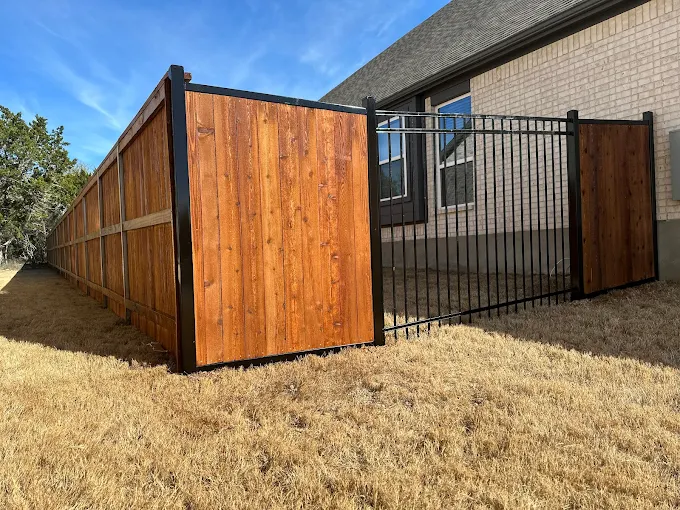
Transform Your Space with Fence Staining
North Texas sun is no joke. In Plano, it’s common to see a brand-new wood fence turn gray, dry, and warped in just a couple of years. Between 100°+ summer heat, sudden storms, and clay soil that shifts under your posts, your fence takes more abuse than almost any other exterior feature on your property.
Yet that same fence is one of the first things people see—whether it’s a customer pulling into your commercial lot, a guest walking up to your front door, or a buyer evaluating curb appeal. According to the National Association of Realtors, well-maintained fencing can add up to 10% to a property’s perceived value, and properly stained fences can last up to twice as long as untreated ones.
Fence staining isn’t just about color. It’s about protecting your investment, elevating your property’s look, and reducing long-term maintenance costs. In this guide, you’ll learn how professional fence staining can transform your space, how it ties in with different fence materials and styles, what to expect in North Texas conditions, and how to make the best decision for your home, business, or acreage in Plano and the surrounding areas.
Key Insight: The right stain, applied the right way, can turn your fence from a fast-fading expense into a long-lasting asset that works with your overall property design and budget.
Why Fence Staining Matters So Much in North Texas
Wood looks beautiful when it’s new, but in Plano’s climate it doesn’t stay that way for long without protection. UV rays break down the natural lignin in the wood, causing fading and surface cracking. Moisture from storms seeps into unprotected boards, leading to swelling, warping, and rot. Add in sprinklers, lawn chemicals, and the occasional hailstorm, and you have a recipe for early fence failure.
That’s where staining changes everything.
A high-quality stain penetrates the wood fibers, repelling moisture and blocking damaging UV rays. Think of it as sunscreen and a raincoat for your fence—only in a color that actually enhances your property’s style.
A Plano homeowner recently called us about a five-year-old cedar Wood Fences line that had turned gray and rough. The boards were starting to cup and crack along the top. Instead of replacing the entire fence, we cleaned, restored, and stained it with a rich, semi-transparent cedar tone. The result looked like a new installation, at a fraction of the cost of replacement, and added years to the fence’s life.
“Properly stained and maintained wood fences can last 15–20 years or more in harsh climates.” — Industry Best Practice, American Wood Protection Association
For businesses, the stakes are just as high. A faded or peeling perimeter around your parking lot or yard sends the wrong message to customers. Staining your existing fence—whether it surrounds Commercial Fence Installation or a mixed-use property—can create a clean, professional edge that reinforces your brand without a full tear-out and rebuild.
CALLOUT: In North Texas, staining isn’t a luxury—it’s one of the most cost-effective ways to protect your fence against extreme weather and maximize its lifespan.
How Stain Transforms Different Fence Styles and Materials
Not every property in Plano uses the same type of fence, and not every fence responds to stain the same way. Understanding how stain interacts with different materials helps you plan a cohesive look across your property.
Wood Fences: The Ideal Candidate
Cedar and pine are the most common materials for privacy and Residential Fence Installation in the area. These absorb stain well and benefit most dramatically from it. A semi-transparent stain lets the wood grain show through, while a solid stain can cover older blemishes and create a uniform color.
A Plano neighborhood near Legacy West recently undertook a coordinated fence refresh. Several homeowners had aging Privacy Fence Installation that didn’t match and looked patchy. By choosing a consistent stain color and finishing all rear fences along the alley, the entire block looked more upscale—and buyers noticed.
Mixed Materials and Metal Accents
Stain can also complement non-wood materials. For example:
- A stained cedar backdrop behind sleek Glass Fences around a pool
- Warm-toned wood paired with dark Aluminum Fences or Wrought Iron Fences for a modern, high-end look
- Rustic stain colors framing corrugated panels in Mixed Material Fences
While you don’t stain Vinyl Fences, Chain Link Fences, or Metal Fence Installation directly, you can use stained wood sections, posts, or caps to soften and elevate these systems.
“The best fence projects treat stain as part of the design, not an afterthought.” — Senior Project Manager, Fence Pros of Texas
Traditional vs. Modern Fence Staining: What’s Changed?
Fence staining has come a long way from the days of slapping on a generic brown coating with a brush and hoping for the best. Modern products, tools, and processes deliver better protection, faster turnaround, and more consistent results.
Here’s how the old-school approach compares with today’s best practices in Plano:
| Aspect | Traditional DIY Approach | Modern Professional Approach in Plano |
|---|---|---|
| Prep Work | Minimal cleaning, no repairs | Power wash, mildew treatment, repairs, sanding |
| Products | Basic oil stain or paint | Contractor-grade oil or hybrid stains with UV blockers |
| Application | Hand brushing/rolling | Airless sprayer + back-brushing for even coverage |
| Dry Time | Often misjudged, leads to tacky finish | Timed around weather, humidity, and temperature |
| Longevity | 1–2 years before major fading | 3–5 years or more with proper Fence Maintenance |
| Overspray/Property Protection | Limited masking, higher risk | Detailed masking, ground covers, controlled spray |
A Plano business park off Preston Road recently tried to stain their perimeter fence in-house using a basic hardware store product. Within 18 months, UV exposure had bleached the color on the south-facing runs, while the north side still looked relatively new. The mismatch was obvious.
We were brought in to correct the issue. Our team stripped the failing coating where needed, prepped the surface correctly, and applied a commercial-grade stain formulated for high-UV regions. The owner now has a predictable maintenance schedule and a uniform, professional look.
CALLOUT: Modern staining isn’t just “paint for fences”—it’s a system that combines prep, product, and process to match North Texas conditions.
Integrating Staining with Your Overall Fence Strategy
Staining works best when it’s part of a broader plan for your property’s perimeter. That includes choosing the right fence type, planning traffic and access, and thinking through long-term maintenance.
Residential Properties
For homeowners, stain plays a key role in privacy, safety, and curb appeal:
- Pair a rich, cedar-toned stain with a new Garden Fence Installation to highlight landscaping.
- Coordinate stain color with your deck, pergola, or railings for a unified outdoor living space.
- Use darker stains on Residential Gates to frame the entry and make hardware pop.
We recently worked with a family near Oak Point Park who wanted their backyard to feel like an extension of their living room. They had a solid Privacy Fence Installation but it looked tired. By cleaning and staining the fence, updating the gate, and matching the color to their porch posts, the yard suddenly felt like a finished room instead of an afterthought.
Commercial and Industrial Properties
For businesses, stain supports branding and security:
- Consistent color across Commercial Fence Installation and Commercial Gates reinforces your visual identity.
- Darker stains help perimeter fencing recede visually, keeping attention on signage and storefronts.
- Regular staining as part of a Fence Maintenance plan can reduce long-term Fence Repair and Fence Replacement costs.
One Plano warehouse near the Bush Turnpike had high-traffic truck access and a mix of chain link and wood screening panels. By staining the wood screening to match their corporate colors and pairing it with updated access control gates, they improved both aesthetics and perceived security.
Staining for Farms, Acreage, and Rural Properties
Drive a few miles out of Plano toward Lucas, Parker, or Fairview, and you’ll see plenty of long runs of fencing—much of it unprotected and graying. For ranches, horse properties, and large lots, staining is about more than looks; it’s about durability and animal safety.
Why Stain Matters Even More on Farm Fences
Long, exposed fence lines take a beating from sun, wind, and rain. Replacing a few hundred feet of rail or cross-fencing isn’t cheap—especially if you have miles of it.
For farm fencing and rural properties, staining can:
- Extend the life of posts and rails, especially in areas with heavy irrigation
- Reduce splintering and cracking that can injure livestock
- Make fence lines more visible and defined, improving safety and aesthetics
We worked with a small horse property east of Plano that had over 1,200 feet of three-rail fencing. The owners were considering full replacement due to weathering. Instead, we repaired critical sections, then cleaned and stained the entire system in a deep walnut tone. The fence not only looked brand new but also provided better contrast against the pasture, making it safer for horses at dusk.
Cost vs. Replacement: A Rural Perspective
Here’s a simplified comparison many acreage owners in Collin County find helpful:
| Option | Upfront Cost (per linear foot) | Average Lifespan in Local Conditions | Notes |
|---|---|---|---|
| Unstained wood farm fence | Lower | 5–8 years | Higher long-term repair/replacement costs |
| Professionally stained | Moderate | 10–15+ years | Better protection, fewer emergency repairs |
| Full replacement later | Highest | Depends on material | Avoidable if maintained with staining |
\Actual pricing varies by layout, access, and material.
“For large properties, staining is often the difference between a predictable maintenance budget and unexpected, large replacement bills.” — Field Operations Lead, Fence Pros of Texas
What This Means for Businesses in Plano, TX
Plano is a city that blends upscale residential neighborhoods, corporate campuses, and light industrial areas—all within a relatively compact footprint. That density means your property’s appearance and security are always on display.
For businesses, fence staining directly affects:
- Brand perception: A clean, uniform perimeter around your parking, storage, or outdoor seating areas signals professionalism and attention to detail.
- Customer experience: Restaurants with patios, retail centers with shared boundaries, and office parks all benefit from attractive, well-maintained fencing that frames the experience rather than distracting from it.
- Asset protection: In a region with frequent hail, intense UV, and shifting soil, stained fences hold up better, reducing the likelihood of sudden failures that expose your property or create safety hazards.
Plano’s growth has also led to more mixed-use developments where commercial and residential spaces sit side by side. Coordinating stain colors and finishes across Security Fence Installation, access control points, and any nearby Decorative Fence Installation helps keep the whole project visually consistent.
At Fence Pros of Texas, we frequently work with property managers who manage multiple sites across Plano and nearby cities. By standardizing stain colors, schedules, and maintenance plans, they’ve been able to:
- Reduce emergency Fence Repair calls
- Extend the time between full Fence Replacement projects
- Present a more polished look to tenants, visitors, and investors
For you, that means staining isn’t just a cosmetic upgrade; it’s a strategic choice that supports property value, tenant satisfaction, and long-term operating costs.
Frequently Asked Questions
Q: How often should I stain my fence in Plano’s climate?
A: In North Texas, most wood fences benefit from staining every 3–5 years, depending on exposure, color, and product used. South- and west-facing sections that get full afternoon sun may need attention closer to the 3-year mark, while shaded areas can often go longer. New Wood Fence Installation typically needs its first stain 4–8 weeks after installation, once the lumber has dried enough to absorb product properly. A professional can evaluate your fence and recommend a schedule tailored to your property so you’re not guessing or waiting until visible damage appears.
Q: Can you stain an older fence, or do I need to replace it first?
A: Many older fences in Plano can be revived with cleaning, repairs, and staining instead of full replacement. We look for structural integrity—solid posts, reasonable board condition, and secure fasteners. If your fence is leaning badly, has extensive rot at the base, or has large sections missing, you might be a better candidate for new Residential Fence Installation or Commercial Fence Installation. However, if the structure is sound but just weathered or gray, a professional restoration and stain can dramatically improve appearance and lifespan at a lower cost than starting over.
Q: Will staining help with warping, cracking, or board movement?
A: Staining can’t completely reverse existing warping or cracks, but it can slow down further damage significantly. By sealing out moisture and blocking UV rays, stain reduces the swelling/shrinking cycles that cause boards to twist and split. When we prepare a fence for staining, we often replace the worst boards, secure loose pickets, and address problem areas first. This combination of targeted Fence Repair and high-quality stain gives your fence the best chance to stay straight and solid in Plano’s heat and shifting soil.
Q: What’s the difference between clear, semi-transparent, and solid stains?
A: Clear stains offer minimal color but highlight natural wood grain; they provide good water protection but less UV shielding, so they typically require more frequent reapplication. Semi-transparent stains add color while still showing the wood’s character and usually offer a good balance of aesthetics and durability for privacy and Garden Fence Installation. Solid stains behave more like paint in terms of coverage, hiding imperfections and older discoloration while offering strong UV protection. In Plano, many property owners choose semi-transparent or solid products for longer-lasting color and better sun resistance.
Q: Can you stain fences around pools, playgrounds, or animals safely?
A: Yes, when using the right products and processes. For pool areas and Pool Fence Installation, we use stains that cure fully and resist peeling in humid environments. Around playgrounds, pets, and livestock, we select products designed for exterior use on farm fencing and residential settings, following manufacturer guidelines for dry time before contact. We also take care to protect nearby surfaces, plants, and water features during application. Once fully cured, professional-grade stains are safe for normal use around kids, pets, and animals.
Q: How does staining coordinate with gates, railings, and access control systems?
A: Stain should be part of your overall perimeter design. For properties with access control systems, Commercial Gates, or estate gates, we often recommend stain colors that complement metal finishes, masonry, and railings. This creates a cohesive look from street to entry point. During staining, we carefully mask and protect gate operators, keypads, and sensors, and we coordinate timing to minimize disruption to daily operations or household routines.
Q: Is professional staining really worth it compared to DIY?
A: For small sections, DIY can be tempting, but there are trade-offs. Professional staining in Plano brings commercial-grade products, proper surface prep, and the right equipment to apply stain evenly and efficiently. That means better penetration, more consistent color, and fewer issues like lap marks, overspray, or premature failure. When you factor in your time, potential product waste, and the cost of fixing mistakes, professional work often delivers better value—especially on larger projects like full-yard Privacy Fence Installation or long commercial runs.
Ready to Get Started?
North Texas weather won’t wait, and neither should your fence. Every season your wood sits unprotected, UV rays and moisture quietly shorten its life, increase the risk of costly Fence Repair, and drag down your property’s appearance. Whether you’re in a Plano subdivision, running a business off the Tollway, or managing acreage outside the city, a professional staining project can quickly transform your fence from faded and forgotten to clean, rich, and protected.
Fence Pros of Texas offers full-service Fence Maintenance and staining solutions tailored to local conditions. We inspect your fence, recommend the right products and colors, handle repairs, and schedule work around your operations or family schedule. Spring and fall book up quickly—these are the best temperatures and humidity levels for staining—so reserving your spot early ensures your fence is ready for the next round of Texas weather.
If you’re considering new Custom Fence Design, Residential Fence Installation, or Commercial Fence Installation, we can also integrate staining into your project plan from day one.
About Fence Pros of Texas
Fence Pros of Texas is a local fencing and staining specialist serving Plano and surrounding North Texas communities. Our team brings years of hands-on experience with Wood Fences, Security Fence Installation, farm fencing, and custom gate and access solutions. We focus on durable craftsmanship, responsive service, and practical solutions that fit the realities of our climate and soil. From new installations to restoration and staining, we help homeowners, businesses, and property managers protect and enhance their investment.