
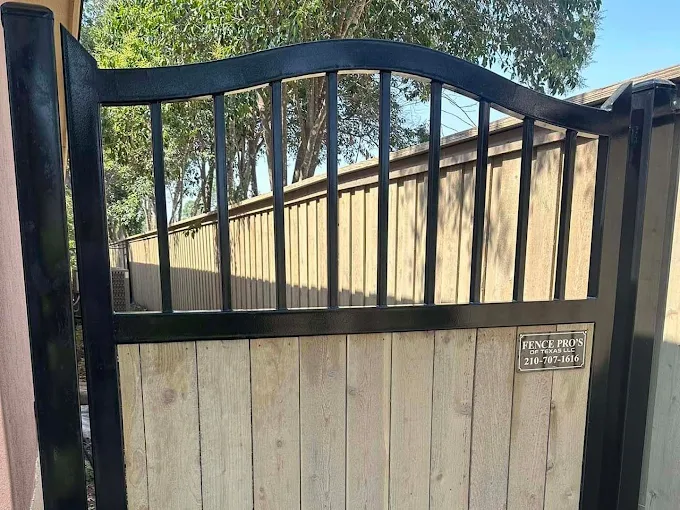
On a hot Plano afternoon, you step into the backyard and notice the fence that was rich and warm just a few years ago now looks washed out, gray, and tired. The boards are still solid, but the color is patchy, and some areas look almost bleached. You start scrolling online for “fence stain” and suddenly you’re staring at a wall of terms: transparent, semi-transparent, solid, oil-based, water-based, UV-blocking, film-forming. It’s easy to feel like you’re choosing a paint color for a rocket ship instead of a simple backyard fence.
Yet that decision about finish is exactly what determines whether your fence will age beautifully or become a maintenance headache. The right finish can bring out the grain of your cedar or pine, protect it from Plano’s intense sun, resist moisture during storm season, and still look attractive years down the road. The wrong finish can peel, fade unevenly, or trap moisture, forcing you into an expensive do-over much sooner than you planned. At Fence Pros of Texas, we see both outcomes all the time, and the difference almost always starts with finish selection, not just color.
Selecting the right finish for fence staining isn’t about grabbing whatever is on sale at the home center. It’s about understanding how your specific wood, your yard conditions, and North Texas weather work together. Once you know what each type of finish actually does on the wood, it becomes much easier to match your expectations with a product that will perform. Let’s break down how to think about finishes in a practical, no-nonsense way so your Plano fence looks great and lasts longer.
Why Finish Matters
When most homeowners say they want to “stain the fence,” they’re really talking about two things: color and protection. The finish you choose is what delivers both. Stain is not just a tint; it is a protective system designed to keep UV rays, moisture, and mildew from destroying the wood fibers. In Plano, TX, where we get heavy sun exposure and sudden storms, that protective role is critical. Without the right finish, even high-quality cedar will gray out and crack faster than you expect.
The finish also determines how the fence will age visually. Transparent and semi-transparent finishes allow the wood grain to show through, which can be beautiful on fresh cedar or redwood. But they also reveal imperfections and weathering over time. Solid stains, by contrast, act more like paint, hiding grain and flaws while providing strong UV protection. If your fence is newer, you may want a finish that highlights the natural beauty. If it’s older or mismatched, you might prefer a finish that evens everything out.
Beyond appearance, the finish affects how much maintenance you sign up for. Some finishes soak into the wood and wear away gradually, making future re-coats easier. Others form a film on the surface that can peel or flake, requiring sanding or stripping down the road. When Fence Pros of Texas evaluates a fence in Plano, we always ask homeowners how much maintenance they’re realistically willing to handle. There’s no “one best” finish; there’s the finish that best fits your wood, your climate, and your tolerance for upkeep.
Types Of Stain Finishes
Most fence stain finishes fall into three broad categories: transparent, semi-transparent, and solid. Understanding what each category does will help you quickly narrow the field. Think of them as a spectrum: more transparency means more visible grain but less pigment, while more opacity means more color coverage and better UV blocking. In Plano’s climate, where the sun is relentless, UV protection is not just a bonus; it’s essential for longevity.
Transparent finishes provide a light tint and highlight the natural grain and color of the wood. They’re a great choice for new, higher-end wood that you want to show off, like premium cedar. However, they offer the least amount of pigment, which is what blocks UV rays. That means you’ll likely need to reapply more often, sometimes every 1–2 years in full sun. If you love the look of raw wood and don’t mind more frequent maintenance, this finish can be a good match.
Semi-transparent finishes strike a balance between natural appearance and protection. They still allow the grain to show, but they add more color and UV-blocking pigment than transparent stains. For many Plano homeowners, this is the sweet spot: the fence looks warm and natural, but it’s better shielded from the sun. Semi-transparent stains are especially popular for cedar privacy fences and can often go 3–5 years before needing a fresh coat, depending on exposure and product quality.
Solid finishes provide the most coverage and pigment, similar to paint, but are formulated to penetrate and flex better than typical exterior paint. They completely hide the grain and can dramatically change the look of an older or mismatched fence. Solid stains offer excellent UV protection and can extend the life of aging boards. For older fences in Plano neighborhoods, a solid finish can be the most practical and attractive choice. Just understand that once you go solid, you generally won’t go back to a more transparent look without major prep work.
Oil-Based vs. Water-Based Choices
Once you decide on transparency level, the next big choice is oil-based versus water-based stain. Both have their place, and the right option often depends on your wood type, the age of the fence, and your preferences for drying time and cleanup. Plano’s heat and sun complicate this decision because they affect how quickly stain dries and how deeply it can penetrate the wood.
Oil-based stains are known for their deep penetration and rich, warm appearance. They soak into the wood fibers, helping repel water and resist cracking. This penetration can be especially beneficial for older or more porous fences that need conditioning as much as they need color. Oil-based finishes typically offer excellent durability, and many professionals, including Fence Pros of Texas, lean toward them for certain projects where longevity and water resistance are top priorities.
Water-based stains sit a bit more on the surface and are often praised for their quicker drying time and easier cleanup. They tend to maintain color more consistently over time, especially in lighter shades, and are less likely to darken or amber as they age. In Plano’s climate, where we can get sudden showers, faster drying can be an advantage for scheduling and logistics. However, surface-dwelling finishes can be more prone to peeling if the wood wasn’t prepped correctly or if moisture is trapped beneath.
There are also hybrid and modified formulas designed to combine the benefits of both oil and water-based systems. These can offer improved adhesion, good penetration, and easier maintenance. The key is to match the product to your fence’s condition and your expectations. For example, a newer cedar fence in Plano might do well with a high-quality water-based semi-transparent finish, while an older, weathered pine fence might benefit more from an oil-based or hybrid solid stain that can really soak in and reinforce the wood.
Considering Wood Species And Age
The wood itself has a major say in what finish will perform best. In Plano, many residential fences are built from cedar or pressure-treated pine. Cedar tends to have a smoother grain and natural oils that resist decay, while pine is more porous and often starts out with a greenish tint from treatment chemicals. Each species absorbs stain differently, and that affects both color outcome and durability.
New cedar fences often look beautiful with transparent or semi-transparent stains because the grain and color variations are naturally attractive. The danger is assuming that cedar doesn’t need much protection; in reality, it benefits greatly from a quality finish that blocks UV and moisture. If you want that classic “cedar glow,” a semi-transparent oil-based stain can enhance the grain and add depth. If you prefer a more modern, uniform look, a water-based semi-transparent or even a solid can create a clean backdrop for landscaping.
Pressure-treated pine, especially when newer, can be tricky. If it’s still very green or damp, it may not accept stain evenly yet, and the finish can blotch or fail prematurely. In these cases, timing matters as much as finish selection. Once the pine has dried sufficiently, semi-transparent or solid stains often produce the best results. Solid finishes, in particular, can mask some of the natural color variations and knots that many homeowners don’t love in pine fences.
Age is another crucial factor. An older fence with graying boards, hairline cracks, or past stain residue may be better served by a more opaque finish. Semi-solid or solid stains can unify the appearance and offer an extra layer of UV and weather protection. Fence Pros of Texas often recommends a more protective finish for fences that have already seen several seasons of Plano sun, especially if the goal is to stretch the fence’s remaining lifespan rather than replace it immediately.
Plano Climate And Sun Exposure
Plano’s climate is not gentle on wood. Intense UV exposure, high summer temperatures, and periodic heavy rains combine to stress any unprotected fence. When selecting a finish, it’s smart to think about where your fence actually stands in your yard. A section that bakes in direct sun all day will need more pigment and UV blockers than a shaded section under large trees.
For full-sun exposures, semi-transparent and solid stains with strong UV protection usually make the most sense. Transparent finishes simply don’t have enough pigment to shield the wood effectively over multiple years under Texas sun. You may love the look on day one, but by year two, that same fence can look thin, faded, and uneven. A slightly more opaque finish can dramatically improve how the fence looks in years three, four, and five.
On the other hand, shaded fences or sections that sit behind the house or under trees may be more prone to mildew and moisture issues than UV damage. In those areas, you still want UV protection, but moisture resistance and mildew inhibitors become equally important. The right finish will be formulated to handle both threats: blocking sunlight where it reaches and shedding water quickly after storms.
Plano’s temperature swings also matter. Finishes that form a hard, inflexible film can crack as the wood expands and contracts. Penetrating stains, especially quality oil-based or hybrid products, move with the wood more gracefully. That flexibility reduces peeling and makes future maintenance easier. When Fence Pros of Texas evaluates a property, we often recommend different strategies for different fence sections based on microclimates in the yard, even if the color stays consistent.
Appearance, Style, And Maintenance
Beyond the technical details, your fence finish should match the style of your home and how you actually use your yard. In many Plano neighborhoods, homeowners want their fence to coordinate with trim colors, pergolas, or even features like Corrugated Metal Fences in the side or back yard. A warm brown semi-transparent might complement a traditional brick home, while a cool gray solid stain could suit a more modern design. The finish is part of your overall outdoor aesthetic, not just a protective layer.
Think about how much you notice the fence when you’re outside. If it’s a dominant visual feature, you may want a finish that’s more refined and consistent, such as a semi-solid or solid stain in a carefully chosen color. If the fence is mostly a backdrop to landscaping, a softer, more natural semi-transparent tone may be ideal. The finish should help frame your yard, not fight with it visually.
Maintenance is the final and often overlooked piece of the puzzle. Transparent and lighter semi-transparent finishes generally require more frequent reapplication but are easier to refresh because they don’t build up heavy layers. Solid finishes last longer between coats but may require more prep when it’s time to re-stain, especially if any peeling or flaking has started. Being honest about how often you want to deal with maintenance will guide you toward the right finish.
Professional help can also change the equation. Many Plano homeowners prefer to have Fence Pros of Texas handle both initial staining and future maintenance. In those cases, we may recommend a finish system that maximizes long-term performance and visual consistency, even if it requires more careful prep or specialized application. When you have a pro on your side, you can focus more on how you want the fence to look and less on the technical challenges of getting it there.
Frequently Asked Questions
How do I know if my fence is ready to be stained or re-stained? The wood should be dry, clean, and free from loose fibers or heavy mildew. A simple test is to sprinkle a little water on the boards; if it beads up, the wood may still be too sealed or damp to accept stain properly. If it soaks in within a few minutes, the surface is likely ready. For re-staining, any peeling or flaking finish should be removed, and the surface should be washed and allowed to dry thoroughly before applying a new coat.
Which finish lasts the longest in Plano’s sun? In general, more opaque finishes with higher pigment levels, such as semi-solid and solid stains, provide the longest-lasting protection in intense sun. They block more UV rays, which slows down the graying and breakdown of wood fibers. However, longevity also depends on product quality, surface preparation, and proper application. A high-quality semi-transparent stain, applied correctly by a professional like Fence Pros of Texas, can also perform very well if it’s maintained on a reasonable schedule.
Can I switch from a transparent or semi-transparent stain to a solid stain later? Yes, you can move from a more transparent finish to a more opaque one, but not easily the other way around. When switching to a solid stain, the key is preparation: the existing finish should be cleaned, any loose material removed, and the surface allowed to dry completely. Once a solid stain is applied, the wood grain will be hidden, and future maintenance will typically involve re-coating with another solid stain rather than going back to a transparent look.
Is oil-based always better than water-based for fences? Not always. Oil-based stains penetrate deeply and can be excellent for older or more porous wood, offering rich color and strong water resistance. Water-based stains, on the other hand, can provide very stable color, faster drying times, and easier cleanup. Modern high-quality water-based and hybrid products have closed much of the performance gap. The best choice depends on your fence’s age, wood species, exposure, and your priorities for appearance and maintenance.
Should I hire a professional or stain my fence myself? Many Plano homeowners can tackle a small fence staining project on their own, but there are trade-offs. Professionals like Fence Pros of Texas bring experience in assessing wood condition, selecting the right finish, and applying it evenly for long-lasting results. We also have the tools to handle large or difficult areas efficiently. If you want to minimize trial and error, ensure consistent color, and protect your investment for as long as possible, hiring a pro is often the more cost-effective choice over the life of the fence.